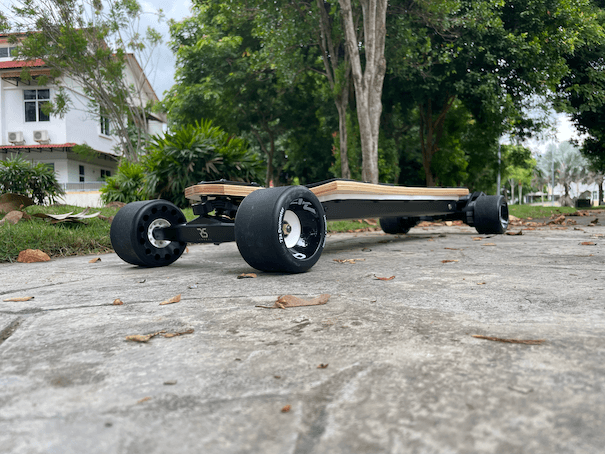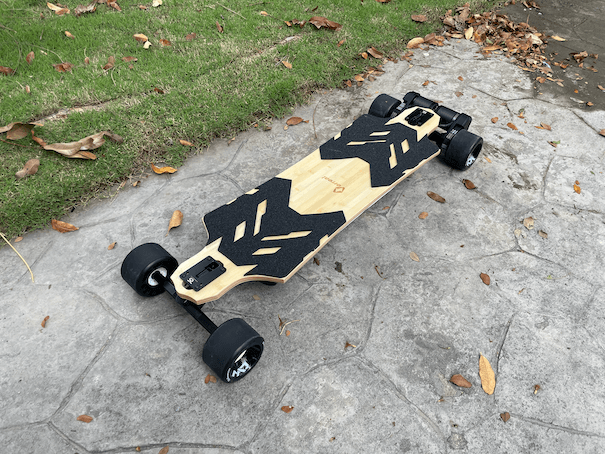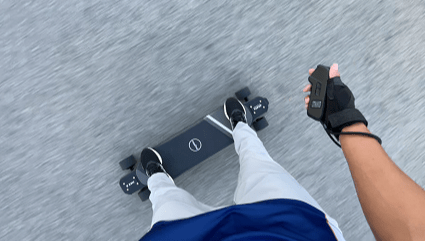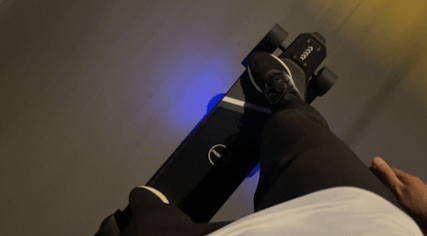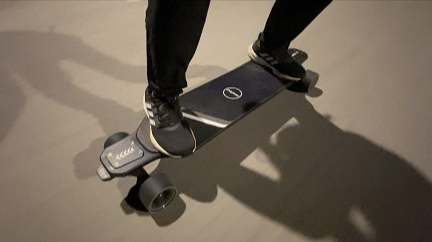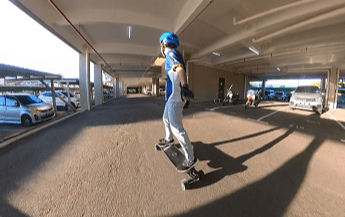
OMW Hussar Review – $999, but rides like $1999

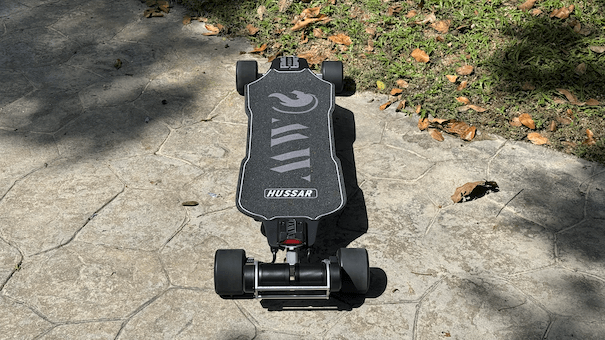
The OMW Hussar is a board that starts at $999 and is almost entirely customizable from the board’s flexibility, the trucks, and the different wheel options to build a ride that suits your needs.

OMW’s is having Black Friday sale starting on 1st November.
Cavalry boards will enjoy a $200 off and Hussar boards will enjoy a $100 off, compared to the original discounted price.

It means:
Cavalry board with forged truck will be $1099,
Cavalry board with CNC truck will be $1249;
Hussar board with forged truck will be $899,
Hussar board with CNC truck will be $1109.
(All with stock in USA. The discount code “EskateHQ” can be also used, which means extra $30 off for all the boards, enjoy!)

OMW Hussar Specs:
PriceStarts at $999
Battery12s3p 21700 648Wh 21700 Samsung 50S battery
Controller12s Hobbywing ESC
Top Speed34 mph (55 kph)
Range37.3 miles (60 km)
DeckCarbon Fiber deck
Motor6374 x2 / 165kv / Max Power – 3500W
Weight33 lbs (15 kg)

Deck –  Carbon Fiber Deck:

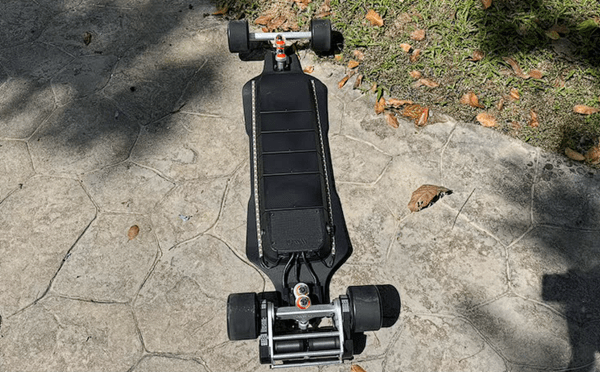
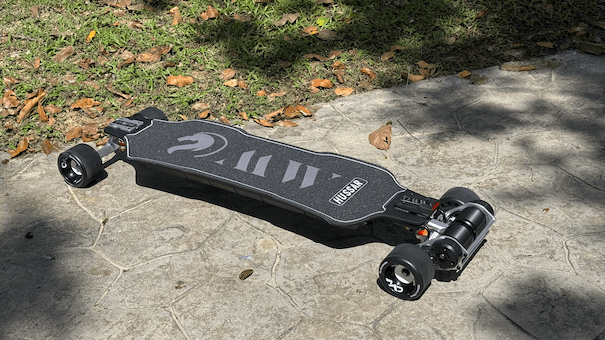
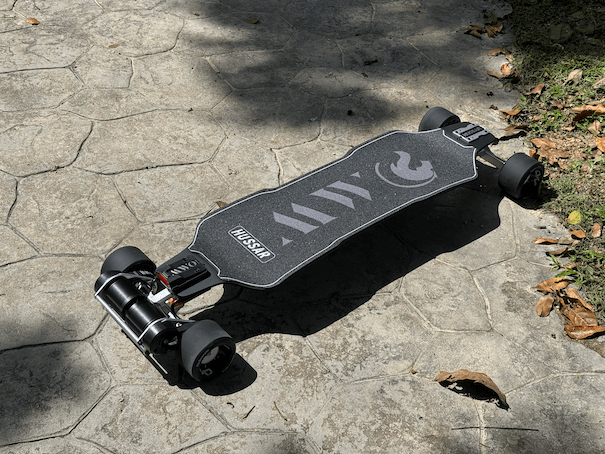
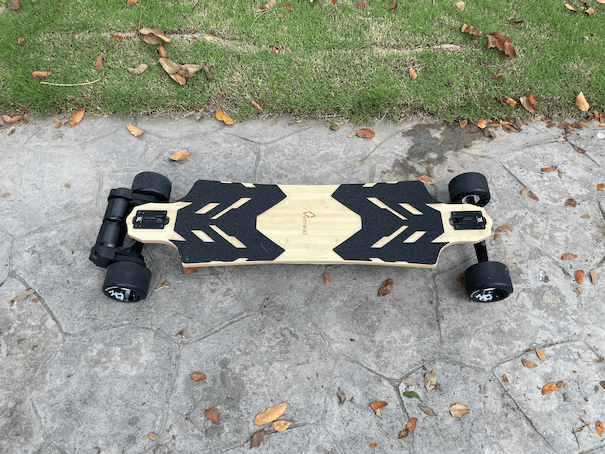
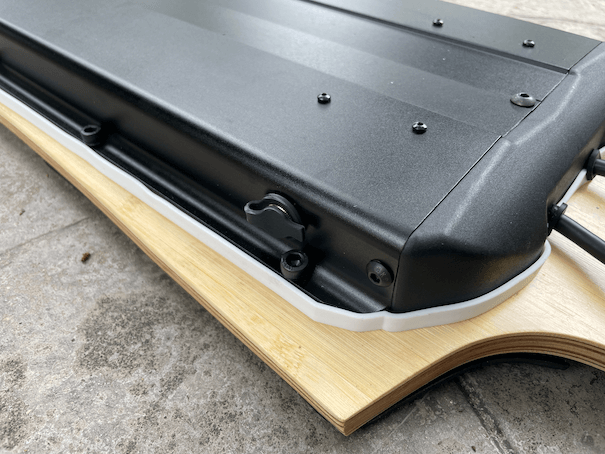
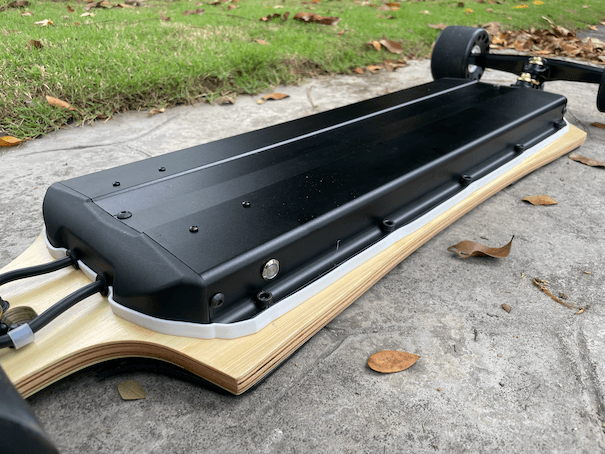
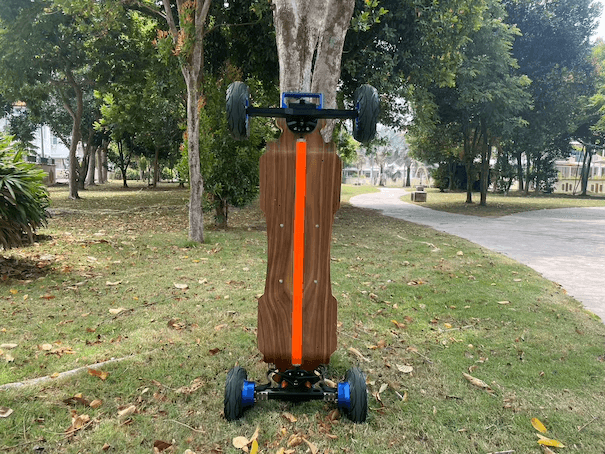
Starting with the deck, OMW is known for making carbon fiber decks that are actually flexible, as seen previously with the OMW Cavalry. The carbon fiber deck is not only relatively lightweight but should also be more durable than a bamboo composite deck.  It features a double drop deck design with a wide concave.

As mentioned in the intro, the flexibility of the deck is customizable. Riders have three flex options to choose from, catering to various riding styles and weight preferences; whether you prefer a more flexible deck for absorbing road vibrations and improving comfort during long rides or a stiffer one for more control and stability.

The one we have is a 2B deck, recommended to us by OMW based on our weight, which is around 154 lbs (70 kg)

ESC, Remote, and Battery – Hobbywing ESC and 12s3p 21700 648Wh 21700 Samsung 50S battery
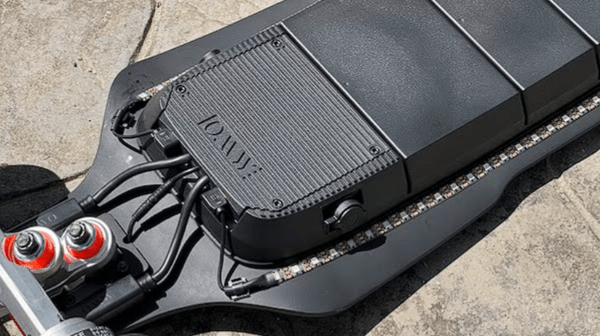
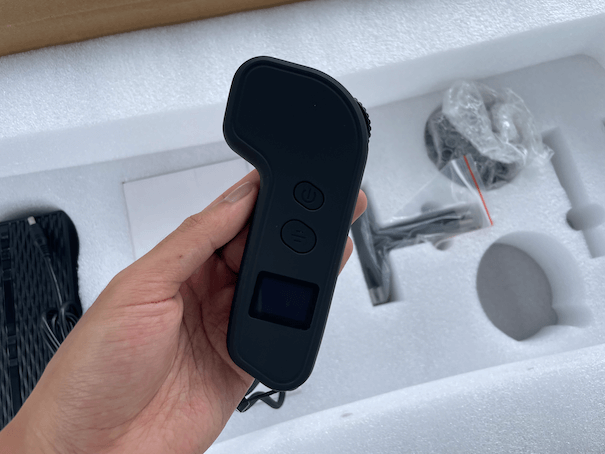
Next, just like with the OMWEV Cavalry, OMW stuck with what works by using the tried and true 12s Hobbywing ESC, which has become the gold standard for its smooth and intuitive control. It comes with four-speed modes and is paired with the standard Hobbywing remote, featuring an OLED display that provides real-time data such as speed and battery levels, and also has cruise control.

The Hussar also includes smart on/off technology, meaning the board powers up as soon as you power on the remote and you can also adjust performance settings via a mobile app.

The Hussar is powered by a 12s3p 21700 648Wh 21700 Samsung 50S battery, marketed to have a range of 37.3 miles (60 km). 

Motor – Dual 6374 Belt Motors:
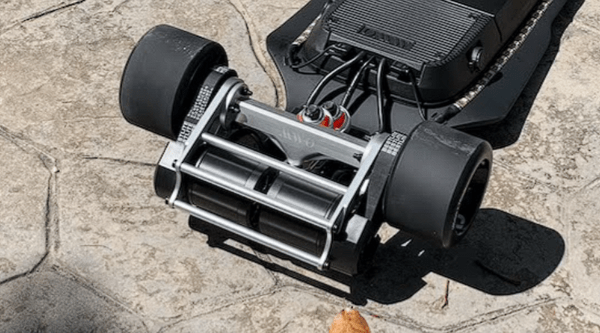
Speaking of power, the Hussar is equipped with dual 6374 belt motors generating a combined output of 8000W. While these numbers seem high on paper, they yield a comparatively modest top speed of 34 mph (55 kph), which we were able to reach in our test.

Trucks and Wheels:
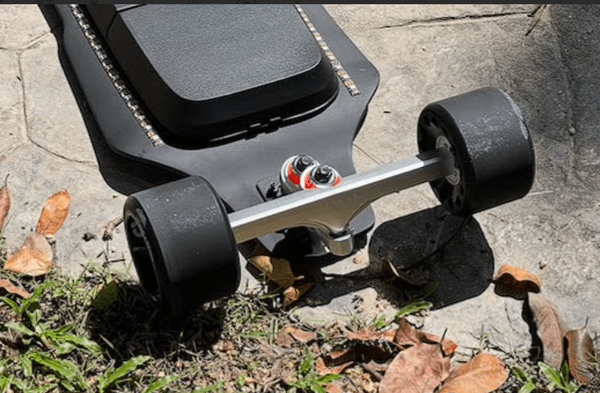
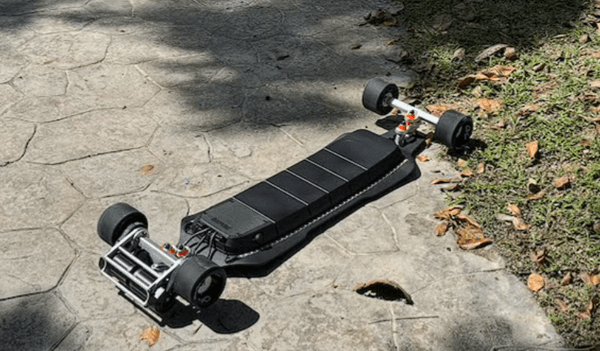
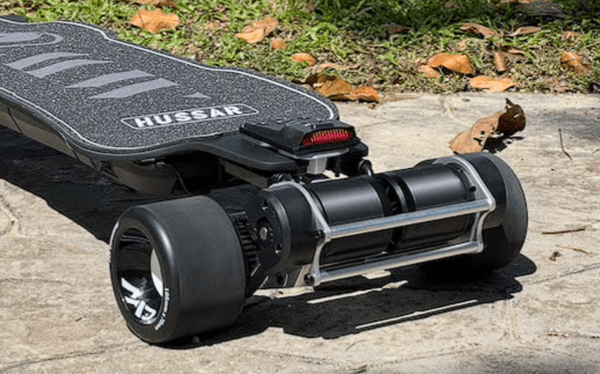
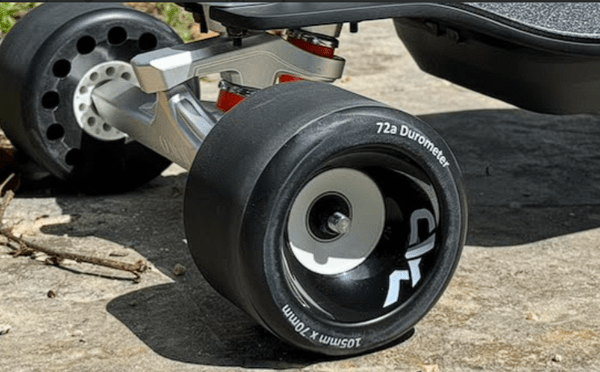
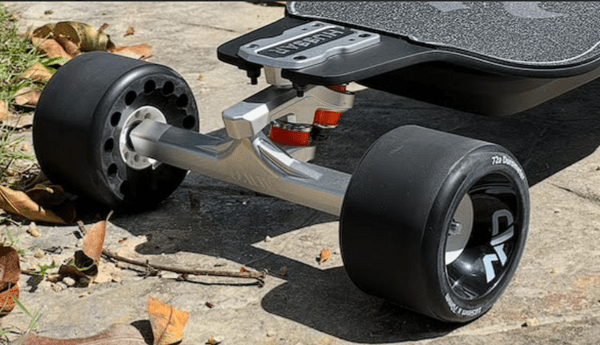
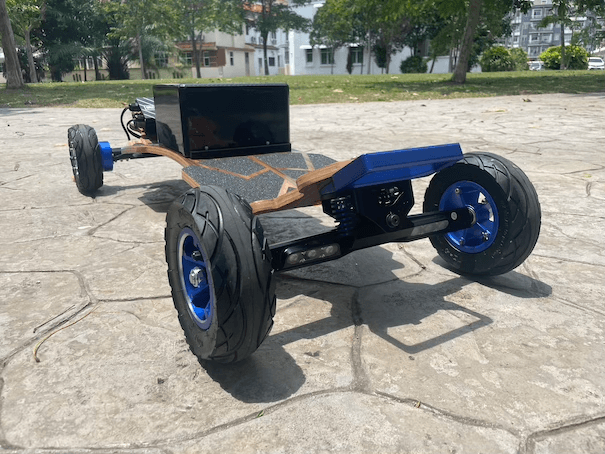
The Hussar offers two truck options: a forged double kingpin truck or a CNC double kingpin truck for an additional $110. Upgrading to forged or CNC trucks can be beneficial for durability, as they outlast cast trucks. Given that the Hussar is the kind of board you’ll be riding hard in various conditions, opting for this upgrade might be worthwhile. The CNC version should be more precise and also allow the trucks to be configured with street wheels, whereas the forged trucks are only compatible with 150mm or 175mm pneumatic wheels.

Our CNC trucks came with the MAD Wheelz, so we will be testing this configuration. We’re already familiar with MAD Wheelz, it’s great to see them offered as a standard option here.

All things Lights:
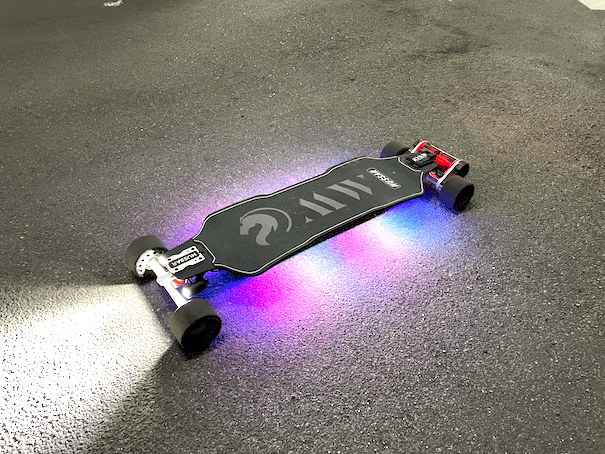
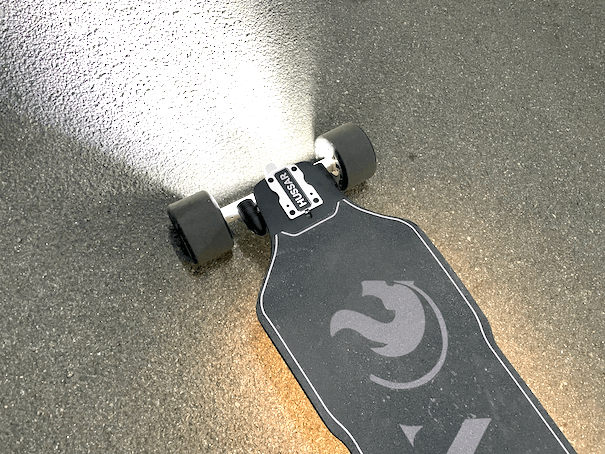
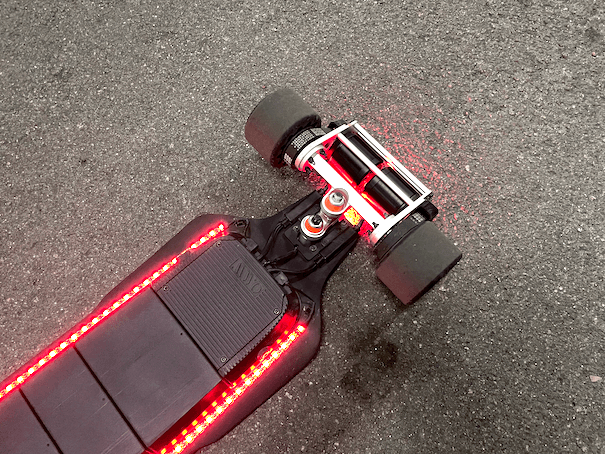
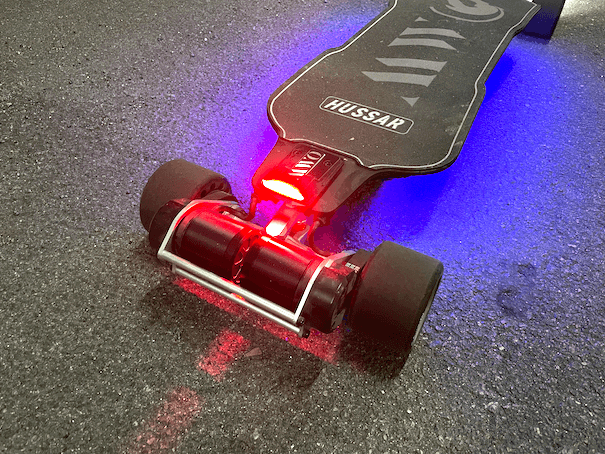
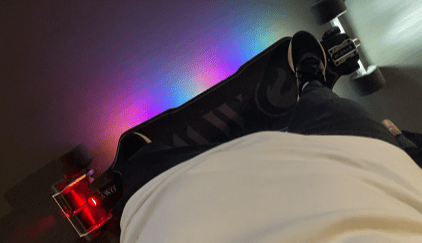
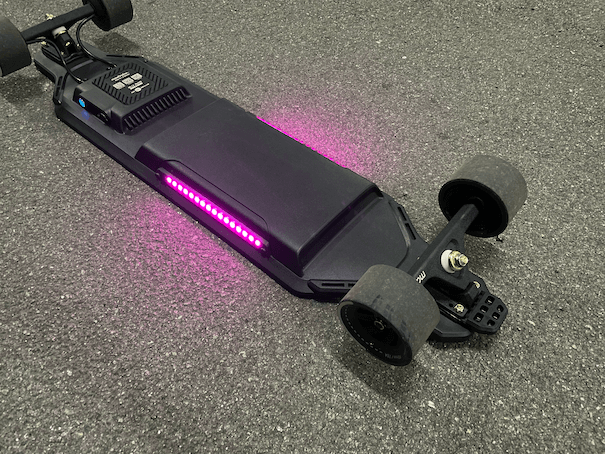
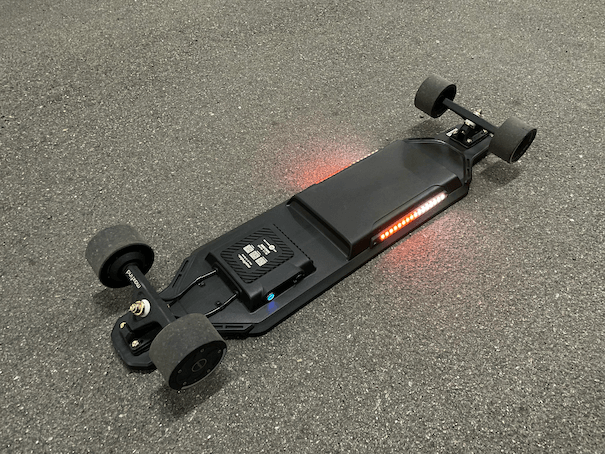
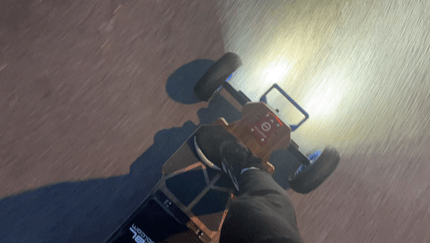
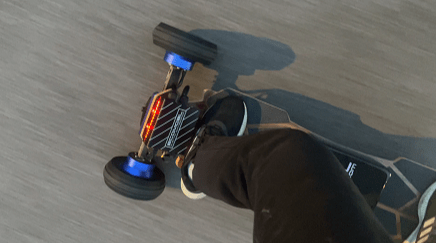
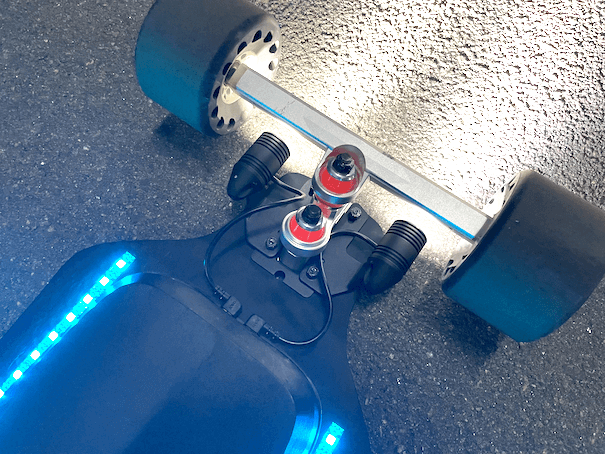
The Hussar comes with bright headlights, offering up to 3600 lumens of output, tail lights that light up when braking, and RGB deck lights, which you can toggle by double-tapping the remote.

Specs Summary of the Hussar
Comparing battery sizes, the OMW Hussar may fall short next to value brands like Verreal’s RS Ultra and the Meepo Hurricane Bamboo. However, neither of those options includes forged trucks. Plus, upgrading from a bamboo to a carbon fiber deck typically adds about $100 in value, and having a flexible carbon fiber deck is even harder to put a price on.

At ESHQ, we love crunching numbers and finding the best specs for the dollar, and we tend to favor brands that pack a lot of value into their boards. So, we’re pretty happy to see that, despite being a premium brand, the specs on the OMW Hussar still hold their own against Meepo and Verreal. OMW isn’t horsing around with the Hussar—it offers a premium look and feel without charging a premium price.

Riding Experience on the OMW Hussar
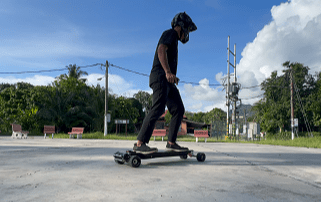
The defining feature of the OMW Hussar is its potential for aggressive riding.

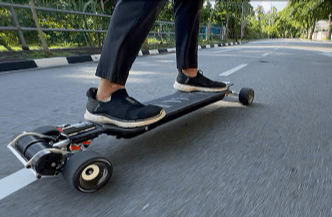
Many boards nowadays prioritize torque over top speed since that exhilarating launch from a standstill is hard to beat. The Hussar’s build is tailored to this experience. The truck, with a double kingpin design, is incredibly stable, making high-speed riding feel easy. In fact, we wish it could go faster because 34 mph didn’t feel fast when the board was this stable.

Another highlight is the strong braking system. While Hobbywing ESCs are known for their smooth and intuitive acceleration and braking, OMW has tuned the brakes on the Hussar to be more aggressive, allowing for more reckless riding with the reassurance that you can stop quickly if needed.

The CNC trucks also contribute to a more aggressive riding style. Though they don’t offer the most aggressive carving experience, they provide great stability while still allowing for precise control.

We love the deck, too. It’s wide, has a nice concave, and is comfortable to stand on. Having a flexible carbon fiber deck feels surreal, even though this isn’t the first OMW deck we’ve tried. That said, the carbon fiber deck doesn’t magically eliminate all road vibrations. With the 105mm MAD Wheelz setup, we still felt about 40% of the road vibrations.

Bamboo decks generally do a better job at absorbing vibrations, but a flexible carbon fiber deck is still leagues ahead compared to a stiff carbon fiber deck.

The board’s low ground clearance does cause it to bottom out occasionally, though not as much as other boards, like the Verreal RS Ultra. If you hate seeing scratches on your board’s enclosure, you might want to go for the 150mm or 175mm all-terrain wheels.

In terms of carving, the Hussar can make tight turns but offers less play than other double kingpin trucks. If you’re looking for a super carvy board, you might be disappointed, but most riders will appreciate the balanced configuration of these CNC trucks—they’re not too aggressive but stable enough for high-speed rides.

Verdict – of OMW Hussar
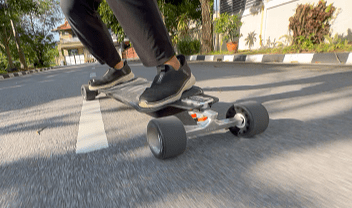
The OMW Hussar is a stunning board and a total thrill to ride. Its precision trucks and expertly tuned Hobbywing ESC deliver incredible control over speed and board.

And while OMW is a premium brand, $999 for a 12s3p carbon fiber board is about as good of a deal as you can get. So, if you are looking to buy an electric skateboard in the $1000 range, and 12s3p and 37 miles (60km) range are enough for you, this board should be one of your top picks, especially if you are looking for one with a flexible carbon fiber deck.

If you are interested in buying the OMW, be sure to check out our affiliate discount link here and use code: “ESKATEHQ” to receive $10 off during checkout.
It will help you get a small monetary discount and help us out too. On top of that, you’ll be tagged as an Electric Skateboard HQ customer and probably be treated better. Cheers!

Backfire Nalu Review – Premium, but only $349

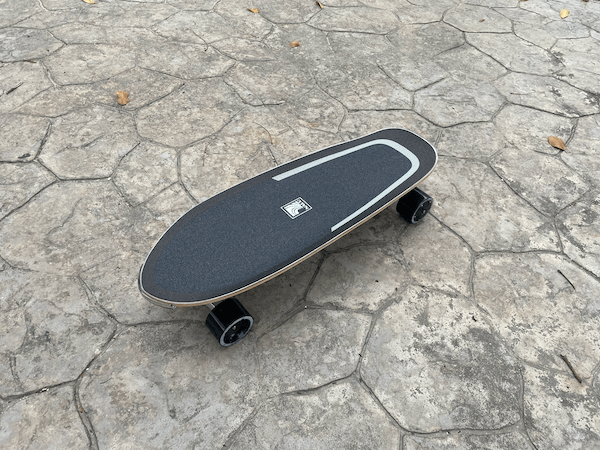
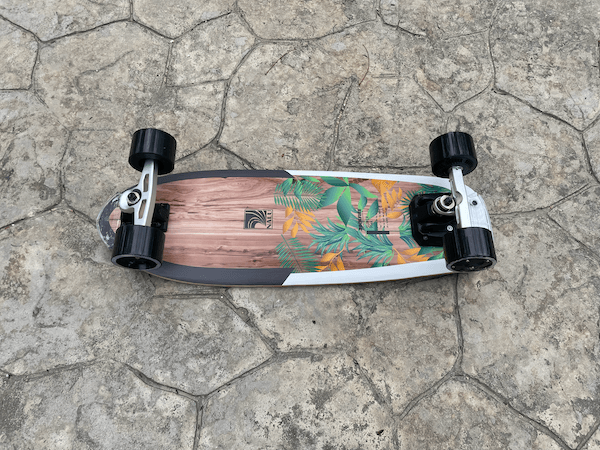
Backfire is no stranger to launching new products through Kickstarter, and they’re doing it again with the Backfire Nalu. Currently priced at $349 on Kickstarter, the Backfire Nalu is an electric shortboard equipped with a surf skate truck.

Unlike most electric skateboards under $400, the Backfire Nalu has a very polished look with four designs to choose from, each with different graphics for the deck and light colors. Beyond its appearance, the Nalu seems to use quality components despite its current low $349 price tag. But first, let’s go over the build and specs, starting with a closer look at the deck.

Backfire Nalu Specs:

Price$349
Battery99Wh Lithium Polymer battery
ControllerHobbywing ESC
Top Speed16 Mph (25 Kph)
Range12.5 miles (20 km)
DeckFibreglass and Maple composite
Motor340W hub motors

Deck

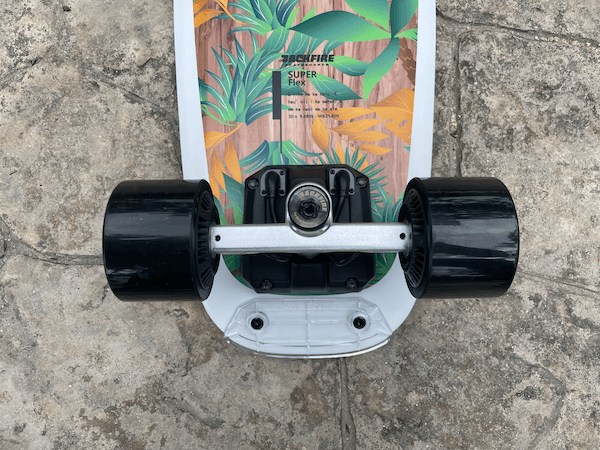
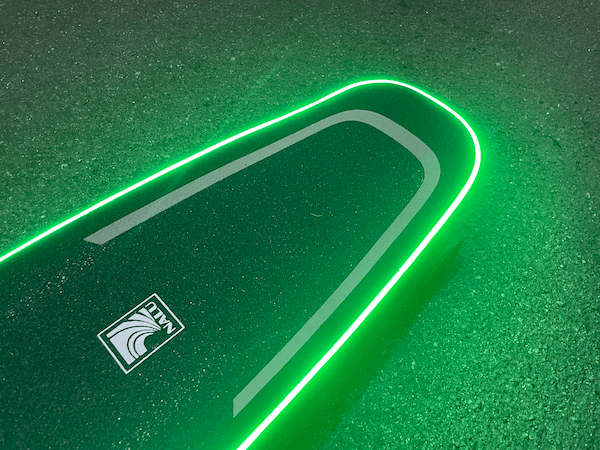
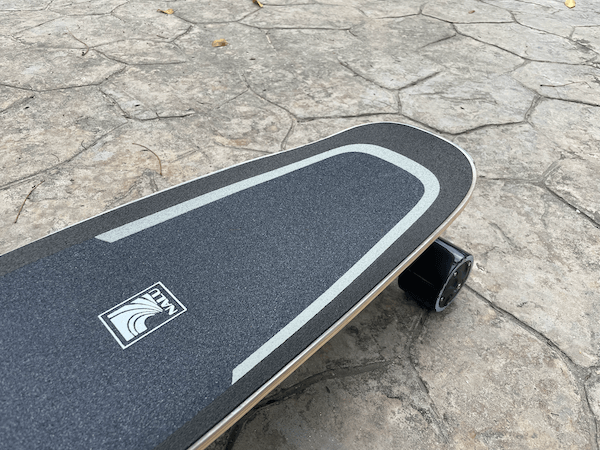
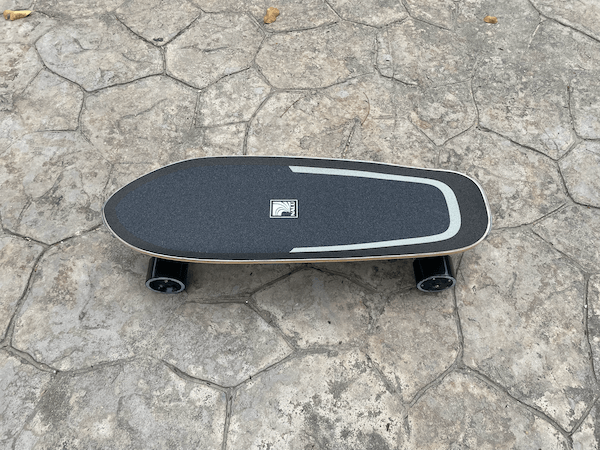
Starting off with the deck, the Nalu’s deck is 30″ in length and 10” in width—a typical size for a shortboard. It features a usable kicktail and a healthy concave for more responsive control.  

They’ve also added shock-absorbing grip tape, which is a nice touch since road vibrations can be particularly harsh on shortboards.

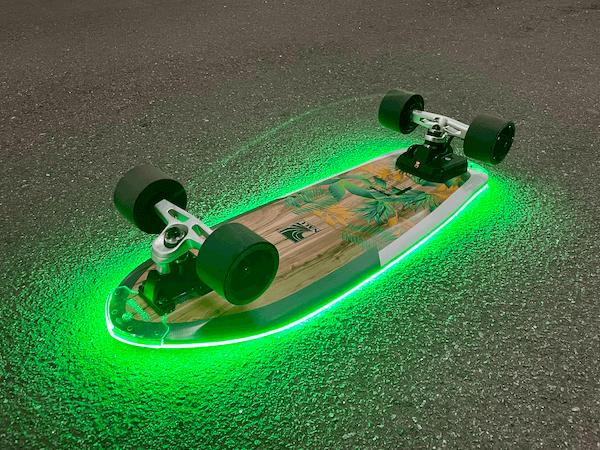
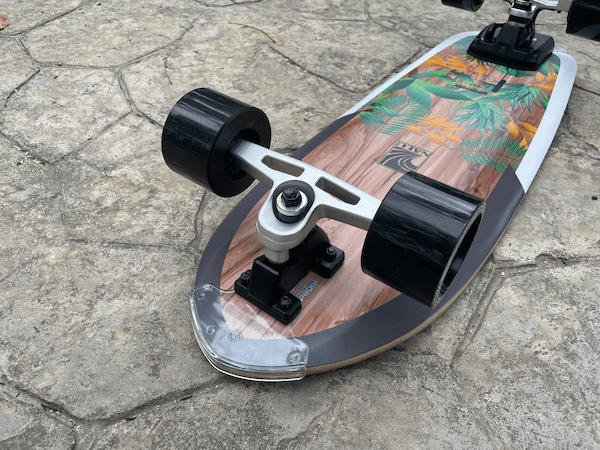
The deck is made from a fibreglass and maple composite, and it’s nice to see anti-collision pads included on the nose and tail to protect the beautiful deck. The transparent pads also allow the icy blue light strip to shine through. 

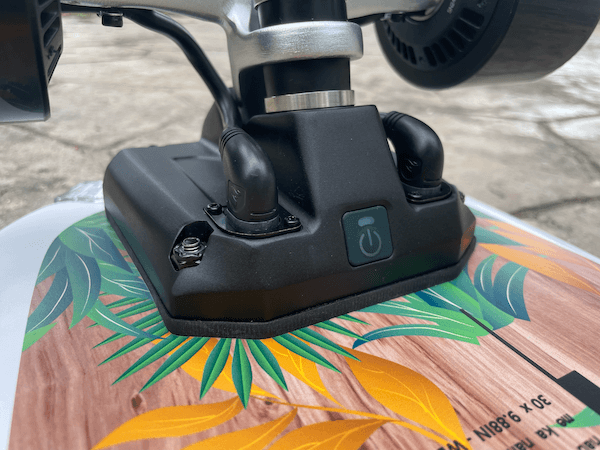
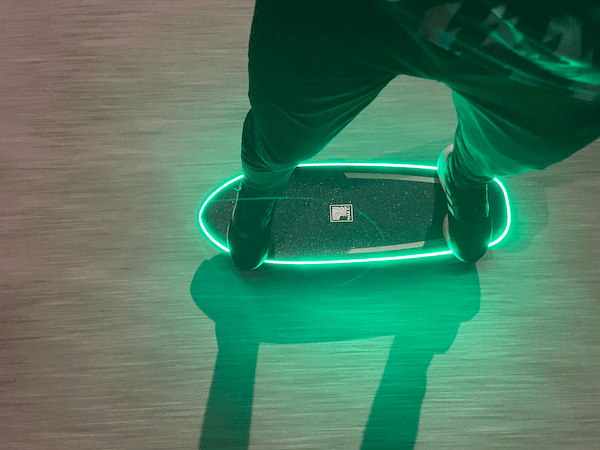
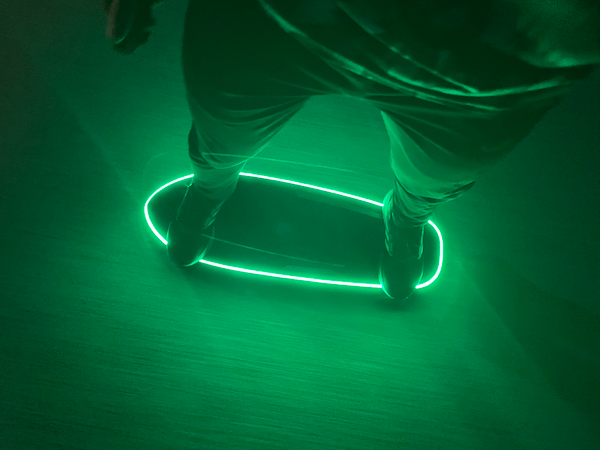
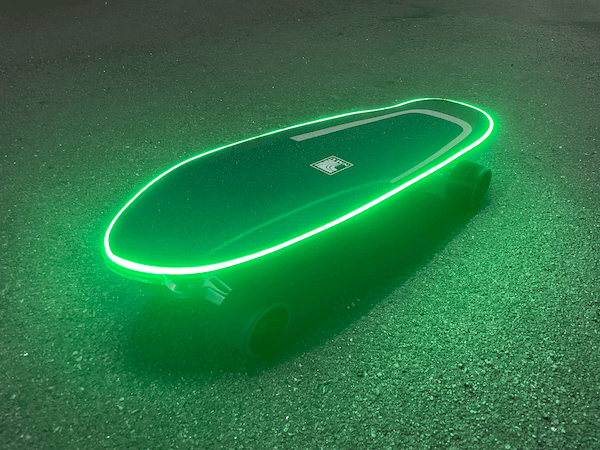
It’s almost 2025, and it feels like every board now comes with integrated lights! Jokes aside, they definitely turn heads when you’re riding at night. If you’re on the shy side, you can turn off the lights by double-clicking the power button on the remote.

Double-clicking the power button also lets you cycle between three light modes: normal, breathing, and blinking.

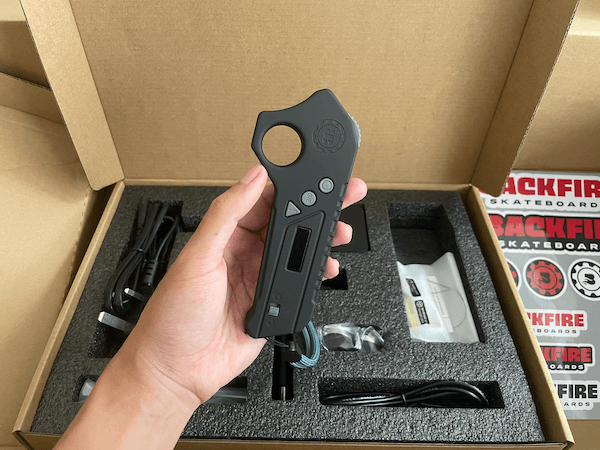
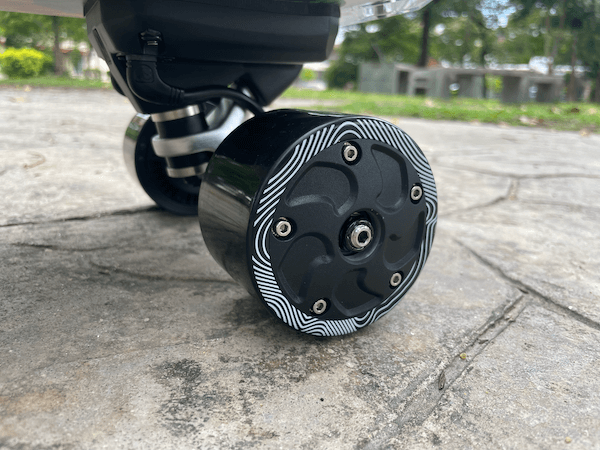
For some riders, the ability to “go stealth mode” is exactly what they want from the Backfire Nalu. Thanks to its integrated ESC and battery and quiet, hidden hub motors, the board could easily pass as a regular shortboard. 

Battery

Next, the battery inside the deck is a 99Wh Lithium Polymer battery. Its size makes it flight-friendly, though we recommend double-checking with your airline.

It’s worth noting that Backfire likely opted for a LiPo battery instead of Lithium-Ion to provide more punch in a smaller size. Most boards with deck-integrated batteries use LiPo for this reason. We love Lithium-Ion batteries for their longevity and safety, but Backfire has been using LiPo in boards like the Hammer Sledge, and we haven’t heard any negative reports. So, our concerns seem to have been overblown.

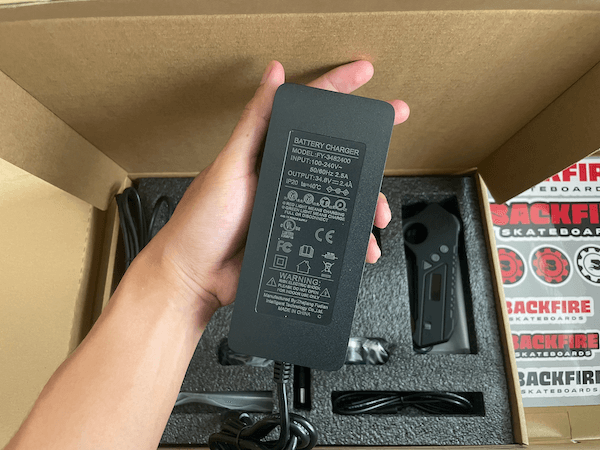
The battery is marketed at a range of 12.5 miles (20 km) on a single charge. It takes 2 hours to fully charge with a standard charger or just 55 minutes with a GaN fast charger.

ESC and Remote

Moving on to the ESC, the Backfire Nalu uses the standard Hobbywing ESC—thankfully.  

We were a bit worried that Backfire might pull an “Exway Ripple” and use a LingYi ESC instead. 

While LingYi ESCs are smooth, especially on casual boards with hub motors, we always prefer the slightly more refined and intuitive control of the Hobbywing ESC, not to mention the better-looking remote that Backfire typically pairs with their boards.  

Motor and Wheels

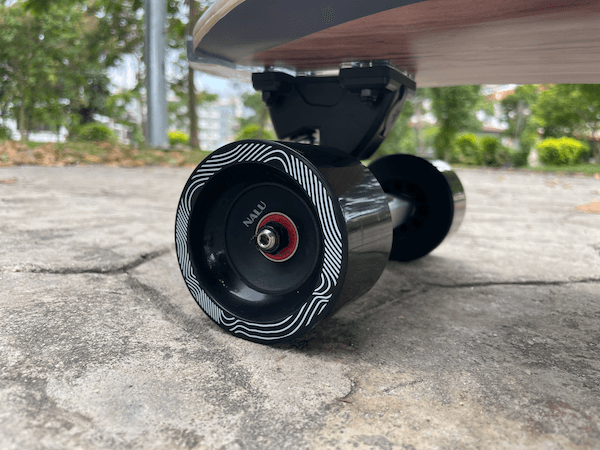
As for the motors, the Backfire Nalu features a pair of 340W hub motors, and it’s marketed to reach a top speed of 16mph (25km/h). While this isn’t fast by any means, it’s a comfortable cruising speed for sidewalks. The motors are pretty quiet, which fits with the stealth theme.

The Nalu’s wheels are 80mm, which is quite typical for a shortboard. This gives the board a nimble feel but may limit your ride to sidewalks or well-paved roads.

Trucks

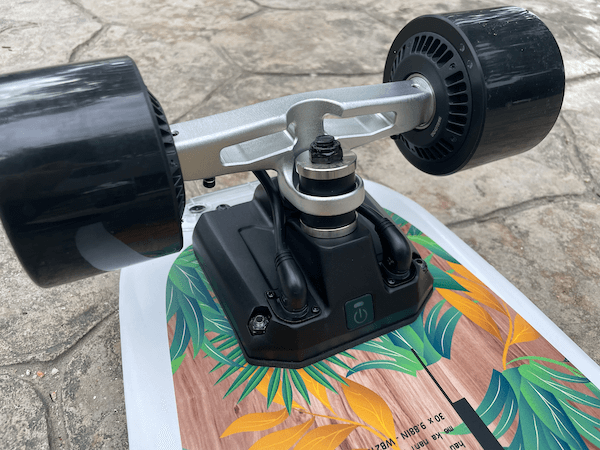
One unique aspect of the Nalu is the Surfskate front truck. And it’s not just any surf truck—it’s a forged CNC-precision surf truck. I’m not sure how necessary it is to use such a durable forged truck for something that tops out at 16mph, but I guess Backfire didn’t want to leave any room for accusations of skimping on quality.

Specs Summary of the Backfire Nalu

Many brands have tried to make their shortboards as light as possible. A recent example is the Exway Ripple, which weighs 13.1 lbs (5.9 kg). The Backfire Nalu beats it, weighing just 12.8 lbs (5.8 kg). Both boards are pretty refined, but Backfire uses the Hobbywing ESC, slightly larger 80mm wheels compared to the Ripple’s 75mm, and a Surfskate front truck instead of a traditional reverse kingpin truck like the Ripple.

But I have to say, when it comes to shaving weight, both of these boards lose to our DIY Orbiter Shrink, which weighed only 10 lbs (4.5 kg) and was only slightly less polished.

Riding Experience on the Backfire Nalu

The Backfire Nalu rides as expected, for the most part. Speed control is super smooth. Braking and acceleration are comfortable and intuitive thanks to the Hobbywing ESC.

What takes time to get used to is the Surfskate truck. It could be the short truck hanger or just how Surfskate trucks behave, but when we leaned hard to turn, the board would topple over if we leaned past a certain tipping point. It took us some time to learn that tipping point and to stay within it. 

Once we got past that, we really enjoyed what the board offered, a super nimble and responsive ride. It’s fun to carve with the Nalu, as the trucks are so quick. You can thread through pedestrians with ease. Not that you should, but you could if you wanted to. For even tighter turns, you can always use kick turns. 

The good news is, even with the Surfskate trucks, the Backfire Nalu is completely stable at its top speed, which is not so much of a challenging feat. After all, the top speed is only 16mph.

As expected, road vibration is pretty strong; the shock-absorbing grip tape can only do so much. But we don’t really blame the board for this, as it wasn’t designed for rough roads anyway.

Verdict – Backfire Nalu

So what is the verdict? The Backfire Nalu was designed to be a portable ride that performs well and looks good, and it achieves just that. With forged trucks, excellent build quality, and pretty lights, we predict that the Backfire Nalu will retail for $469 after the crowdfunding campaign ends. So, it’s an amazing value if you can grab it at the current crowdfunding price.

We don’t usually see eye to eye with how Backfire makes their products but we love this one in particular. The Backfire Nalu makes sense to a lot of people. Beginners will find it easy to ride, and veterans will appreciate its agility. And at this current $349 price point, it definitely will sell like hotcakes.

If you are interested in buying the Backfire, be sure to check out our affiliate discount link here and use code: “ESKATEHQ” to receive $5 off during checkout.
It will help you get a small monetary discount and help us out too. On top of that, you’ll be tagged as an Electric Skateboard HQ customer and probably be treated better. Cheers!
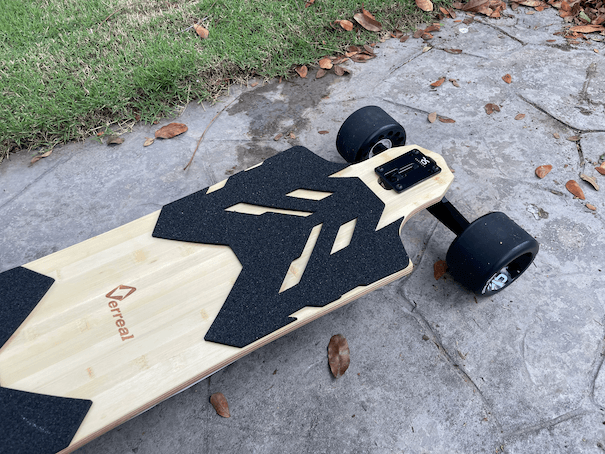
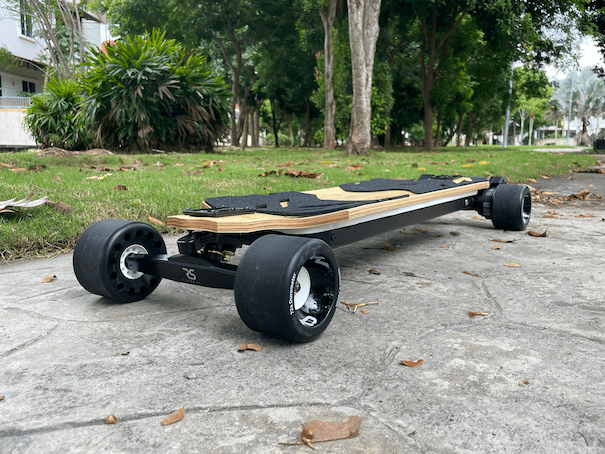
Verreal RS Ultra Review – All these for just $999?

It has been a while since Verreal received many spotlights, and our team almost forgot the brand existed. For those unfamiliar with Verreal, it is an affordable brand that has been around since 2018. 

Verreal has had a knack for keeping it simple, only investing in parts that had the most impact on the riding experience, skimping on everything secondary or cosmetic, and passing the end results to the customers at a very low price.

They started with Verreal F1, a fun $400 electric longboard that, despite its simplicity, was unique for using a drop deck and hence gave a fun low-to-the-ground ride feel.

We wrote about Verreal F1 many years ago here.

That being said, we haven’t heard much about the Verreal RS Ultra that we are reviewing today, but we are pretty much expecting the same formula. It retails for $1099 but with our discount code you can snag one for $999. But first, let’s run through the specs.

Verreal RS Ultra Specs:

Price$999
Battery12S4P 725.8Wh Molicel P42A 21700 cells (16.8Ah)
ControllerHobbywing ESC
Top Speed32 Mph (52 Kph)
Range40 miles (60 km)
Deck6-ply Canadian Maple 2- 2-ply Fiberglass, and 2-ply Bamboo
Motor6374, 170kv, Dual 4000W Belt

Deck:

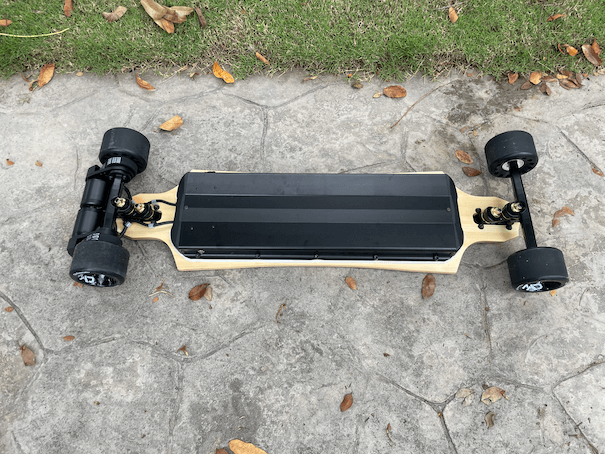
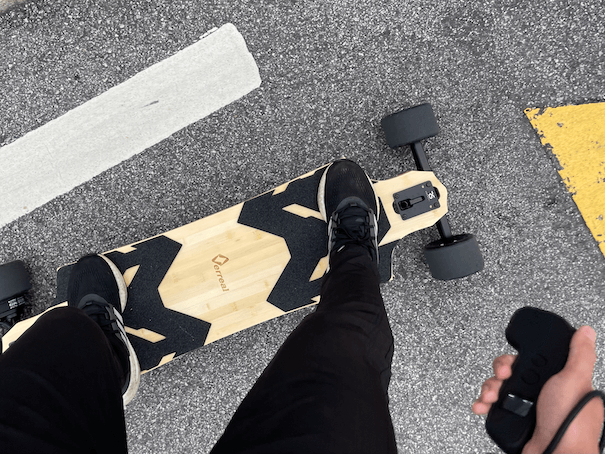
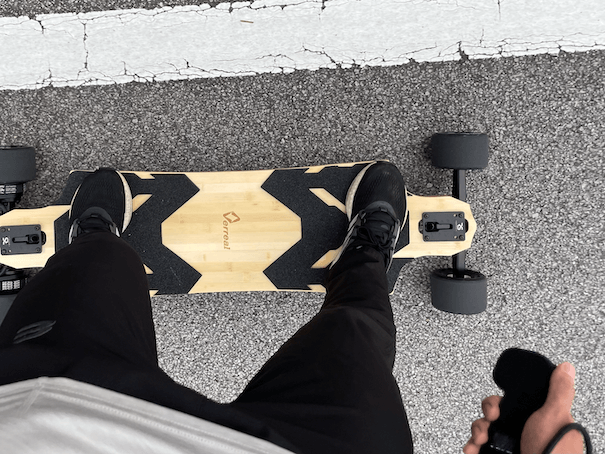
Starting with the deck, the RS Ultra has a double drop deck made from 6-ply Canadian maple 2- 2-ply fiberglass, and 2-ply bamboo. We love double drop decks, and the low-to-the-ground ride feels that double drop decks offer. The deck features a good W concave, which is very comfy and snug for foot placement. 

We were expecting Verreal to skimp out on the quality of the deck, but this one looks like it was made with good material. The board-length enclosure, however, is bad news; it means the board has zero flex and is stiff as hell. While it’s good for those who like the responsive and stable feel of a stiff deck, it is bad news for us, as every team member of ESHQ would much prefer a flexible deck. But on second thought, with such low ground clearance, the board probably couldn’t afford to have flexibility anyway. So maybe this is a feature, not a bug.

Battery :

Next, hiding inside that full-length enclosure is a huge pack of 12s4p molicel P42A.
This means 16.8Ah at 725.8wh, which is a crazy big pack as we only expect 12s3p for a board at $999. And you can’t ask for better quality cells than the trusty Molicel P42A. The $999 package came with a standard 2.5A charger, and for $100 more, you can get the 6A charger, which halves the charging time to under 3 hours.

The Verreal RS Ultra has a marketed range of 40 miles or 60km. For context, this is 20% more range than the $1199 Exway Flex 2 Pro was marketed for with its 12s2p Samsung 50S 432wh battery.

ESC and Remote:

Moving onto the ESC, Verreal has always been sticking with the tried and true Hobbywing ESC which comes with four-speed settings, meaning, it has the exact same smoothness of control as premium brands that are priced a lot higher. For those who are not familiar with Hobbywing ESC, it is the most popular electronic speed controller that’s proven to deliver perfectly smooth and intuitive speed control.  It also has a smart turn-on feature, meaning the board powers on automatically when the remote is turned on. It’s paired with the latest standard Hobbywing Remote, which is pretty comfortable and fairly good-looking.

Top speed locking feature: 

The Verreal RS Ultra provides decent speed control options, with an easy-to-use limiter feature. You can cap the top speed at 20 km/h through a slightly tedious process with the remote, which might be useful if you’re commuting in areas with strict speed limits, like in some European countries. It’s practical, but the method for setting the limit—holding the throttle and tapping a button 10 times—feels a bit clunky. Unlocking the full speed is just as awkward. It gets the job done, but the design could have been a bit more intuitive.

Motor:

As for the motor, the RS Ultra is running on a hefty 6374, 170kv, Dual 4000W belt motor.
These are pretty solid specs for motors and more than capable of providing good torque for an all-terrain setup. We know that for a fact, as they are the exact same motors donned by the infamous Meepo Hurricane, and that board had already made a name for itself as one of the more powerful AT boards.  

Read our review of the Meepo Hurricane here.

It’s marketed to reach a top speed of 32mph (52kmh), which we managed to hit in our tests.

As expected, if you want a bash guard for the motors, they are paid add-on, as Verreal tends to want to trim all the excess fat to keep the price to a minimum.

Trucks and Wheels:

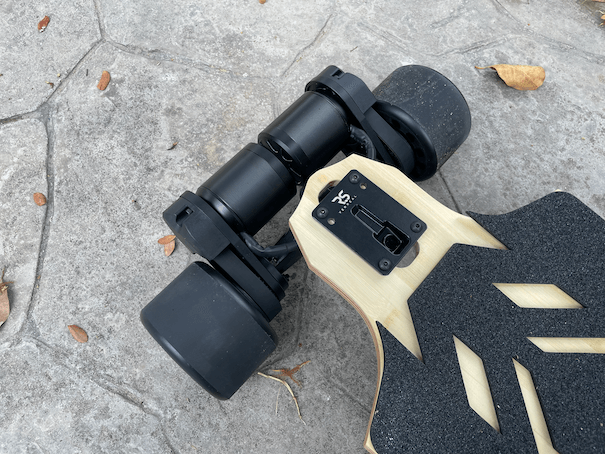
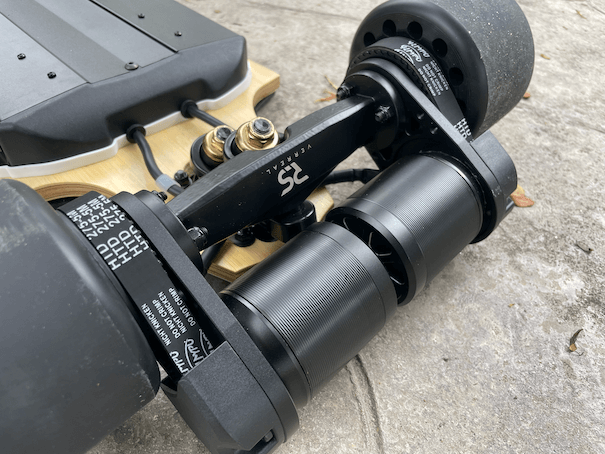
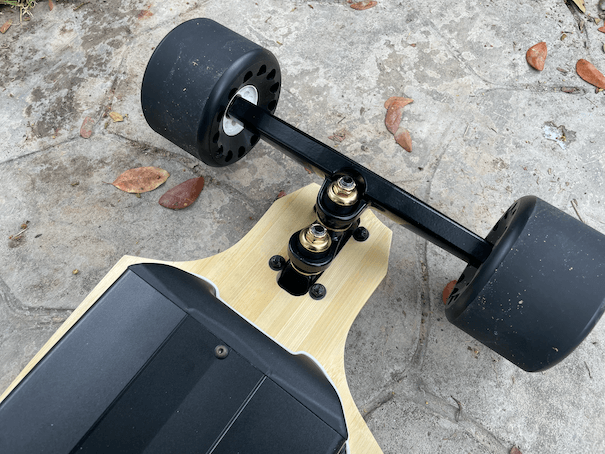
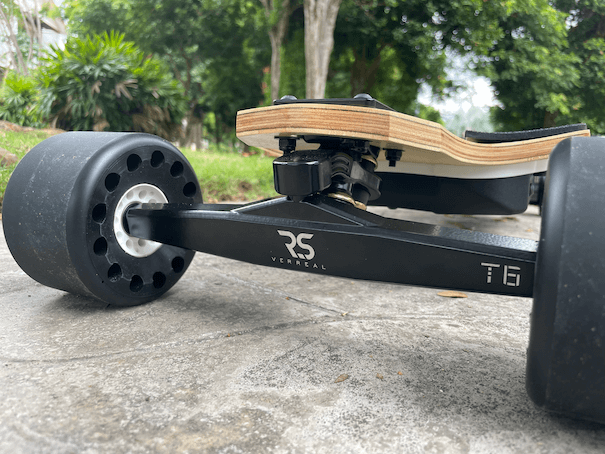
As for the trucks, Verreal went with DKP cast trucks. While we would prefer a forged truck for a board that can go 32mph (52 kph), obviously, Verreal’s priority is to keep the retail price as low as possible. 

Anyways, we hope that this DKP truck is at least amongst the better ones, which can balance ease of turning and stability well. We will find out in our ride test later.

The default setup of the Vereal RS Ultra came with 105mm Mad Wheels V2, but they also offer 150mm pneumatic wheels as an option. This is our first time riding on Mad Wheels, but these wheels have been making a name for themselves lately and many Chinese brands have started to use Mad Wheels as stock options for their mid to premium-priced boards. We look forward to trying them out for the first time.

Specs Summary – of the Verreal RS Ultra:

As we suspected, Verreal sticks to its usual modus operandi and gives us a board with a giant battery & powerful motors that are beyond what was expected at $999. But we were also surprised that we didn’t notice any corner cuts. 

Unlike rubbish brands from Amazon or Aliexpress, Verreal is smart enough to insist on putting the gold standard Hobbywing ESC into their boards. Also, putting Mad Wheels V2 as the stock option wasn’t exactly a cost-cutting move. 

That means as long as the truck is good and the skate parts come together well, the Verreal RS Ultra should be a decent, if not above average ride with amazing range and power.

Riding Experience on the Verreal RS Ultra

It took us just a minute on the board to know Verreal made great choices in putting the board together. 

First, the low-riding height with the double-drop deck plus the double kingpin truck means that this board felt super agile and zappy. 

The Mad Wheels were amazing too, they felt very similar to the Boosted 105s, whose OEM version had been making rounds recently. Maybe the Mad Wheels is even based on that, we were just guessing here But what we do know is that they are super soft and super grippy. They took away 80% of all the road vibrations, something that we thought would’ve been a death sentence to this board considering its full board length enclosure which gives the deck zero flex. With this setup, road vibration is barely felt. We also love the ride feel of its soft, grippy wheels. These soft wheels felt great when carving.

However, the wheels aren’t big enough to give us a safe ground clearance. We bottom out every time we ride over road bumps, and we wonder how long this enclosure is gonna survive, given that we ride in places with quite a lot of bumps. A 120mm wheels may give more leeway, but of course, you could just go with the 150mm pneumatic wheels option and never worry about bottoming out ever.

Another thing that was better than we had expected was the Hobbywing ESC.
We expected Verreal to just “throw in the latest stock Hobbywing ESC and call it a day”, but they seem to also put some good customization into it, and the fastest S+ mode is more powerful than what the default Hobbywing ESC typically feels. This is great as the lower riding height makes it easy to maintain balance; hence, the extra kicks make it extra fun without any downside.

Speaking of balance, we are happy to find that the double kingpin trucks here are amongst the good ones that found a good balance between ease of turning and stability. Carving on the Verreal RS Ultra is really fun, yet we can ride fairly fast at around 28mph (45 kph) without wobbles and without the need to further tighten the trucks.

All in all, when it comes to the riding experience, there’s nothing that we can point to that was the second class to a premium brand. Whether it is the power, manoeuvrability, responsiveness or ride comfort, Verreal RS Ultra is at the same level as any premium board. Thanks to the aggressively low riding height, it is an even more interesting ride compared to most boards.

Verdict of the Verreal RS Ultra:

Verreal has been an afterthought to us for a few years now, so we are pretty surprised by how much we like the RS Ultra. Compared to its quote-unquote full-priced competitors, we didn’t see any obvious flaws with the RS Ultra, except perhaps it went with cast-truck instead of forged trucks. While the board doesn’t have the tip-top polish and packaging and has less bells and whistles than other 2024 boards, like the recent trend of adding RGB lights, our riding experience on it has been nothing but top-tier. Factoring the big battery that it has, we could safely say that, at $1099 ($999 with our discount code, btw), nothing currently beats the value that the Verreal RS Ultra offers.

If you are interested in buying the Verreal, be sure to check out our affiliate discount link here and use code: “ESKATEHQ” to receive $100 off during checkout.
It will help you get a small monetary discount and help us out too. On top of that, you’ll be tagged as an Electric Skateboard HQ customer and probably be treated better. Cheers!
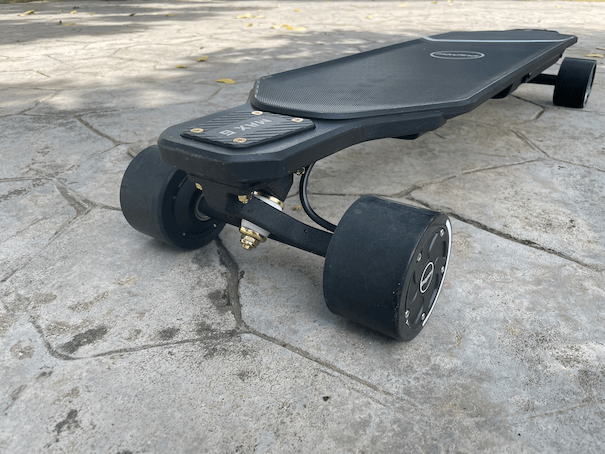
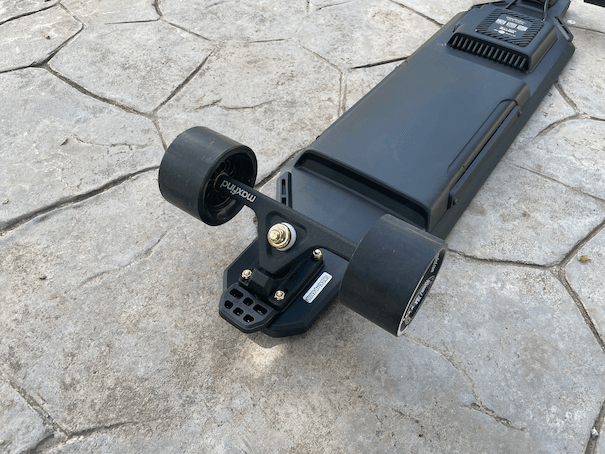
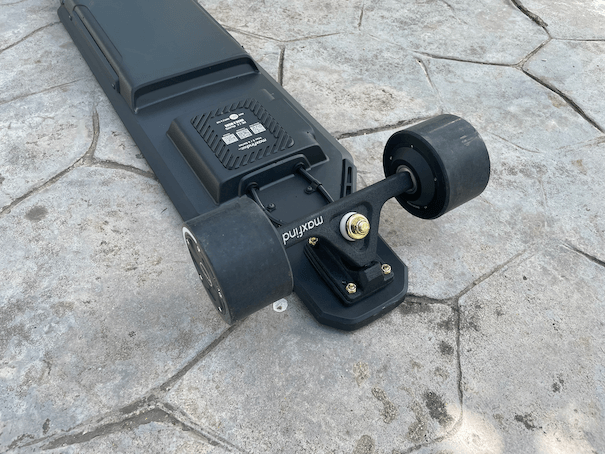
Maxfind Max 5s Review – RGB everything!

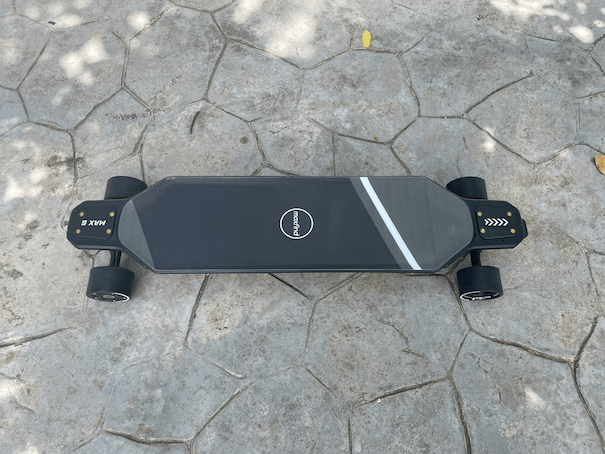
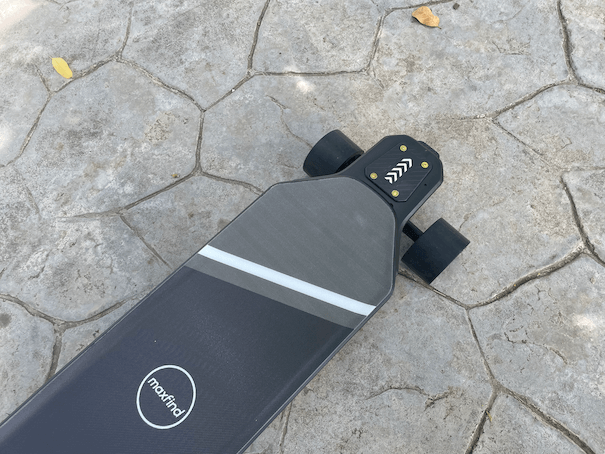
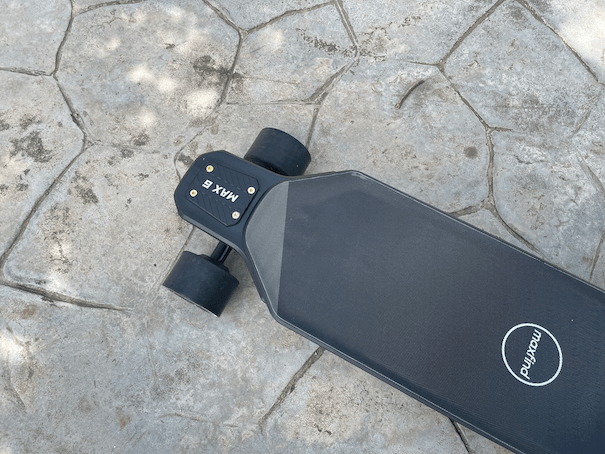
This is the Maxfind Max 5s, Maxfind’s latest refresh of their affordable electric skateboard lineup. It’s priced at $499, which is a bit higher than most affordable e-skateboards that usually hover around the low $400 range. This pricing strategy is in line with Maxfind’s approach of setting a slightly higher price but offering better quality parts in exchange.

Maxfind Max 5s Specs:

Price$499
Battery4.4AH 10s2p 18650 cells
ControllerHobbywing ESC
Top Speed23.6 Mph (38 Kph)
Range15.5 miles (25 km)
DeckX Composite deck
Motor650W*2 Hub drive

Deck – X Composite deck:

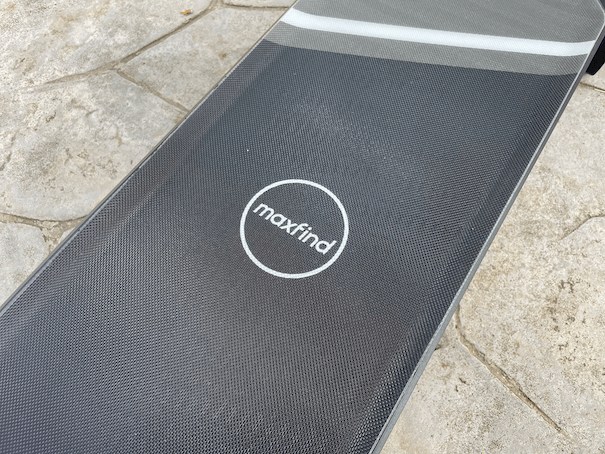
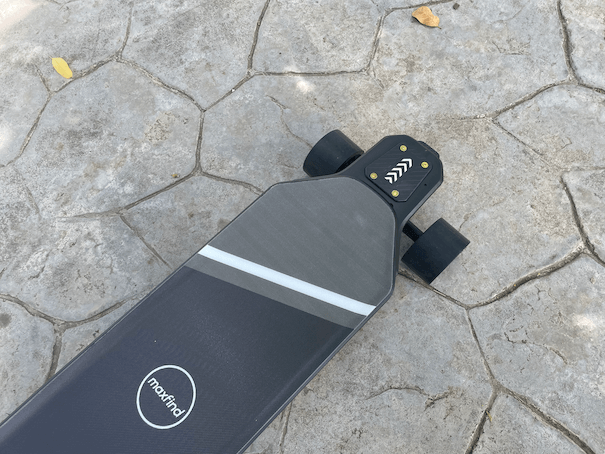
Starting with the deck, the Maxfind Max 5s uses the same X composite deck as the Max 6, which is said to be stronger than your average Maple and Bamboo composites. It’s a deck with only a slight flex and is pretty narrow. But we do quite like it’s pronounced U-shape concave, which makes foot placement nice and snug. The design of the shock-absorbing grip tape also looks pleasant in our eyes.

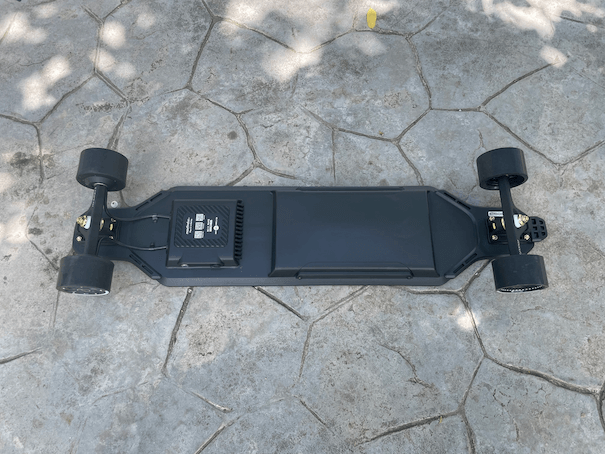
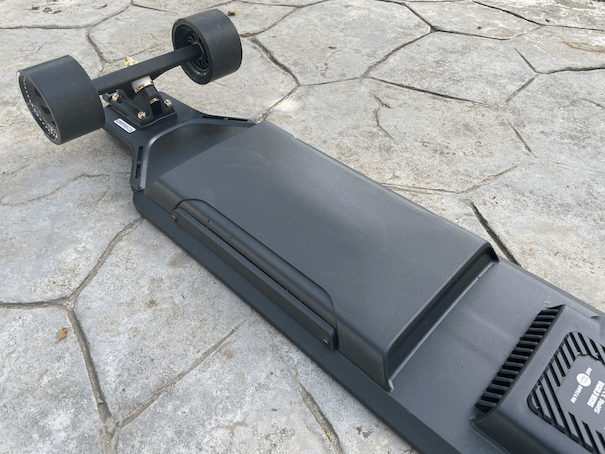
This is an integrated deck with hub motors, so it should be one of the most waterproof budget electric skateboards out there. Many eskate have some IP rating; we don’t trust those with our board, but with an integrated electronic and runs on hub motors, we trust the Max 5s IPX5 splashproof rating a little bit more.

Battery –  4.4ah, 10s2p 18650 Cells:

Moving onto the battery, the Maxfind Max 5s is powered by a 4.4AH, 10s2p configuration using 18650 cells. The marketed range is up to 15.5 miles (25km), but in our tests, we managed to achieve only 7.8 miles (12.6km).

This is a bit underwhelming, especially coming off from reviewing the Max 6, which has an extraordinary range. We expect affordable eskates to have at least a 10-mile (16km) tested range, and the Max 5s fell short of that benchmark. 

Maybe, the RGB lights took a small bite out of the battery, affecting the overall range.

Esc And Remote – Hobbywing Esc And Remote:

Next, the Maxfind Max 5s uses the same tried and true Hobbywing ESC as the Max 6. For the remote, it’s likely the standard Hobbywing remote with a custom casing. It has a screen for telemetry, comes with 4 speed settings, and you can also pair it with their mobile app to customize your ride profile.

Motor – Dual 650w Hub Motors:

Moving onto the motors, the Maxfind Max 5s runs on dual 650W hub motors, which is higher than most affordable eskates that typically have around 550W. The marketed top speed is 23.6 mph (38 km/h), which is pretty standard among affordable electric skateboards, and we had no problem hitting this speed during our tests.

Truck and Wheels – 45° Max III Trucks and 90mm PU Wheels:

Next, as for the trucks and wheels, the Maxfind Max 5s uses the same custom 45° Max III Trucks as the Max 6. These are CNC-forged trucks, which are more durable and safer than cast trucks. For some skaters, having a forged truck is a must for safety, and finding one on a $500 board is a big plus for the Max 5s.

However, there is some bad news, too. From our time with the Max 6, we know these trucks weren’t the most responsive and seemed to have a limited range of turning. More on that later.

For the wheels, you get 90mm Polyurethane wheels, which is nothing extraordinary here.

RGB Lights:

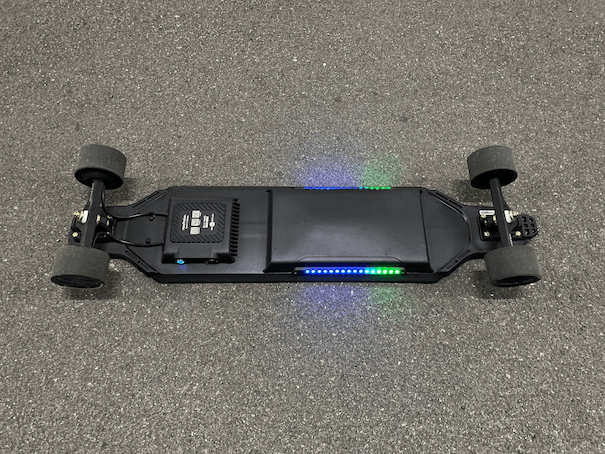
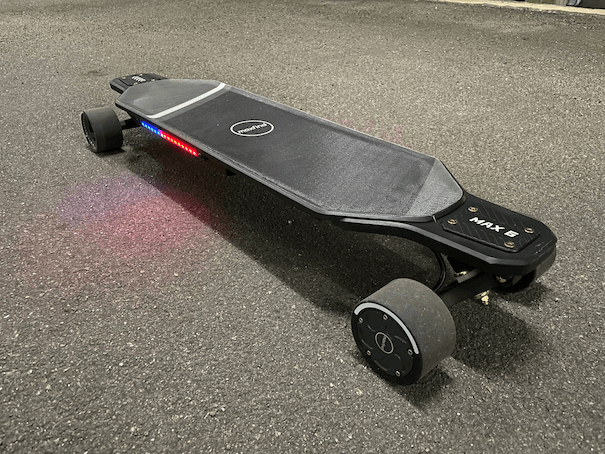
The Max 5s also has RGB atmospheric lighting underneath the deck, along the sides.The RGB lights cycle through 3 modes, none of which stay on a single color. You can turn the lights on and off with the remote. It also has a brake light that will turn red when we brake.

Although the lights are not as bright as the LED lights lining the deck, it is still a wonderful addition for a board under $500.

Specs Summary of Maxfind Max 5s:

As we mentioned, Maxfind always prices its board higher than competitors but gives a little bit more in terms of part quality. Max 5s is exactly that. If we judge the Max 5s solely on the motors and battery, it is merely on par with competitors that are priced around $400 and is about $100 overpriced.

However, it does have an interesting integrated composite deck, a safer forged truck, and the RGB ambient light. Even though we already knew the truck wasn’t the most responsive, it is at least durable and safe. And while the lights aren’t the brightest, they do add some spice to the ride.

So, if you value forged trucks and ambient light more than $100, the Max 5s will be pretty good value on paper.

Riding Experience on the Maxfind Max 5s:

The general theme of the Maxfind Max 5s is that it offers an overall comfortable ride but lacks an outstanding personality.

Firstly, the board is comfortable due to the smooth speed control provided by the Hobbywing ESC. As you should already know, Hobbywing ESC is very smooth and precise with both acceleration and braking, giving the industry the gold standard for predictable and smooth control. Plus, the deck’s U-shape concave makes our feet feel snug and secure, adding to the overall comfort.

The torque is respectable for a hub drive. It’s good enough to make the ride fun but not thrilling, and wouldn’t challenge any seasoned riders. Perhaps this is a boon for beginners; you are not likely to hurt yourself with the Max 5s, while it is still plenty strong to go up any incline.

Another aspect that’s good for beginners is the stability of the trucks. This stability makes riding at top speed easy and reassuring. However, the shortfall here is that the trucks are not very responsive and have a limited turning range. We did loosen up the trucks, but it still felt pretty limited. This means the board isn’t the most fun for carving and may feel a bit stiff when trying to make sharper turns.

And about road vibrations, of course, it’s bad. This is expected since the Max 5s is a hub-driven board with a stiffer deck. While the shock-absorbing grip tape helps to some extent, it’s not a game-changer. Road vibrations are about 20% harsher than what we experienced with the Max 6, so you will feel the rougher surfaces more on this board.

Verdict – Maxfind Mas 5s:

It’s not 2017 anymore, and there are plenty of options when it comes to buying an electric skateboard for less than $500. It might sound like a criticism to say that the Max 5s’s best qualities are just its looks, the lights, and perhaps the durability of the deck and the forged truck; however, I’m sure there are people who value these qualities. And, beneath it all, the Max 5s is still a good overall ride.
If you like the looks and need a forged truck, go for it.

If you are interested in buying the Maxfind, be sure to check out our affiliate discount link here and use code: “ESKATEHQ” to receive $25 off during checkout.
It will help you get a small monetary discount and help us out too. On top of that, you’ll be tagged as an Electric Skateboard HQ customer and probably be treated better. Cheers!
Ecomobl Ripper Pro Review – The most affordable electric mountainboard. Period.

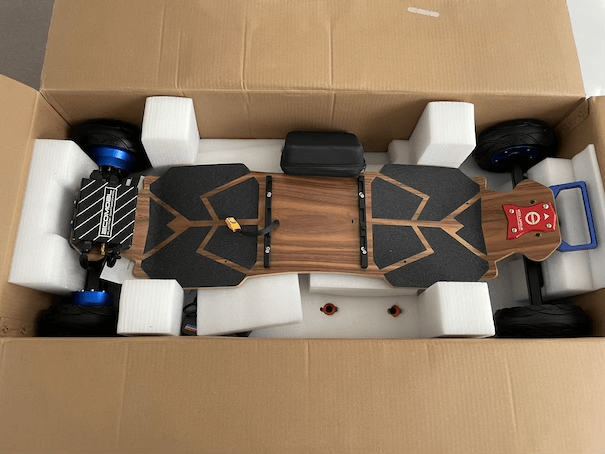
Today, we’re reviewing the Ecomobl Ripper Pro, which comes in 2WD and 4WD versions. 

Ecomobl is a brand known for its rugged all-terrain boards at affordable prices. At $1199, the 2WD Ecomobl Ripper Pro is quite literally the most affordable electric mountainboard on the market. As we run through the specs, you’ll see that if you were to buy the parts off the shelf and assemble a mountain board yourself, you’d probably end up spending more than $1199.

Ecomobl Ripper Pro Specs:

Price$1199 (2WD), $1899 (4WD)
Battery12s5p 25AH (1080 Wh)
Controller12s Lingyi ESC
Top Speed30-35 mph / 48-55 kph
Range25-30 miles / 40-50 km
DeckMaple and Fibreglass Composite deck
Motor170kv 6382 Planetary Gear Drive Motors, 3500W each

Ecomobl Ripper Pro Deck – Maple and Fibreglass Composite: 

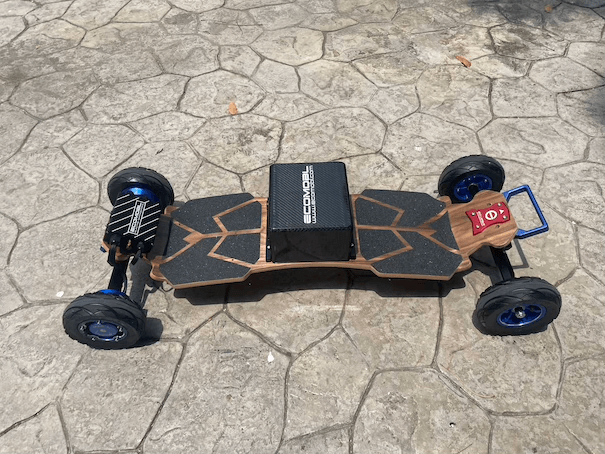
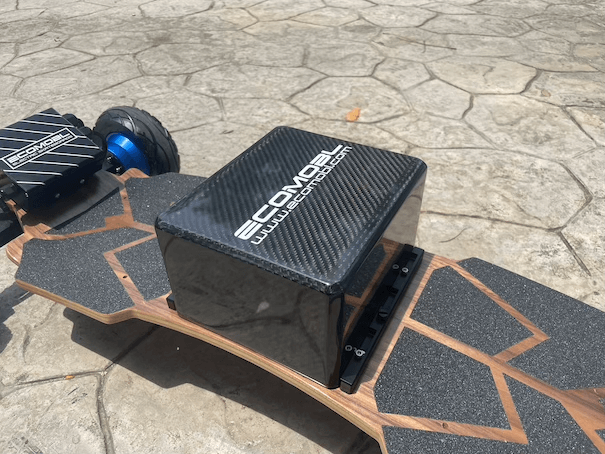
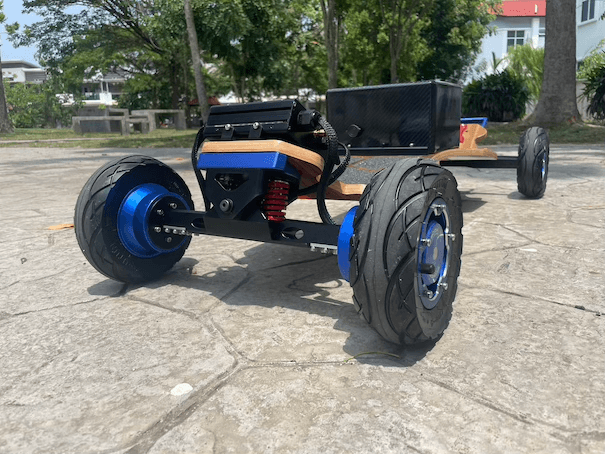
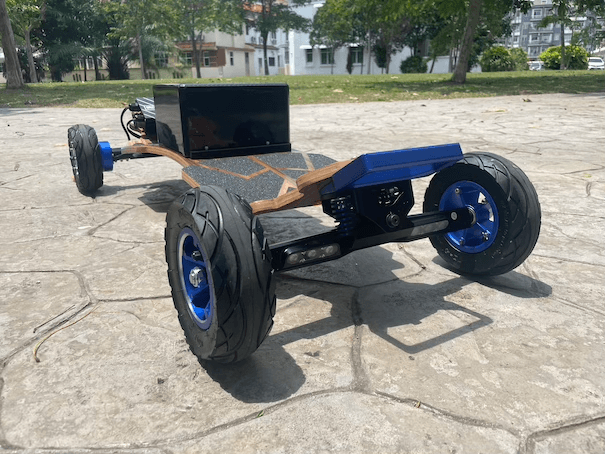
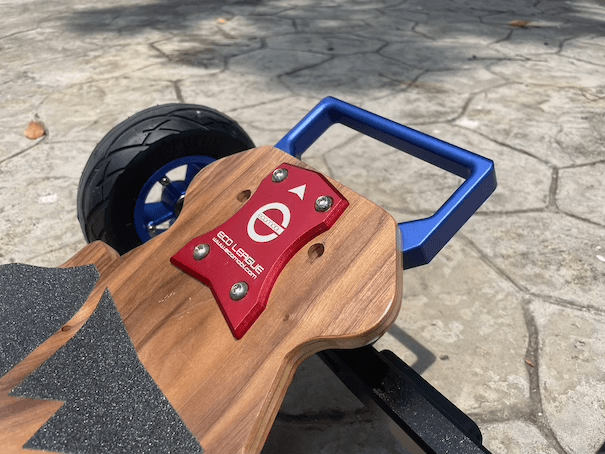
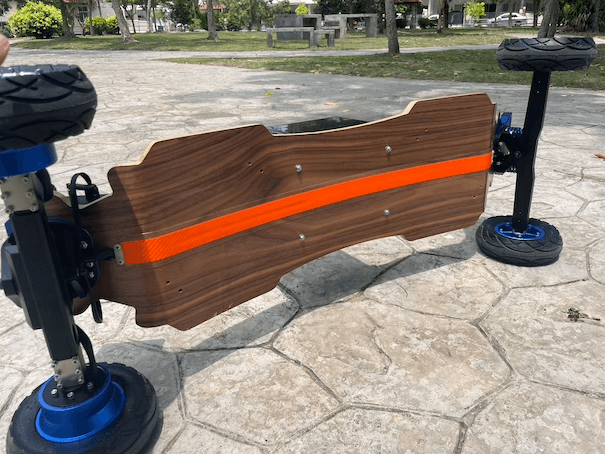
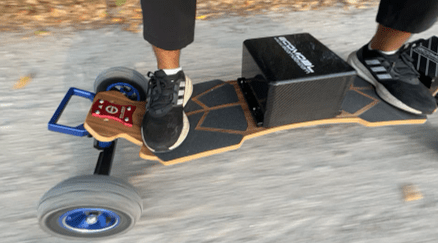
Let’s start by talking about the deck. The Ecomobl Ripper Pro features a typical mountainboard deck made from a maple and fibreglass composite. As with many mountainboard builds, the battery box is mounted on top of the deck, right in the middle, instead of underneath. This allows the deck to remain flexible while maximizing ground clearance.

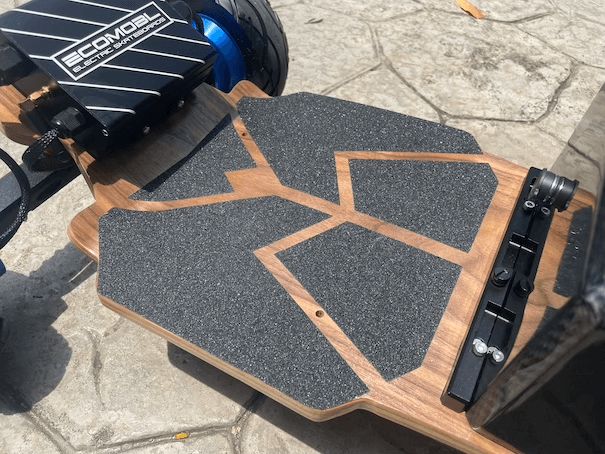
As with all mountainboard decks, it has an aggressive camber, giving the deck a good bit of flex, which is essential for off-road performance. The wide concave design makes it comfortable to stand on, providing a snug and secure feeling underfoot.

Since many people ride mountain boards with footbindings, Ecomobl has thoughtfully predrilled the deck for them, with the drill holes neatly covered under the grip tape. This feature adds to the board’s versatility, allowing riders to lean aggressively and maintain control, especially on challenging terrains.

Ecomobl Ripper Pro ESC and Remote – 12s Lingyi ESC: 

For the ESC, Ecomobl went with a 12s ESC, which is most likely a Lingyi ESC. It features the Lingyi signature push-to-turn-on feature instead of the smart power-on feature where you turn on the remote, and the board automatically turns on. As usual, it comes with 4-speed modes and 4 braking modes, which can be adjusted independently. We’ll talk about how they impact the ride later.

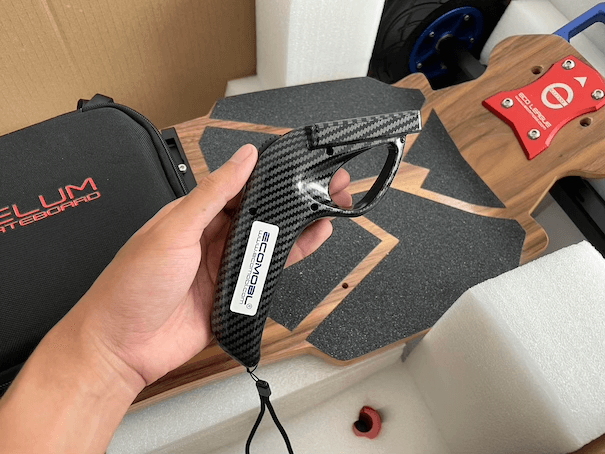
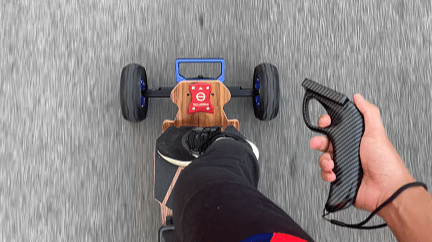
However, instead of the typical Lingyi remote, Ecomobl pairs this with one that we haven’t seen before. It gives off the vibe of an RC remote, which I think the DIY community will love. It has all the usual information on it, like speed, ride mode, etc., but it also shows throttle input, which is unique to this remote. What’s not so nice is that the remote screen isn’t bright enough, making it hard to see what’s displayed when the sun is out.

Ecomobl Ripper Pro Battery – 12s5p 1080Wh battery: 

The big black box on top of the deck houses a pack of 12s5p batteries, which are 25AH or 1080 Wh. This is an unusually large battery for the price, rivalling most boards costing $2000. 

The battery box is removable, making it easy to maintain or replace. 

The Ecomobl Ripper Pro is marketed to have a range of 25-30 miles (40-50 km) with a 144 lbs rider. In our tests, we managed to get 24 miles (39 km) with our still relatively lightweight 154 lbs (70 kg) test rider riding fast.

Ecomobl Ripper Pro Motor – 170kv 6382 3500W Planetary Gear Drive Motors : 

As for the motors, the Ripper Pro 2WD is equipped with its signature planetary gear drives. These are 170kv 6382 motors, rated at 3500 watts each. We are familiar with them from our time with the Ecomobl Telum, and they are powerful. It’s marketed to do 30-35 mph (48-55 kph), and in our test, we hit 32 mph (52 kph), right in the middle of the marketed numbers.

Ecomobl Ripper Pro Truck And Wheels – 20 Inch Suspension Trucks:

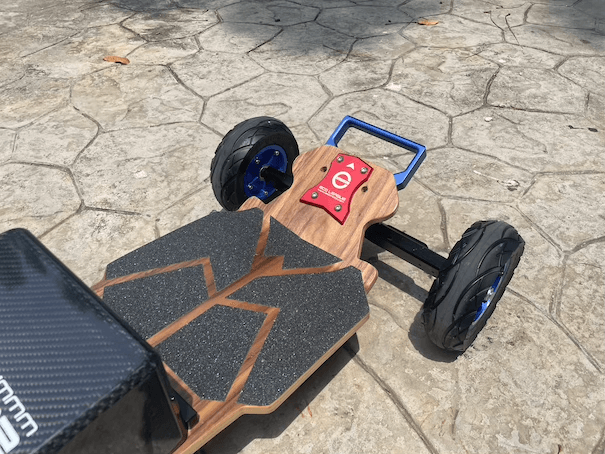
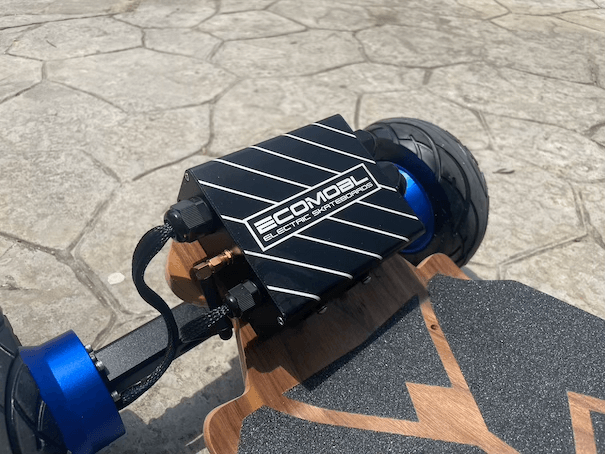
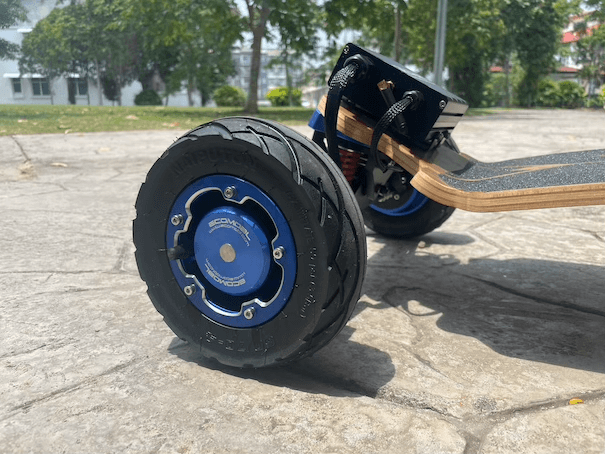
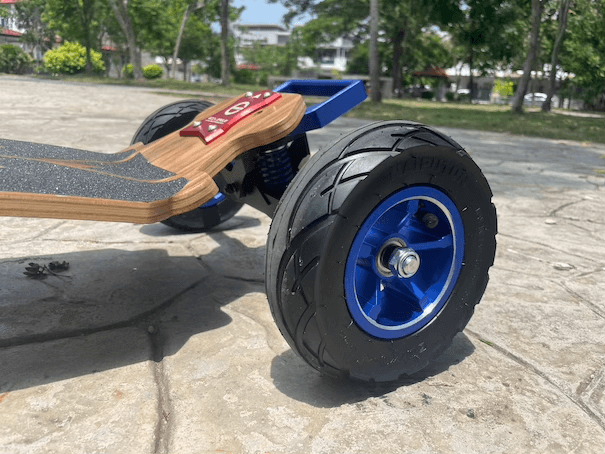
The board uses super-wide 20-inch trucks, which are CNC forged and should be durable enough for off-road abuse. The front lights are conveniently built into the front trucks and are functionally bright, making them actually useful. 

Like many off-road mountainboards, the truck uses spring suspensions. This often makes the board tough to turn for featherweight riders like us but incredibly stable for straight lines and off-road terrains. 

One way to remedy the turning problem is by installing footbindings, which will allow you to lean aggressively and use more of your body weight to turn the board.

Speaking of weight, the board is incredibly heavy, weighing in at 39 lbs (17.7 kg).

So if you were thinking of jumping with the footbindings to turn, you’ll need to make sure you’re not skipping leg days. 

Unlike some of the older Ecomobl boards, which use airless wheels, the Ripper Pro comes with 7-inch pneumatic wheels, which should provide a softer ride compared to airless wheels.

Ecomobl Ripper Pro Spec Summary: 

It’s clear that Ecomobl wants to offer the best value-for-money electric mountainboard. A 12s5p battery, planetary gear drive, and CNC parts for just $1199 is awesome.

For example, the Evolve Bamboo GTR, which we considered the best value all-terrain board now that it’s on sale at $1199, only has a 12s4p battery and regular belt drives. 

And, the Backfire Ranger X3, which we love and has the exact $1199 price tag, also only has a 12s3p battery. 

While we are aware that leading brands for all-terrain builds like Propel and Acedeck have more refined products, Ecomobl was all about giving you the same specs while asking for half the price.

So, Ecomobl is cheap, relatively, but what’s the catch?

Ecomobl Ripper Pro Riding Experience: 

If you’re familiar with the Ecomobl Telum or any old Ecomobl boards, the Ripper feels very similar but a bit more refined.

Ecomobl feels like a raw beast. I’ve never driven a monster truck or a jeep before, but I’d imagine they share the same ride feel. Meaning – very powerful, with very strong torque, but the acceleration and braking are jerky. We have to say that we’re a little disappointed at the rawness of the speed control, as we’ve seen how the latest Lingyi ESC can be smooth yet powerful, but this one remains unrefined.

It’s also hard to maintain the board at the same speed when riding fast, as the drive system has significant drag, and merely easing off the throttle feels like braking. It may throw you off if you’re not expecting the forward momentum to halt.

Experienced riders will get used to this quickly, and some may even love the rawness of the speed control, but not us. 

Another reason I describe it as a truck is that it’s not easy to turn. We’re not expecting a mountainboard to be easy to turn, but even after loosening the trucks, this is still one of the hardest boards to turn. Making L turns at intersections is challenging for us, but if you weigh more than 180 lbs (80 kg), you might find the truck just right.

Even with all that criticism, the Ripper Pro still excels at what it was designed to do: tackle unpaved paths. The planetary gear drives are strong enough to handle off-road hiking trails with ease, allowing you to both climb them and stop on an incline.

The flexible mountainboard deck, the 7-inch pneumatic wheels, and the suspension in the trucks work together to eliminate any vibrations you’d feel on bad roads while keeping the board stable when riding fast on off-road terrain.

Verdict: 

Let’s put it this way. The premium brands in the off-road category right now are Propels and Acedecks. Their $2000 boards handle off-road incredibly well while also being smooth and responsive enough to be fun regular city rides. The same can’t be said about the Ecomobl Ripper Pro. It’s not refined, smooth, or responsive enough to be a regular city ride, but it still does off-road well and costs only half as much.

If you want to get into electric mountainboarding, Ecomobl is a good way to enter. It has a decent build, a good-looking design, and practical integrated head and taillights. It’s not perfect, but it sure as hell is the most affordable option available.

If you are interested in buying the Ecomobl, be sure to check out our affiliate discount link here and use code: “ESKATEHQ” to receive $50 off during checkout.
It will help you get a small monetary discount and help us out too. On top of that, you’ll be tagged as an Electric Skateboard HQ customer and probably be treated better. Cheers!