[Updated] Evolve Bamboo GTR First Look & In Depth Review – Evolve, Evolved

Follow the discussion on Reddit here

If you want the TL;DR, see end of review

The Email

It was a day like any other day on March 30, 2019 when I got an email from Jeff Anning.

“Hi Sophia,” it started. “My name is Jeff Anning, I’m the founder of Evolve Skateboards based in Australia and we have been manufacturing and distributing Electric Skateboards since 2009.  I’m emailing you to see if you would be interested in doing a review for us.  We have some cool things ahead and now at a stage where we are looking for potential reviewers who may be interested in working with us.  We do have our USA partner whom can assist with logistics etc and is more than happy assist with anything that may be required. If you have any questions please let me know, cheers for your time :)”

Of course, I leapt at the chance. Evolve Skateboards. I mean come on! They’re one of the few companies in the eskate world that cater specifically and directly to high end consumers. Their boards are fun to ride despite their well documented problems, and they’re secretive. Who wouldn’t want to get a first look at what they’re up to?

My Evolve Carbon GT circa June 2017

My first experience with Evolve was with their third generation board, the Carbon GT. At first, I thought it was the best thing ever. Then I started to experience the issues. Remote disconnects, battery sag up hills, almost no power to do anything meaningful once it drained past half battery. The problems were exacerbated here in San Francisco as it’s a very wirelessly dense and hilly city. After a while, I became unhappy with the performance and moved on to bigger and better things.

However, I always wondered what Evolve would do to fix these problems. Make no mistake, these weren’t isolated incidents I was having, the problems were very real. There’s no way they wouldn’t be working to fix this stuff.

Well, what have Evolve been up to all this time? Let’s find out.

Digging In
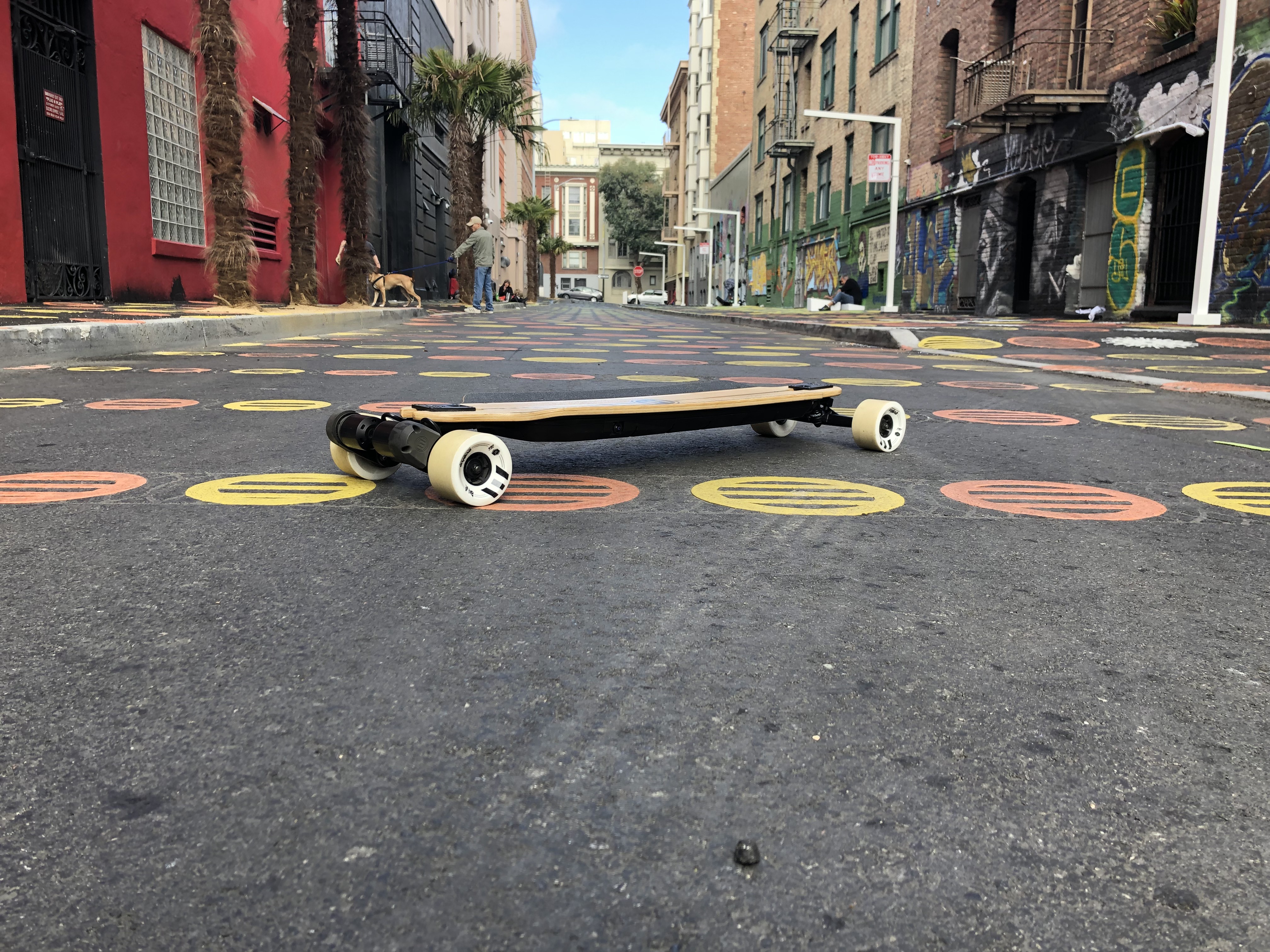
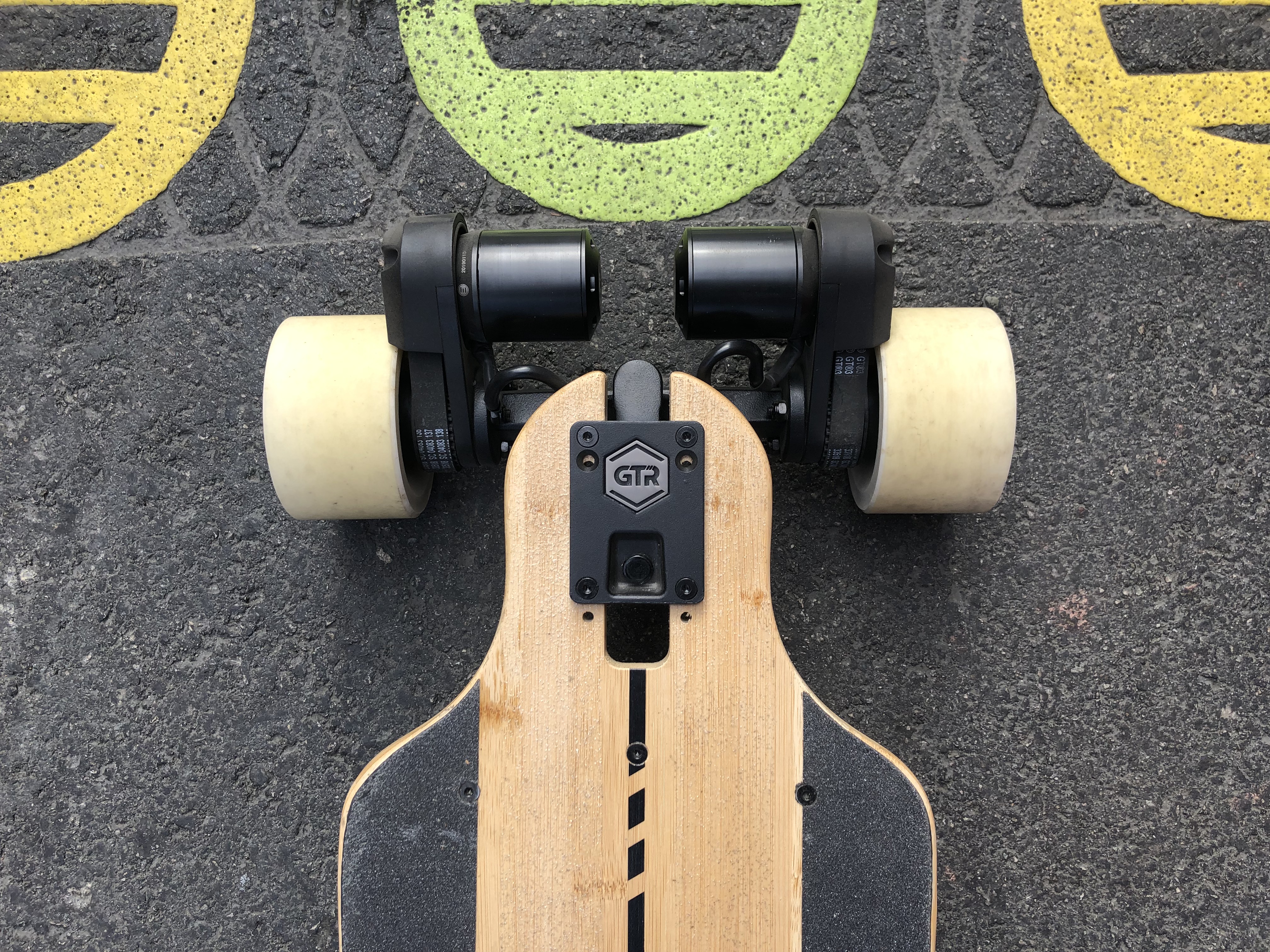
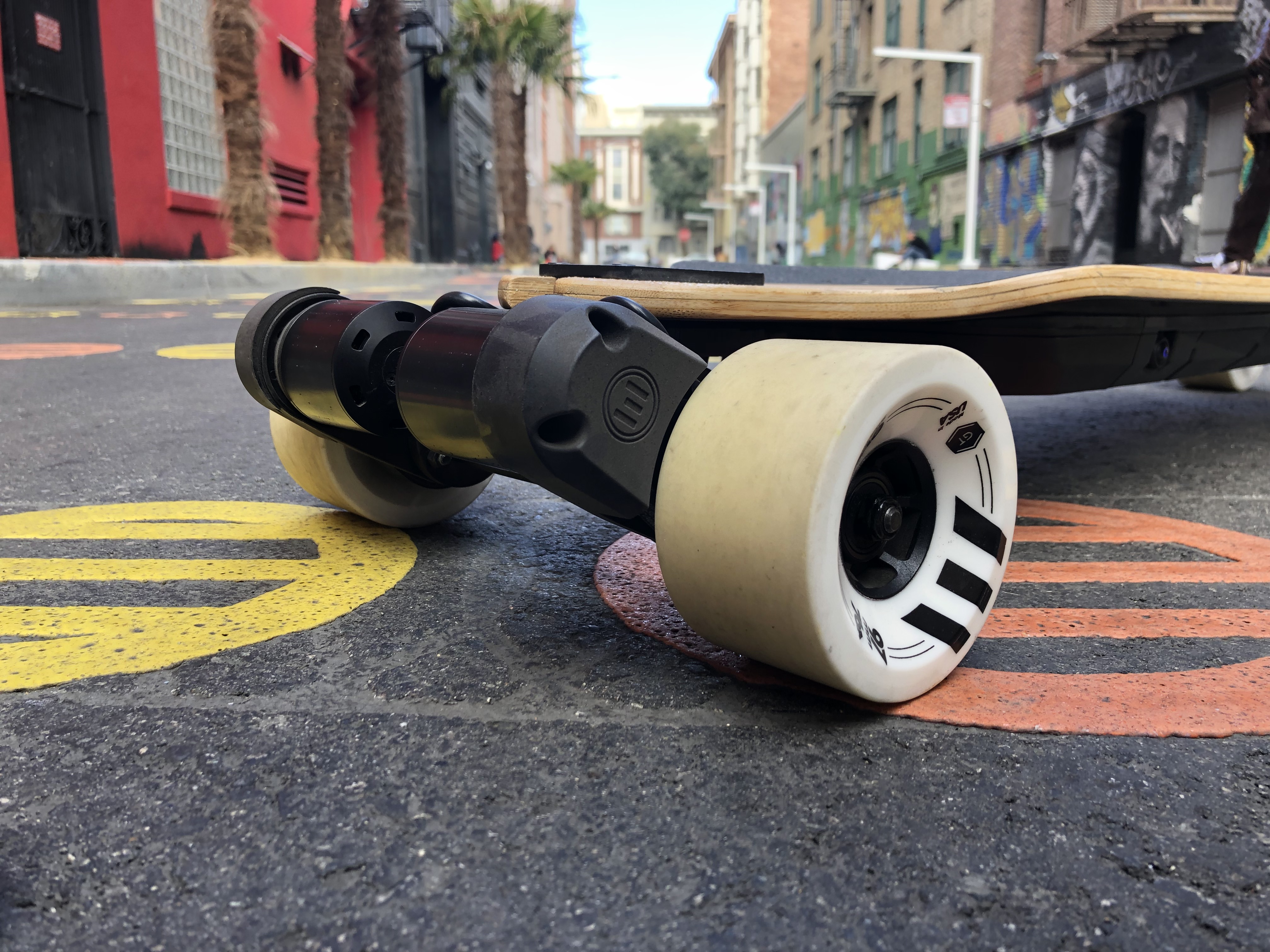
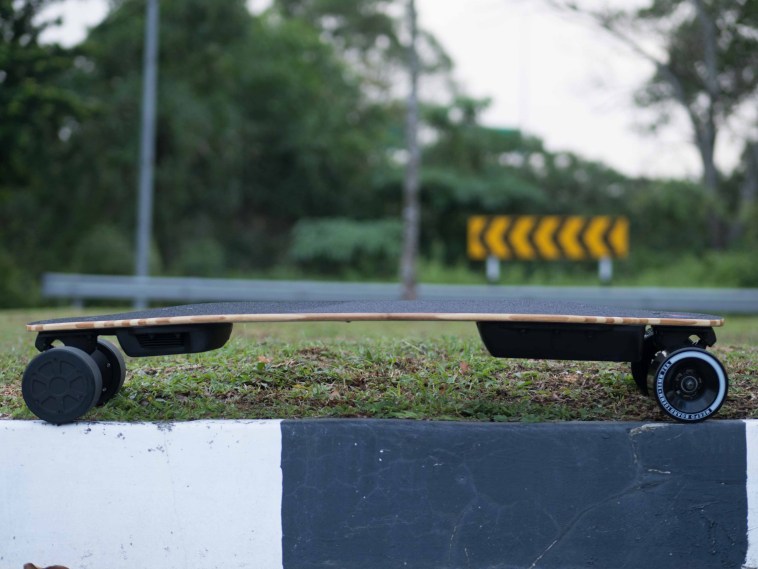
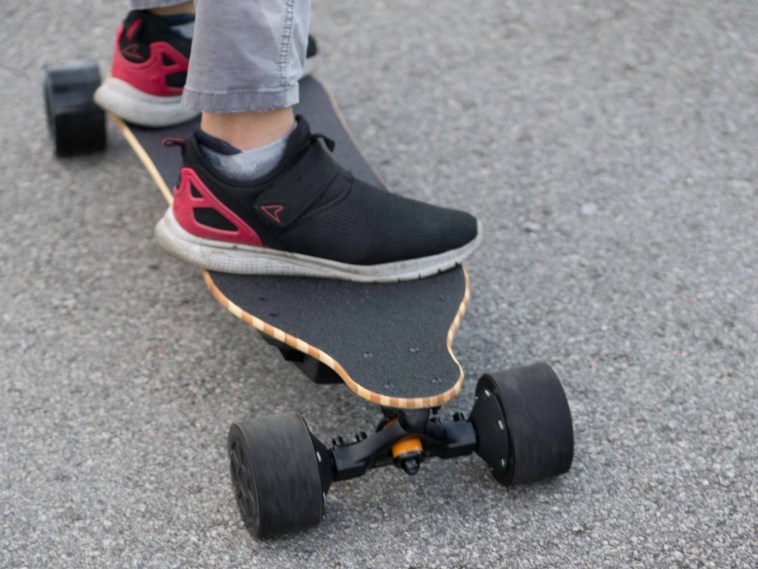
When I first opened up the box and caught my first glimpse of the Bamboo GTR, my immediate first impression was that it simply looked fantastic. An all new super flex deck, new thicc enclosure, new white (!) wheels, new matte finished trucks. The combination just looks great. I love classic looks, and this is most surely a classic look. The wide wheelbase coupled with the natural wood deck striped with griptape on either side is just super. You’d be hard pressed to find a better looking board.

The Hardware

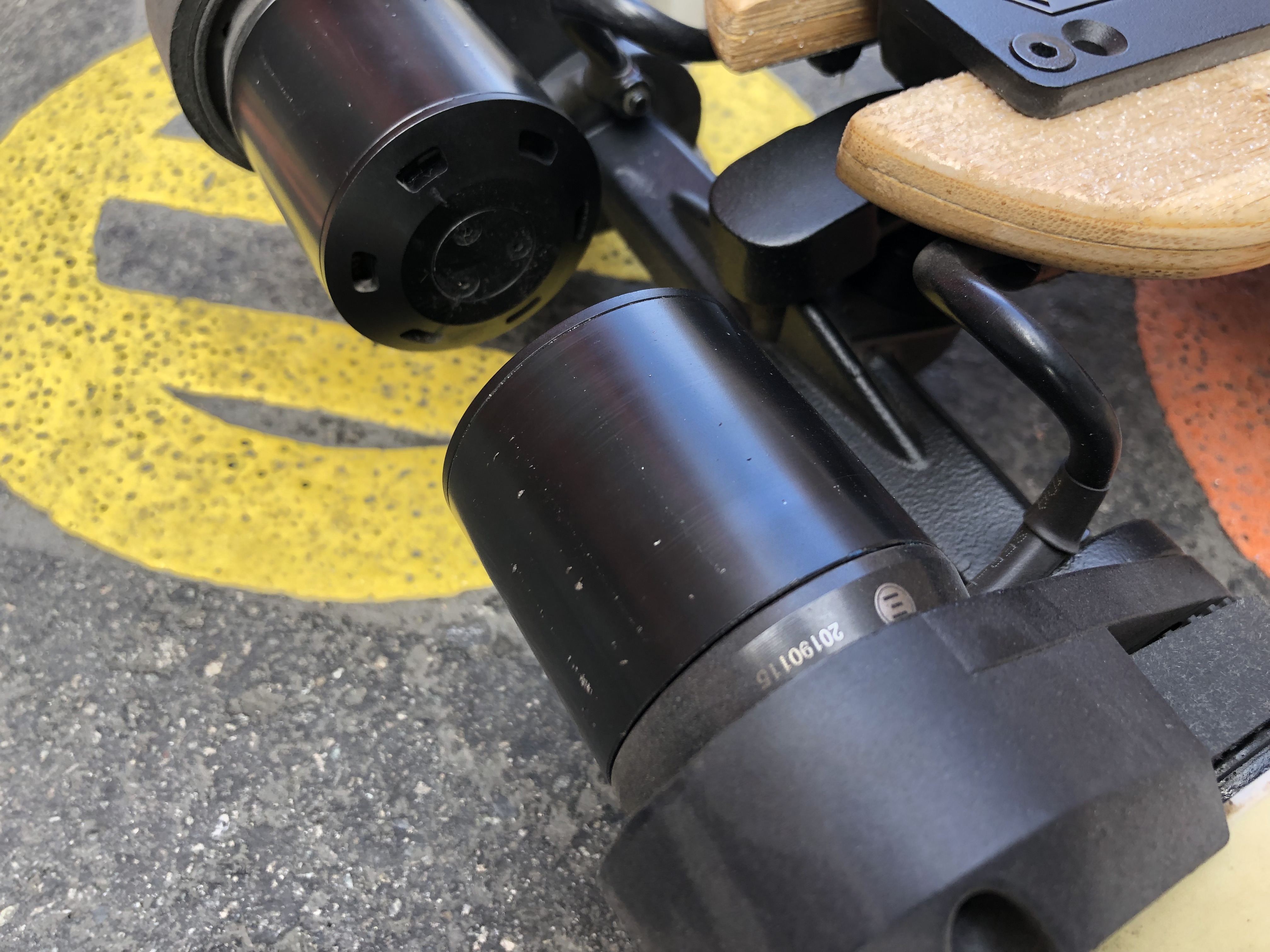
I’m told by Evolve that the new GTR series shares no components with the 3rd generation GT series. Even if things look similar, every component has been at least re-engineered. A new manufacturing method for the trucks (forging and CNCing instead of casting), a new deck manufacturer with a different construction method, a new motor construction with a focus on reliability, and new wheels with new formula poured by AEND, the same factory that pours wheels for other leading wheel brands like ABEC.

New wheels. Let’s talk about the wheels for a second. First off, they’re really great. I mean really. I’ve tried all the ABEC wheels, all Evolve’s old wheels, and a whole bunch of other wheels. The rebound on the urethane is great, and it really grips the road and takes potholes well. I run Boas on my main DIY board, and honestly I like these 97s ever so slightly better. It’s high praise, I know, and the durability and long term coloration of these wheels are still to be determined, but so far so very good.

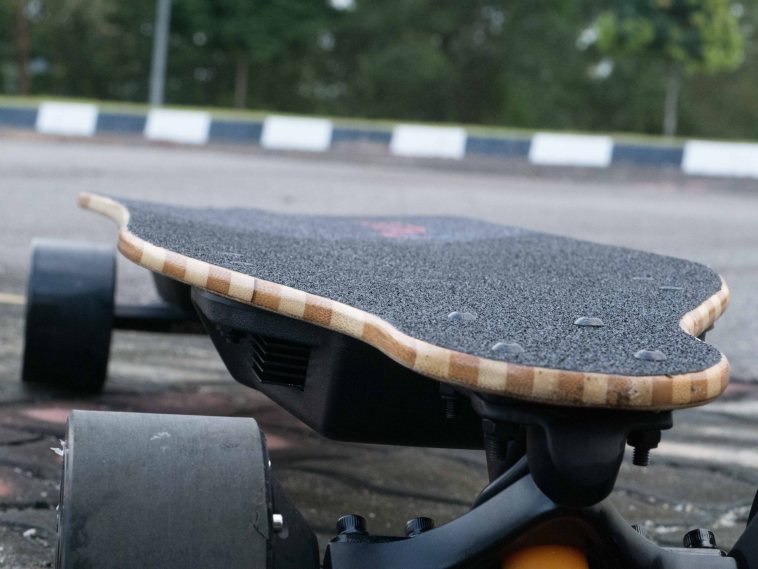
Speaking of so far so good, the deck is also a lot improved from the previous bamboo deck. There’s a lot more flex, a lot more distinctive concave, and personally I think the design is a lot better. It’s also a bit longer than the previous one at 38 inches, and features multiple sets of mounting holes so you can adjust your ride position. Of course, the enclosure that goes on the deck is equally flexy and solidly built, with improved waterproofing by way of rubber gaskets and improved sealing, and in my opinion the battery pack that goes inside is also much improved. But let’s talk about that later.
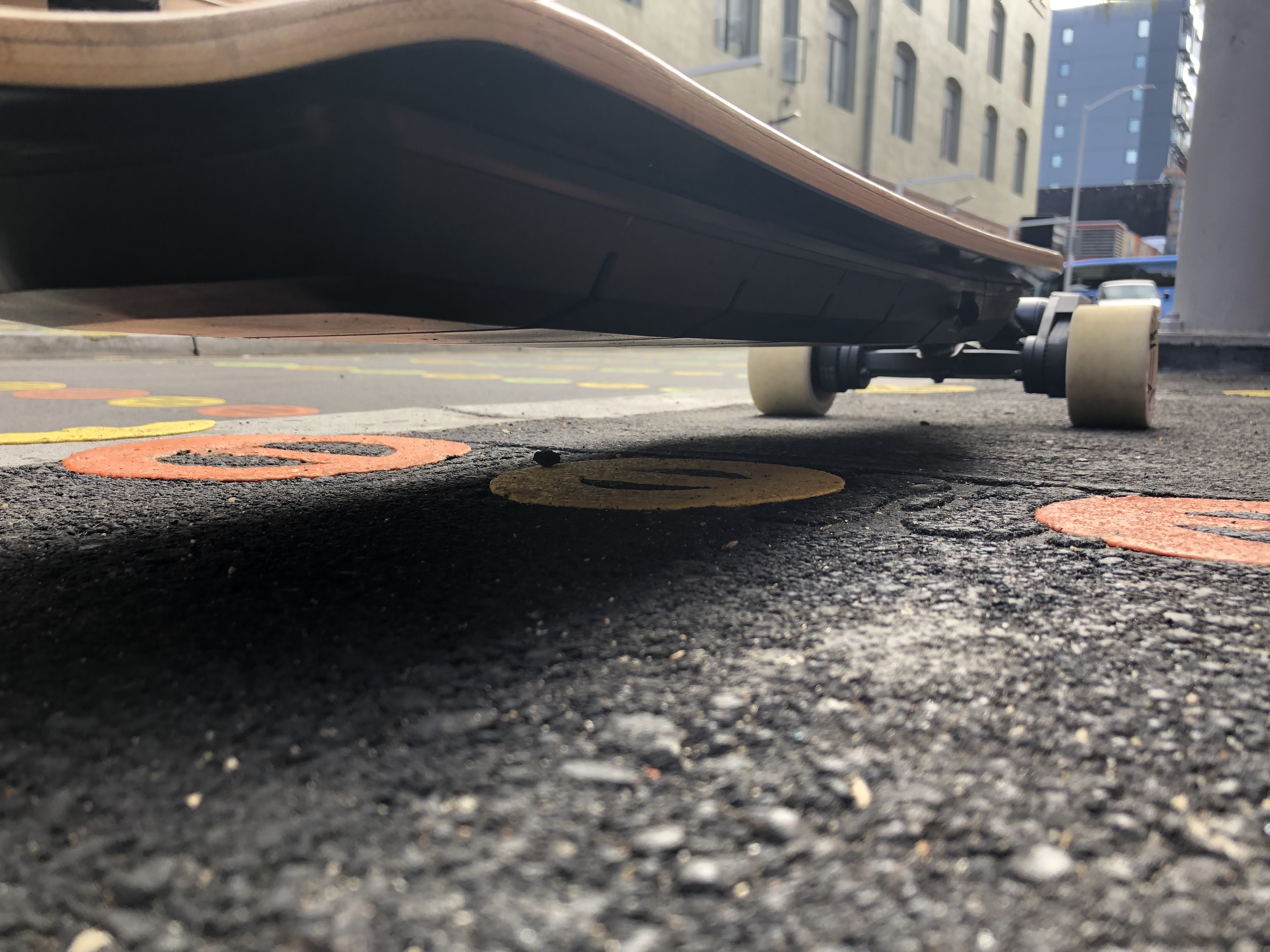
All this coupled with the new more precision made trucks makes for a fantastically comfortable ride. I had absolutely no problems rolling over any potholes that I otherwise would have to watch out and brace for, even though I’m on 97mm wheels. It’s so cliche and cheesy saying this, but I can tell they really focused on the ride first and foremost. So good!

Of course, no Evolve product is complete without the ability to swap to all terrain hardware. I did not get to test this feature in my review as they didn’t send me any AT hardware, but if it worked like it did in the previous generation, I’d expect it to work quite well. There are new tire colors, sizes, and rims, something for everybody. I’m also told that the new Evolve website will have a board builder feature where you can customize your perfect board and have that arrive at your doorstep instead of a stock configuration. I think this is really great and an unprecedented option in eskate.

But skate hardware is not everything when it comes to eskates right?

Right. The electronics are of the utmost importance and tell the other side of the ride story. Performance, control, and reliability of electronics all play a huge part in how an eskate handles and feels to ride. Previously, on the 3rd generation GTs, some of my most major complaints were somewhat jerky early braking curves at high speeds, weirdly jerky throttle application, remote disconnections, and inconsistent power.

Let’s start with the braking curve. I’m happy to report that compared to the previous generation, it’s much improved. The same Evolve motor control algorithm is present, and the customary motor whine is still there, so if you were hoping for that to go away, you will be disappointed. However, braking from high speeds no longer jerks on initial application but instead comes on smoothly and predictably. This was a painpoint for me as bombing hills at high speed is something I do regularly and it really used to be very nervewracking on the Carbon GT. Now I no longer worry when I’m on the GTR. As for throttle during acceleration, while it does feel smoother than the previous generation, it’s not so much of a difference that I’d say it’s gamechanging.

But braking and acceleration curves mean nothing if the dang thing isn’t reliable. So let’s talk about that.

The Remote
The R2 remote was somewhat controversial when it first launched. The design was wholly unique, and many people’s opinions were split. I personally even preferred the original remote and eschewed the R2 because of that.

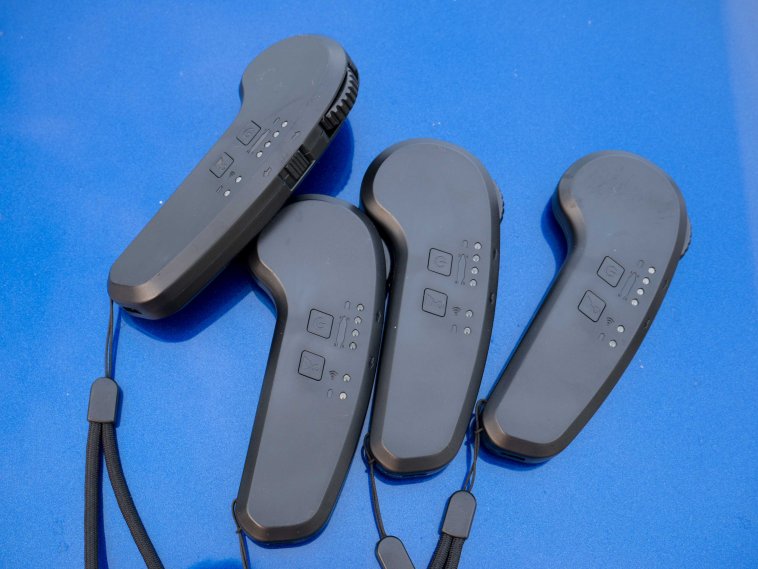
However, I’ve come to realize that all I really had to do was stick with it. Now, on my second go at using the R2 remote daily, I’m finding that it really is a fairly good remote in terms of ergonomics and controls. I have smaller hands so it’s ever so slightly on the chunky side, but it’s not so bulky that I have a hard time using it. It’s now heftier due to a larger battery than the original R2 and even comes in several colors if you’re into that sort of thing. A battery saving features has now been built in as well where the screen automatically turning on/off depending on if you raise to look at it or not.

Now all that is well and good, but the major headlining feature for the GTR R2 remote, is the Bluetooth connection. There may be some confusion around this subject so let me explain. Evolve did not actually change the radio technology they use to transfer data. Bluetooth is a protocol, transmitted via the same radio frequency they used to use, 2.4GHz. Done correctly, 2.4GHz remotes are some of the most reliable remotes available.

Now, it’s no secret that old Evolve remotes have had connection issues. It’s also no secret that their remotes have had pairing issues. I’ve had many an instance where I’ve simply turned on my old Carbon GT as I regularly did and had it simply refuse to connect. I’ve also had many an instance where the remote would simply disconnect on me while riding. I know firsthand that these things happened with the old R2. And although I no longer have an old R2 remote, I also know exactly where I can reproduce disconnections on bad remotes in general. Now that I’ve been given this opportunity to put the GTR through its paces, I must also test the remote as thoroughly as I can.


Please note before you read the below that my board and remote was both running prototype firmware. There were some bugs in general that did not affect riding.


I really tried to get this remote to disconnect. San Francisco is a very wirelessly dense city with tons of interference, and I made sure to run through the thick of it. In my test, I rode through all the challenging areas of SF: The streets of Chinatown, the heart of the Financial District, directly under high voltage bus lines, up Twin Peaks and around the high powered radio towers. I ran errands on the board, commuted to work on the board, did 20+ mile nonstop rides across hilly and mountainous terrain on the board. Not a single drop while riding where the old R2 once had issues for me.

There is one caveat though. If I stand at a certain street corner near my house for a period of time, I can maybe make the remote disconnect. I can’t reproduce this reliably (in fact the two times it happened I was not attempting to reproduce it at all) and it’s only happened twice and only on this specific street corner, but I believe it bears mentioning. There were a few other firmware related issues with my review unit, chief amongst which was a bug where the remote wouldn’t re-establish connection with the board after the board times out and turns off then is turned back on again, so I’m more willing to chalk this issue up to a firmware bug. Evolve tells me these issues have already been fixed on the release firmware, but only time will tell if they really have been fixed. All I can say is that in my times testing it, I have not had a single issue where I most surely would have already on the old hardware.
The Battery

If the remotes were the foremost controversial thing about the 3rd generation GT boards, the battery packs that ran them were the secondmost.

Reports of battery sag and being kicked down to Eco mode going uphill have been abound for the last few years, and it’s been a major sticking point for the GT series boards. It’s also no secret that CEO of Evolve Jeff Anning has had very public strong opinions about Evolve’s then battery technology of choice: lithium polymer prismatic packs. In any case, this was something Evolve dearly needed to fix. And fix it they did.

Let’s get some facts out of the way. The new Evolve Powerflex packs are 10s4p Samsung 35e batteries. This means the cells are arranged in packs of four, wired in series. 35e cells are 3500mAh cells that can do 8A discharge. It’s somewhat surprising that Evolve has chosen to go this route, as the 35e drops voltage faster than another popular cell for eskate, the 30q. Here’s a comparison between the 35e and 30q:

And here’s a comparison between the 35e and VTC6, yet another popular cell for eskate:

As you can see, voltage drops quite drastically in both single cell performance comparisons, which means packs built out of 35e cells will experience more battery sag than packs built out of the other two cell types.

But does it matter?

When Evolve told me about their new battery technologies, they stressed that their first main focus was battery safety. Their second main focus was power at all battery levels. This means that regardless of the state of charge, you should experience similar torque. Taking off at 100% in GTR mode should feel the same as taking off at 10% in GTR.

I’ve tested this to the best of my ability and, well, they’re not lying. Torque is similar at all battery levels. Climbing hills at 10% felt the same as 100%, albeit slower, and I remained in GTR the entire way. The battery indicator did not fluctuate wildly either. This is honestly a fantastic improvement. With this, one of my major complaints about Evolve boards was solved completely.

Heading to the top of Twin Peaks, San Francisco is a route I ride regularly, and it’s no easy route. It’s a fairly steep climb all the way to the top if you start at Market St near the Castro or the Panhandle near Golden Gate Park, and it’s the route I take if I want to test performance of a board under high constant load. I took the Bamboo GTR up that route, and recorded the whole thing. Here’s the video. Note that the video starts when I was already halfway up:

I’d say that’s pretty impressive. The whole route up I only dropped 20% battery according to the remote, and maintained power the entire time.

Range is quite good too. On range tests over very hilly terrain (basically all of San Francisco), I was consistently hitting over the 20 mile mark riding briskly. As you can see in the ride tracked on the left even an 145lb person can do a 21 mile run and still get home with 7% battery all in GTR. This includes literally riding up a mountain. This is extremely good and quite impressive for a board in San Francisco. I have no doubt on flatter ground it’s entirely possible to hit the 30 mile range advertised even in GTR mode. Really good shit.

The Internals

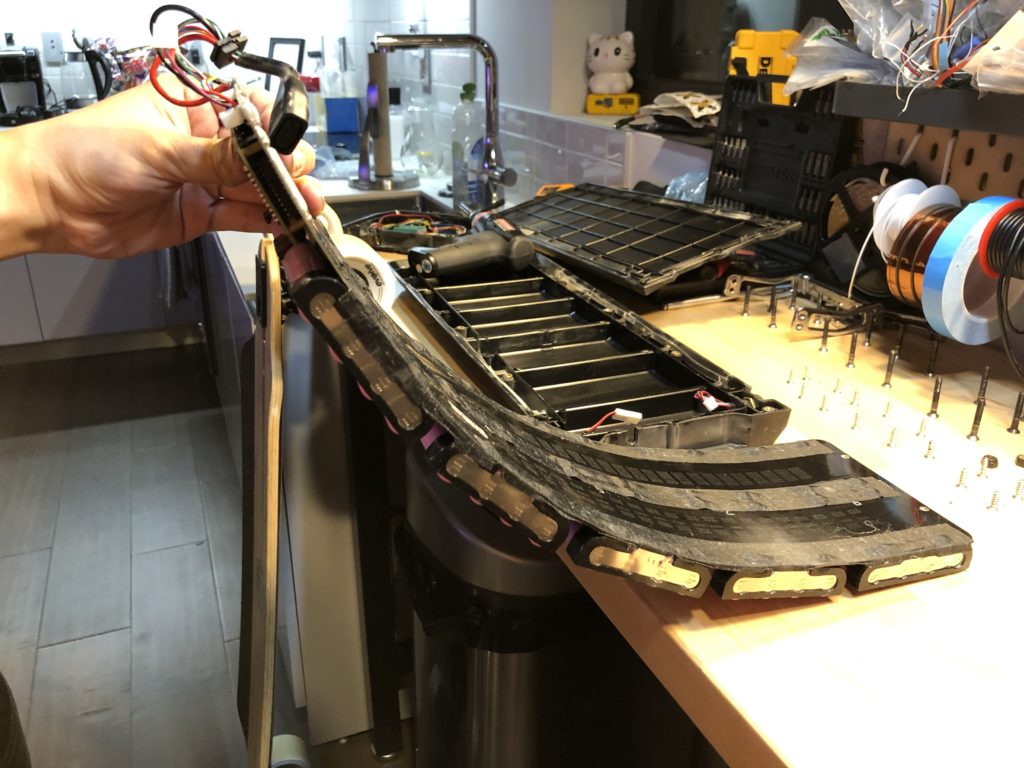
One of the major improvements Evolve claims they’ve made to their battery system is that they’ve found a way to allow the entire pack to flex an insane amount.

I’m not talking about just a little bend, I’m talking about you can bend the entire pack into an almost tube shape. They also told me they’ve redesigned every single internal electrical component. So of course I opened it up, and here’s what I found.

The electronics enclosure is split into two parts: the ESC housing and the battery pack and BMS housing. You can remove one or the other quite easily simply by removing the screws from the top. Each enclosure has been dustproofed and waterproofed, though Evolve won’t say what the rating is.

Each enclosure has a plastic cover that’s screwed down, and there are o-rings and gaskets around every point of ingress. It’s very clean.

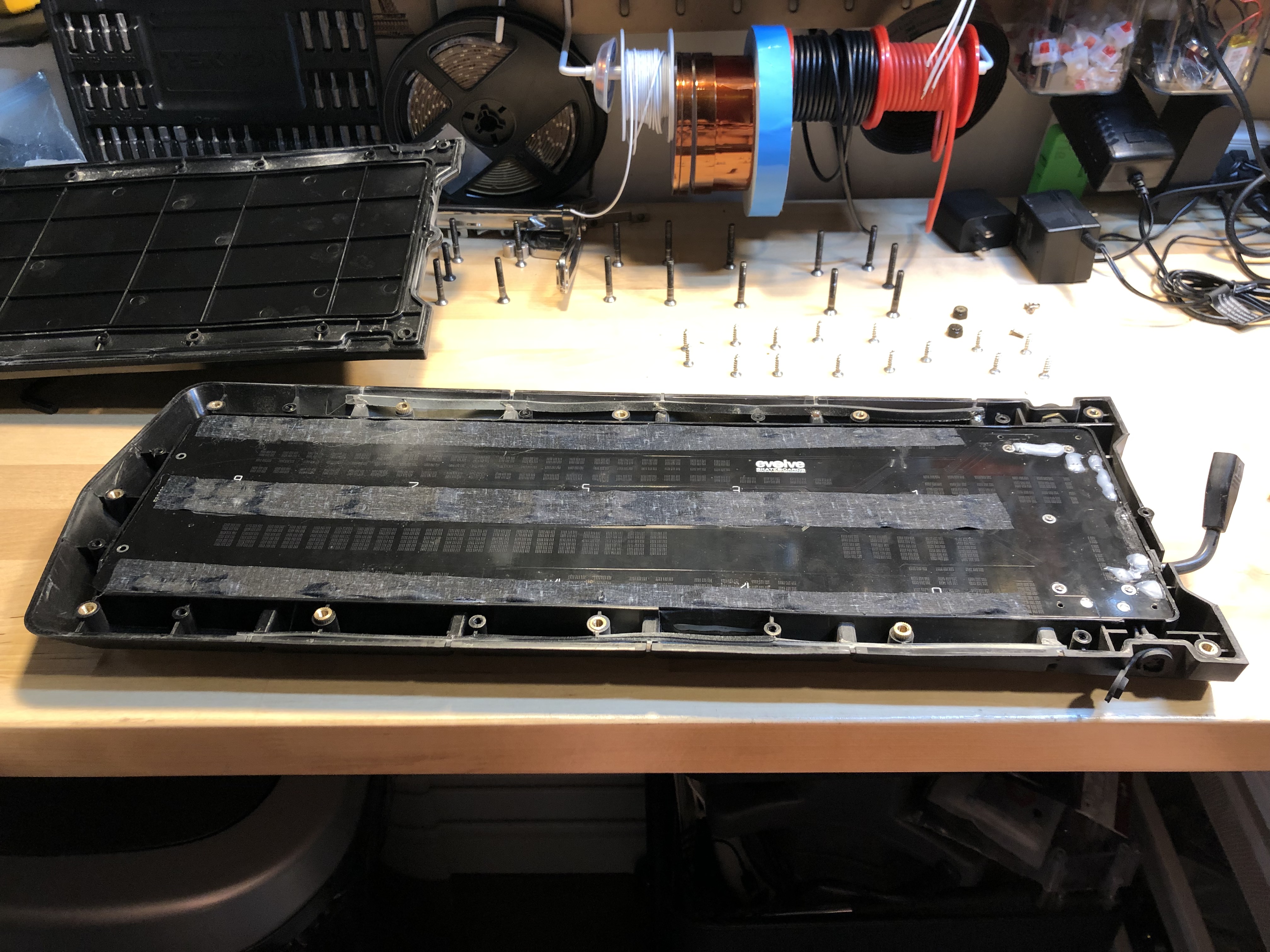
Opening up the battery enclosure, we find the underside of the flexible battery PCB. The entire assembly is pressfit into the enclosure tightly to prevent movement, so it takes quite some effort to pull out.

But pull it out I did, and here’s what it looks like.

You can clearly see how flexible this pack is. I’m actually very impressed with the design of this pack. The traces on the PCB can actually carry around 200A, even though the full pack is rated at 32A continuous and 52A burst. Evolve says that average continuous riding will hit 20A discharge and that in their side by side comparisons with the same pack made of 30q cells, the 35e performed better. I don’t claim to know what metrics they’re looking at for performance, but this is what I’ve been told.
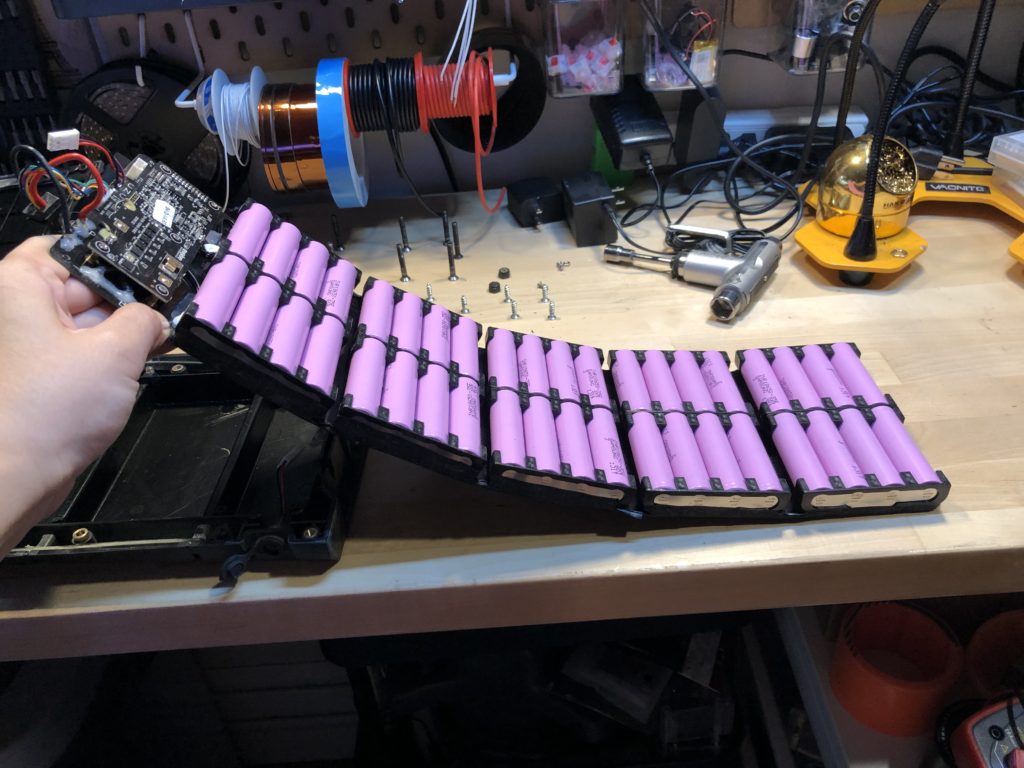
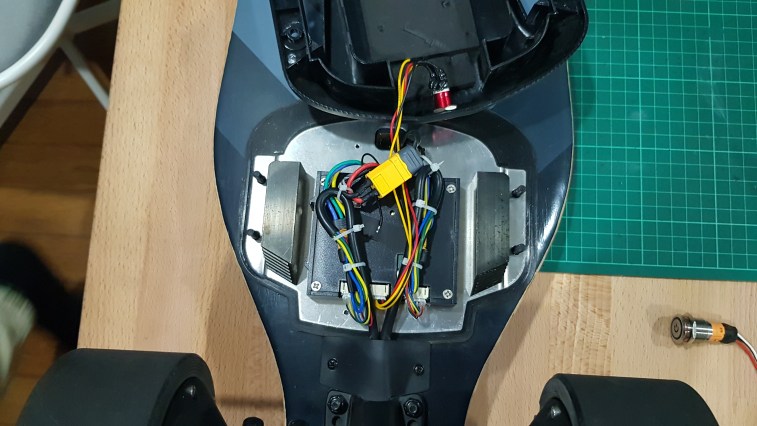
Going over to the ESC enclosure, we remove its cover to find the newly redesigned ESC.

You can see the ceramic antenna for the remote embedded on the right side of the ESC, and two wires going to the USB breakout board. These power the two rear facing USB ports for accessories.

I think time will tell how well this enclosure system holds up. Evolve tells me they got to where they are now from breaking countless iterations, fixing, and breaking again so they’re very sure of the hardware, and honestly I believe them. Everything I see here is quite high quality and obviously built to last.

So after all that, I have a few observations.

The GTR is a brand new product inside and out. It may look similar to the 3rd generation GT boards, but honestly, it’s really not. As far as I can tell, almost everything is improved in a forward thinking way. Even the motors have been redesigned with stronger components, are now vented, and now feature a single hot swap connector for some mysterious purpose.

I think a lot of people will look at this board and go “well it looks similar to the old one, why upgrade? I can just send my current GT to a battery upgrade service and be done with it,” and of course, you can do that. But I think unless you’re also planning on swapping the ESC out for something like a FOCbox Unity, the new GTR would probably still be a better bet due to the numerous upgrades.

I really love the new 97s. I think they’re a great wheel with great rebound, and I love the white color scheme even though it gets dirty fairly quickly here in SF. They’re so good that I’m willing to jump in and get four sets. HMU Jeff Anning 😉

I think it’s a good move for Evolve to move to 18650s, even if they’re not admitting they were wrong in the past. It’s an even better move for the consumer as now they don’t have to deal with the headaches related to voltage sag and can just ride. We’ll call it a win-win yeah?

The new Bamboo GTR deck is just great. You gotta take it for a ride.

But Sof, would you recommend it?

I’ve been riding the new Bamboo GTR for the better part of two weeks. It’s less time than I would have liked, and certainly less time than I typically ride other boards before I give my opinion.

In addition, the release schedule of this review had to be very unexpectedly and very annoyingly bumped forward quite a bit because of certain circumstances regarding a certain YouTuber, but I think what it boils down to is this.

Riding an electric skateboard, as with any other leisure sport, is an activity that should be enjoyed. That’s the bottom line. If your only focus is speed and that’s what you enjoy, this is not the board for you. If you hate belt drives, this is not the board for you. But at the end of the day, there’s only one question that needs to be asked. Do you smile when you ride the GTR? I know I do.

Update On Remote Connection

Earlier in this piece, I mentioned that I was getting dropouts on the remote at certain places during my testing. Evolve chalked it up to issues the prototype unit had and assured me that the issues wouldn’t persist in the production unit. Of course, I didn’t simply believe them, so Evolve was kind enough to arrange for me to get on a production board and ride to my problem spots around San Francisco to test if things have really gotten better.

I’m happy to report that I had no issues whatsoever. Down Polk, down Market, up the entirety of California, around Chinatown, no disconnects occurred. Of course, this is not a comprehensive testing and consumer results remain to be seen, but in areas where I previously had issues with the prototype, I now had no issues with the production unit. I’m fairly satisfied for now.

Ride1UP Slopestyle Review – A Study In Compromise

Follow the discussion on Reddit here

If you want the TL;DR, see end of review

A year or two ago, the western budget electric skateboarding market was a burgeoning place with Chinese brands like Meepo and Ownboard dominating. These boards usually featured lackluster performance, mediocre to bad hardware, and virtually no customer support. There was really not too much other choice unfortunately. Over the past years, we’ve seen the industry grow and transform. Budget boards are no longer something you have to put up with. Instead, they’re now a really valid option, and sometimes maybe even a preferred option. As a result of the budget board boom, there are now many manufacturers trying to stake out their claim to the space. And so, here we have Ride1UP, an e-bike company just starting their own electric skateboard line. So how good is their first effort? Let’s find out!

Digging in…

The first thing you see when you get the board in the mail is the box. It’s your typical solid electric skateboard box. However, it’s the inscription on it that caught my eye.

“We sacrifice nothing.” “Bring on the competition!” Man those are some strong words. Fightin’ words. But you know what? I agree with that message. I would love to see more high performance, low price boards. After all, Exway can’t remain the king forever right? Well let’s bang on and see what this board is made of.

The Slopestyle comes with a bevy of accessories: a hex tool, a skate tool, a hub motor sleeve removable tool, cables, a charger… I think that’s it right? Of course, there’s the remote and board itself.

So let’s talk about the board.

In terms of skate hardware setup, it’s actually pretty good.

  • 38″ Canadian maple rocker dropthru deck with a slight concave
  • Clone Paris v2 trucks
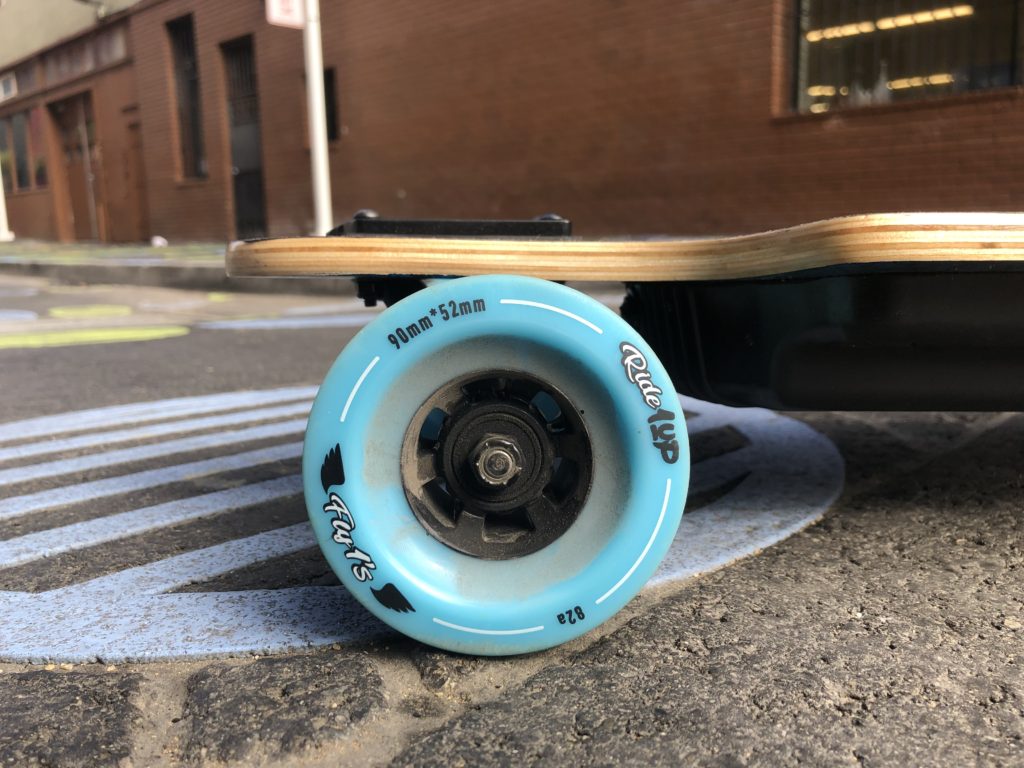
  • Pretty good 90mm wheels (time will tell if they hold up on rough streets)
  • Double barrel bushings setup, not something you see very often on these kinds of boards but ok

Pretty good for a budget eskate to be honest. You can tell they put thought into it and didn’t just find whatever from the grab bin.

So the hardware is good. But what about electronics?

And here’s where it sort of falls apart…

While hardware makes or breaks a traditional longboard, the electronics make or break the electronic skateboard. Quite unfortunately, the electronics break the Slopestyle. Let me explain.

There are two main ESCs (electronic speed controller) that are typically used in budget boards: The Hobbywing ESC and the LiYing ESC. Fellow ESHQ writer Paxson did a comparison in this article a while back. While they’re both budget ESCs, the performance of the two are extremely different. the Hobbywing ESC features FOC (field oriented control) of the motors for extremely smooth takeoff, acceleration, and braking performance, while the LiYing ESC uses square wave control algorithms to control the motors. At first blush, simply by reading specs, you’d assume the LiYing ESC was superior because it can apply more torque immediately and control switching is also immediate. However, in eskate, what you really want is a ramp up in torque and switching, otherwise you’re likely to have the board jerked out from under you. In this, the Hobbywing ESC excels.

I should also mention that while the ESC has torque, it’s not so good at braking. I live on a mild incline, around 5%. I had to fully footbrake down this incline to the bottom and all the subsequent hills I went down in San Francisco as full brakes did almost nothing to slow me down. Granted, this maybe good knowing the behavior of this ESC and it may be good for riding on flat ground, but it’s definitely not good for a hilly place like San Francisco.

I’ve recorded a video of braking behavior. You can see at full brake on HI+ speed mode I can still move the board quite easily. The brakes can also lock in place, but only if you hit slow enough erpm on the board, which requires footbraking. They also sort of “vibrate” when locked…

As far as the remote goes, the LiYing ESC has seen many remote shells that house more or less the same internals. Recently, the LiYing remotes have been upgraded with telemetry. I first experienced a LiYing remote with telemetry on the Teamgee H6 which I wrote a review of here. I didn’t like it then, and don’t like it now. While it’s been made better with a casing almost identical to the Hobbywing remotes, the ride mode differentiation is still “let’s add more deadzone and simply slow down the ramp-up time for the slow modes and keep everything else the same”, which is not really how these modes should be programmed. All this really does is make the board unpredictable for fine grain control.

You can see a video I recorded of this behavior below as well. The inconsistent throttle and bad ramp-up is very apparent.

Well, I’ve said all I really want to say about that. For the sake of the review, let’s move onto the rest of the board’s electronics.

Honestly, the rest is pretty good

Look, it’s not all bad for the electronics. The rest of the electronics hardware is very good. Samsung 25R cells in a 10s3p configuration housed by an unassuming front enclosure. A similarly unassuming enclosure in the back houses the ESC. While the 25R has higher discharge (20A cont.) compared to the 30Q, it has lower capacity by 500mAh. This may make the 25R seem like a worse choice, but it’s a pretty significant price difference of a dollar so I can understand it. However, this means the range takes a bit of a hit vs a comparable 30Q pack. In San Francisco, I got around 11 miles on average.

A sample route I took to achieve the range

The hub motors used here are also not too shabby. They feature replaceable sleeves, and Ride1UP includes all the tools you need to change them out, a really nice touch. The urethane used on the hubs are also not half bad. They feel good, but the durability is yet to be seen.

In terms of power cycle, I had no issues cycling through hard acceleration and braking tests (besides control as mentioned above), and the hub motors didn’t heat up too much after periods of riding.

Unfortunate conclusions

However, what it really boils down to is this:

The impact of the ESC, its configuration, and its remote is fundamental to how an eskate feels and behaves. If an eskate has jerky torque application and mode switching with large deadzones and unpredictable control in the remote, it should not be recommended. I’m happy to revisit my assessment if Ride1UP changes the ESC they use. It should be more or less plug and play to be honest. But until they change it, I can’t really recommend the board. “We sacrifice nothing?” Unfortunately Ride1UP has sacrificed the most important thing of all.

The Peak Review – Reborn from the ashes

Foreword and Introductions

Some of you might remember that back in 2016, a Kickstarter campaign for ‘World’s 1st Single-Dual Motor Switchable Electric Skateboard’ was launched. It’s called the Buffalo board. The project was successfully funded and delivered, but Buffalo the company fizzled out pretty soon after that.

At 2019, out of the ashes of Buffalo board, rises a new brand – The Peak.
The Peak utilized some of the design left over by Buffalo board and created a new product of their own. It was as if this was Buffalo reincarnated.

You shouldn’t assume they are the same product though, even though I never get to put my hand on a Buffalo, just by reviewing the ‘literature’, I found the similarity of both these products starts and ends with the look.

The Peak Review

This the marketed specs of The Peak:

  • Top Speed: 25mph (40kmh)
  • Range: 9mil (14.5km)
  • Weight: 17lbs (7.75kg)
  • Charge Time: 4.5hrs
  • Features: 2 belt motors, IP64 waterproof, Regenerative braking, handles up to 30% slope.
  • Price: 599USD with shipping included.

Build Quality

Packaging

The Peak came double boxed and cleanly packed. Nothing fancy, nothing flamboyant, just one practical package.

Deck

The Peak uses a deck made out of 7 layers of bamboo material with two layers fiberglass. I love the defined concave that this deck have, but is disappointed that it is actually a pretty stiff deck.

I have no problem with stiff deck, but I just think that it is wasteful to have a good flexible battery configuration and battery case yet didn’t make use of it. From my research, I think the old Buffalo has a pretty flexy deck.

‘Though the deck still has some flex to it, it’s still pretty stiff.

Component Enclosures and ESC

The enclosure of The Peak is the most defining feature of the board. It is designed to allow a huge array of 18650 batteries to flex, but unfortunately, as mentioned, it didn’t take good use of that.

There is a USB port on the enclosure, in case you fancy using your 17lbs board as a power bank.

I couldn’t recognize what ESC The Peak is using, but more on its performance later.

Wheels

The Peak use 83mm 85A wheels with an abec core. They are not the most comfortable wheels, but that the advantage of a belt drive isn’t it?
You can easily swap the wheels to flywheels of your fancy.

More on how the wheels impact the riding experience later.

Trucks

The Peak uses cloned Paris truck, which is my preferred version of Chinese generic truck. Outside of branded truck or Shredder truck, this cloned Paris is the best a Chinese manufacturer could pick.

It provides better maneuverability than another generic variant, and was pretty stable too.

Capability

Range

The Peak is rocking 10s2p Samsung 25R battery pack. That amounts to 5AH and 180wh.

It needs to, as the nature of using dual belt drive really eats up battery.
I would expect a 5AH to go at least 11miles(18km) with dual hubs but with The Peaks dual belt set up my range test ends at 9miles (14.5km).

The board has pretty negligible sag though, it still goes up to 18.5mph(30km) at the very last few minutes. Be careful on challenging the range though, as unlike other board which you can feel the battery drying up, this one just push till it can’t accelerate anymore. And being a dual belt drive it really can’t freeroll so don’t think about kick pushing back home.

*I weigh around 165lbs (75kg) and was riding in a mostly flat area in a warm climate. 

Speed

Hitting the marketed top speed 25mph/40kmh is not a problem. My top speed on the sports tracker shows exactly 25mph.

It’s not the faster board for acceleration, some belt drive does do better than that.

Torque

The Peak uses two 1200W Motor, and being a belt drive, it has no issue climbing hill.

Riding Experience:

Acceleration and Deceleration

The Peak allows you to change the acceleration and braking mode separately. Both have 3 different strength to choose from.

The control works alright, but it is definitely not the most refined control I have ever use. And it is pretty difficult to describe the flaw. I would say the flaw lies within the consistency of the control. Sometimes the acceleration comes pretty instant, sometimes it seems to have a delay. I never notice any delay with the braking though, always the acceleration, and especially when starting from a standstill.

The acceleration is definitely smooth enough, so even when the control doesn’t seem to be all that consistent, there wasn’t too much of a jolt and at no point, I am afraid of the board. It is pretty annoying though.

The smoothness of the braking largely depends on the strength setting. In the weakest mode, the braking is pretty tame, and the strongest mode, strong.

When applying the strong brake at a faster speed, sometimes the brake seems to bite and release in alternate succession, causing a few jerks before fully stopping. Again, this is not a consistent finding on every braking attempt. It’s not a big issue as you would already be bracing yourself before braking strongly, but it does take away from the experience.

Stability & Manoeuvrability

Stiff deck, low riding height with 83mm wheels makes The Peak a pretty stable board. I have no problem riding on top speed. (Or maybe just me getting better on an eskate?)

The board is pretty maneuverable, with the Paris truck clone, turning and carving are pretty comfortable. Nothing to write home about though.

Vibration

Belt drive’s had a distinct advantage over the hub wheels in the smoothness of rides as they have 2 real longboard wheel in place of 2 stiff hub motors.
This advantage, however, is something The Peak didn’t take advantage of right out the box. The stock 83mm wheels are just not that good, and despite not having stiff hub motors, the board still vibrate pretty bad on rough roads.

This is made worse as the deck, as I mention, is pretty stiff.

This, I am pretty sure, can be addressed by swapping over to better quality and bigger wheels. But it is up to you to do the switch.

Remote

Argh, this is by far the worst remote I ever used.

Having a dead man trigger is thoughtful, making it stiff and at an awkward angle is not. After pressing down hard on the trigger for half an hour, I felt as if my hand is gonna cramp.

The awkward placement of the dead man trigger in relation to the throttle dial also means I am unable to reach the full throttle with one hand as I am pushing down on the dead man trigger.

Remember I mention about the board not being consistent in control? Part of me wonders if that is due to the dead man trigger not engaged properly. I have no way of testing that, pretty frustrating situation.

The remote has telemetry on it, telling you the speed and allowing you to change speed modes. It has a calibration setting for it but I have no idea what it does. I played around with it and nothing happened. Can’t find any instruction on the manual either.

In short, this is a bad remote design. It’s usable, but just… uncomfortable.

Customer Service

The Peak is pretty new to the scene and pretty unknown even to me even after some research. They offer a 3-month repair warranty and they do not entertain a refund.

They promise to provide customer service over email, or you can reach them via Facebook.
If you purchase it via online retailer EskateboardPark, they too will offer their after-sale service.

Verdict

When I see The Peak, I see a board with a lot of wasted potentials.
It didn’t use a flex deck to take advantage of its battery and enclosure set up; it also didn’t use good quality wheels to take advantage of the belt drive system.

The flaws in control and remote is not deal breaker, but pretty annoying.

All in all, the board from top to bottom, are pretty average.

It is a good base for DIY though, imagine what you can do with the flexible enclosure and battery packs. hmmm.

Click here to checkout The Peak board here.

A Comprehensive Guide to Chinese Budget Eskates

It was over a year ago when I wrote about my findings after diving deep into the realm of Chinese Electric Skateboards. A lot has changed since then, and yet a lot also remains the same.

In 2019, anyone who is looking for a sub $500 entry level electric skateboard will find that segment of the market being dominated by new Chinese brands which provide the best value to money preposition.

Just to prove my point, try naming to me an electric skateboard under $500 that’s not made from a Chinese company.

… Acton Blink S?

Okay fine, maybe one. But Acton Blink S is just another Chinese manufactured product behind an American logo that has customer service that isn’t significantly better than that of established Chinese brands.

But where should you look? There are so many of them on the market. Anyone who is not already in the loop might find trouble separating the rubbish from the legit and the gem.

Lots of options for example, on Aliexpress.

Inclusion Criteria and Method

It’s a long process trying to get a grip on this market. I’ve reached out to all of the more reputable players in this market to request review units.

The criteria to be included is quite simple:

  1. Is an electric longboard
  2. Priced under $500
  3. Can be trusted in Post-sales services

The brands that look to fulfil that criteria are:

  • Meepo Classic
  • Backfire G2 2019
  • Wowgo 2s
  • Ownboard W1s
  • Verreal F1
  • Teamgee H5, H6 and H9 (often under $500 after discount)
  • Yeeplay M2S, H2B
  • AEBoard AE1
  • Teemo boards
  • Jackzoom
  • Panther x3s
  • Harvoo

Notable exclusions of this criteria:

  • Backfire G2 (Because it has been discontinued, and the G2s and G2T are above the cut off price) (Andddd it’s back!)
  • Koowheels (Although I don’t have a high opinion of the Koowheels, but the reason of exclusion is the cut off price)
  • I-Wonder – More of a manufacturer, I am unsure of it’s 1 to 1 post-sales service quality.
  • Winboard’s- Big OEM manufacturer attempted to get into retail. Their retail line-ups are all priced above the cut-off $500 price tag.
  • Maxfinds – not a brand that’s known for quality. Performance is pretty lacking.

How did it go? Well, most of the included brands agreed to have their boards reviewed.

Teemo stopped replying to emails after a few to and fro, which is fair.

Jackzoom, Panther x3s and Harvoo never replied to my initial and the follow-up ‘hellos’.
I think it’s pretty safe to say that if they don’t even bother to reply to a blogger, they won’t reply to regular customers – and hence failed criteria number 3.

So here is the summary of the selection:

Before we began

It is helpful to recognize that most of the Chinese vendors at this segment are aggregators who assembles parts available in the market to build their own product.

This results in many of these boards riding or even looking very similar.

This is not any more obvious and impactful than the choice of ESC. As this directly effects how the board controls.

At this point in time, all the boards in this list use one of these two: ESC -‘LingYi’ ESC or Hobbywing ESC.

LingYi ESC vs Hobbywing ESC

LingYi ESC has the biggest market share at this point in time.

A lot of big manufacturers will have LingYi in its ESC, tuned and tinkered to their liking of course.

Generally speaking, the profile of the LingYi ESC is a harsher acceleration and stronger braking. But it is very difficult to assume a boards behavior just by knowing it’s using the LingYi ESC, as brands do tinker it to suit their idea of good speed control. In doing so, this will change them quite a bit.

Eg, Winboards introduces an aggressive speed ramp in the control, making it less difficult for absolute beginners, but may frustrate those who like a precise control.
Meepo use of LingYi is mainly to maximise on the acceleration and braking, in order to make a more aggressive and thrilling ride.

For the last year, many brands have moved away from LingYi ESC to the HobbyWing ESC.

The notable brands that use a variation of LingYi ESC currently are: Meepo NLS, Yeeplay M2s, Original Backfire G2, Winboard, Teamgee.


Some will tell you the rise of HobbyWing ESC is the best thing that has happened to budget electric skateboards.

HobbyWing ESC saw its first international debut when Wowgo 2s started using it. (Or did Ownboard do it first? Man… these things are hard to keep track of.)

If a board uses this remote… then you know you have Hobbywing ESC.

Hobbywing ESC gains a quick popularity for its amazing performance. It’s smooth in both acceleration and braking, the control is precise, there are no latency issues and the control behavior is consistent throughout different speeds.

Some say it is even better than the Boosted board… that’s how good it is.

Some companies tune the Hobbywing ESC to get the most out of their board, but we generally can expect similar behavior on the Hobbywing ESC.

The notable brands that use a variation of Hobbywing ESC currently are – Meepo Classic, Backfire G2s, Wowgo, Ownboard, Verreal, AEBoards and higher end stuff like Exway X1 are using a custom version of it too.

But I digress, now the boards.

I’ve reviewed most of the boards. Now this will be the summarized thoughts about them and how well they fare against each other.

If you would like to learn more about them, there are always the in-depth full reviews that I’ve published.

The list is in random order (maybe).

PS: ElectricSkateboardHQ do have discount codes for most of the boards below in the discount code page.
However, it’s advisable to check if there is any ongoing promotion available before using our codes as special festive promotions will often offer steeper discounts than that of our discount codes.

Meepo Classic

Obviously the newer stuff is going to fare better than a dated product.

For those who don’t know, Meepo is the current leading budget brand that pioneered the Chinese budget board movement. Since its debut in 2017, MeepoBoard is now a mature brand that has refined its product. Their customer service, though not award winning, is reasonably good and serviceable.

Meepo Classic just came out in early 2019, it aims to replace the last gen Meepo V2, and it’s my favorite budget electric skateboard right now.

I think Meepo picked all the right parts when putting together the Meepo Classic.

This slideshow requires JavaScript.

I especially love the gorgeous double-drop deck which allows a very comfortable, stable low ride. Meepo’s shredder truck provides a good balance between maneuvrebility and stability and is another strong point for the board too.

With all of that said, the best move the Classic made undoubtedly is the switch to HobbyWing ESC. Though some people will miss the aggressive ride of the old LingYi ESC, most people will find a relaxing, smooth ride of HobbyWing ESC. This is a welcoming change – especially for beginners who are looking for their first board.

Click here to read full review of the Meepo Classic.

Use our promo code “ESHQ” to get 15 USD off your Meepo purchase.

Backfire G2 2019

While I was working on this post, Backfire updated the Backfire G2.

While I never tried the newer version of the G2, I do have the G2T and the original G2. And I would say the updated Backfire G2 2019 is probably one of the best budget board money can buy.

Compare to most budget boards, the new Backfire G2 has the advantage of having bigger 5AH battery, and much better polish. The deck Backfire uses, in my opinion, are inferior to Meepo V2/ Meepo Classics but much better than the flat deck that Wowgo 2S and Ownboard W1S uses.

It also uses the Hobbywing which promises smooth acceleration and braking. Sadly, unlike its pricier siblings, G2 won’t come with the caliber trucks.

Smaller 83mm wheels might be a deal-breaker for those who have to dealt with poor and bumpy road. Although you can technically put on the bigger 96mm hub sleeve on G2’s hubs, the width of its truck wasn’t long enough and you will risk wheel bites. You can solve that by swapping in the longer Caliber II trucks, but at that point, you would be better off by paying extra 200$ and go for the G2T.

Affiliated discount link for Backfire Boards (no discount for G2 though)

Verreal F1

Verreal is one of the newer brands that tried to mimic the success of MeepoBoard, and it is doing quite well at that.

Verreal has a good track record in customer service and continue to offer good price to value.

Its latest product and current flagship, Verreal F1, is one of the better takes on a budget board.

Its use of a micro-drop deck and Hobbywing ESC results in a very responsive, agile, and zippy ride. It’s a lot of people’s favorite budget board and after putting it through the paces myself, it’s easy to understand why.

The low-light of the Verreal F1 is that the board’s polish and finishing is still leaving a lot to be desired. F1 also does cheap out a little bit on small parts, such as the bearings.

Though in exchange, the board usually is asking a bit less… especially after discounts as compared to other boards on the list!

Click here to read the full review of the Verreal F1.

Use code ‘EskateHQ’ to get $45 off

Ownboard W1S

As an OEM manufacturer that joined the retail game, Ownboard has a huge advantage right from the get go.

Almost from the get go, Ownboard built with higher quality parts and used good polish. Its customer service is generally considered good.

Ownboard W1S is one of the better iterations of the ‘typical’ budget board. It uses Hobbywing ESC which allows great control and it uses Paris-cloned trucks that offer great maneuverability. Ceramic bearings and its special foam-padded ‘EVA grip tape’ are the other highlights of the board.

This slideshow requires JavaScript.

The only weak point of this board would probably be the flat deck. The 6 ply maple +2 ply bamboo deck offer a fair amount of flex, but a little bit of concave would make it a lot better.

What makes Ownboard W1S a good deal is the option to go with 6AH Samsung 30Q battery – for just US$457.00.
If by any chance a flat deck is what you are looking for (wut?), or you are going to deck swap any time down the line, Ownboard W1s is a very good choice.

Click here to read full review of the Ownboard W1S

Use code ‘OWNBOARDHQ’ to get 5% off

Wowgo 2S

Wowgo is the first competitor of Meepo and made Chinese budget brands a thing.

It has successfully shook the earlier image of a scrappy brand with weird taste in marketing and established itself as a major player in the budget board segment.

Product quality, polish and customer service of Wowgo are all good now.

The Wowgo 2S is especially significant, being the product that elevated the budget segment to another level. Being the first to make the Hobbywing ESC famous, Wowgo 2s was dubbed the Boosted killer for its comfortable control that rivals the top brands.

Today, it is still among the best budget boards on the market. But unfortunately, one-upped by its doppleganger Ownboard W1s that uses slightly better parts in the deck, bearings and trucks.

The differences are not all that significant and Wowgo 2S is still a good choice if you can get it at a better price.

Click here to read full review of the Wowgo 2s

Use code ‘WOWGOHQ’ to get 10% off

Yeeplay M2S, H2B

Yeeplay M2S

Yeeplay M2S is another new brand coming out from the same mold of Meepo, Wowgo and Ownboard. Heck, even its products look like it came out of the same mold as the original Meepo, Wowgo and Ownboards.

The company is still very young, and there is still much speculation as to how it will handle post-sale service. The good thing is – there aren’t any complaints heard about this brand so far – and as usual, the earlier customers would usually be treated royally.

Yeeplay M2S itself is a valid option of a budget board. It uses one of the broader decks with good concave, making it a very comfortable ride. The use of Paris-cloned trucks allow the board to be maneuvreble and turny.

This slideshow requires JavaScript.

However it opted for ‘LiYing’ ESC, which has a more aggressive control. This caters better to specific crowds, but beginners are unlikely to favor it much. And hence making other boards on this list better alternatives.

Yeeplay recently released a belt drive ‘H2B’, which could be the only option for someone looking for a budget belt drive board.

I did not review the board, but performance could be postulated through the part used.
LiYing ESC promised a more aggressive acceleration and braking. Using the same deck as Ownboard W1S means enough flex, but too bad no concave.

Yeeplay H2B

The belt drive H2B should provide better torque than hub boards, but likely will handicap on the range.
Refer to our short guide on drive train to learn more about belt vs hub.

If you are planning to buy a Yeeplay, perhaps you are digging that exotic grip tape. Just be informed that the priced listed on the website at this point in time is not inclusive of a delivery fee.

Click here to read full review of the Yeeplay M2S.

Use code YeeplayHQ for 25USD off

AEBoard AE1/ AE2/ AF

AEBoard made a splash entry in to the market with boards that offer a lot of batteries for the price that it’s asking.

As it is the case for Yeeplay, AEBoard too is very new to the scene. No precedent can be known on how they handle customer complaints. Recently, however, I was able to help an unhappy customer get his purchase refunded, so I at least know my readers will be taken care of.

AEBoard AE1

The AE1 basically tries to offer as much value as possible while asking for as little as possible. The biggest ‘Wow’ factor here is the use of 10s3p battery while only asking for the entry level $430.

This slideshow requires JavaScript.

The use of broad micro-drop deck with good concave – plus the use of Hobbywing ESC – makes AE1 a very comfortable ride.

The base level 10s3p 20R Samsung battery is less impressive as initially assumed though. Basically, it’s performance is only equal to the $457 Ownboard W1S with a 10S2p Samsung 30Q battery – same performance with the extra weight of 10 batteries.

However, the biggest downside of all would definitely be the stiffness of the deck reinforced by the board length aluminium enclosure below the deck. It has zero gives. You know you are stepping on steel immediately as you step onto the board. This result in god-awful vibration when riding on a less than perfect road.

And, being a new company, the packaging and finishing of AEBoard is pretty raw.

All in all, AE1 has the most amount of battery to for the price it’s asking and is definitely a good base for future DIY tinkering. For someone who doesn’t mind extra-steel-like-stiff deck (it’s REALLY STIFF), and is looking for range, AE1 should be the board to check out. You can even upgrade the battery to a Panasonic 9.6AH battery for 25mile (40km) range (or Sanyo for even more range.)

Click here to read full review of the AEboard AE1.

Click to receive 9.99USD off AEBOARD (Affiliated)

While I was working on this piece, AEBoard launched a few new boards which is creatively named AE2 and AF. (Chinese market move so fast, I can barely catch up).

While AE2 seems to be a Wowgo 2S/ Ownboard W1S clone, AF is worth paying attention to as it has some very practical features

Ae Board AE2 Electric Skateboard
AE2, tell me if it doesn’t look like Wowgo 2s or Ownboard W1S

AEBoard AF

While I have not personally reviewed AF, I certain would suggest anyone looking for a budget board to consider it.

Reason? While most of the parts used in AF are old news, it is the only budget board in this list that allows hot swappable battery. On top of that, the battery that it’s carrying has the standard 4AH, 144wh capacity.

The advantage of hot swappable battery over bigger battery pack is, obviously, is the weight – You don’t need to carry the batteries that you don’t plan to use.

Hot swappable battery

Plus, this definitely solves the ultra-super-stiff deck complaints that I have on the AE1. Basically, I think of it as Wowgo 2s with concave deck plus hot-swappable battery. AF is definitely worth considering over AE2, Wowgo 2s, and the W1s.

Click to receive 9.99USD off AEBOARD (Affiliated)

Teamgee H5, H6, H9

Similar to Ownboard, Teamgee is another manufacturer turned retailer.

Just like the Ownboard, Teamgee maintains a certain standard in their products and customers care since day 1. That said, Teamgee is still young in the international scene and though there has been no bad news about the customer service so far, we are yet to see how well its’ post-sale service stands when some serious complaint comes in.

Unlike Ownboard however, Teamgee is not a follower of the generic Chinese budget board trend. It has a slim body design that hides all of the electronics inside the decks.

As a result, the board looks very much like a regular long board to non-prying eyes.

This slideshow requires JavaScript.

To cater to beginners, Teamgee also introduced heavy filtering to control input. This is done to soften the speed changes, however it also causes a noticeable delay between control input and the boards reactions.

This is done to cater to beginner crowd, who might find precise or zappy control intimidating. Many people will, however, be frustrated with the lag and the weaker acceleration.

Both the H5 and H6 are beautifully designed and give a reasonably good skating experience. H6 with the pintail deck has a very surfy feel and H5 with the broad dropdown deck has a stable ride.

Just be informed that stiff deck, relatively weak performance and voltage sags are what you have to be able to put up with when dropping $500 on these boards.

One more thing, their price on Amazon is somehow cheaper.

Click here to read full review of the Teamgee H6.

Click here to read full review of the Teamgee H5 by Samuel James.

In the end:

Even after trying the boards back to back to back, it is sometimes hard to tell the differences between two boards.

As a reviewer, my recommendations are based on the average taste of an average eskater but as any other personal purchase, personal preference often trumps everything else.

Hopefully with all of the information provided here, and the vetting done to screen out questionable brands, this can help you with your purchasing decision.

PS: If you are looking for boards beyond the $500 price range, we also have a list of recommended electric skateboards at all price range.

For those who are from a European country, you can choose to shop from a local dealer – Speedio. Speedio is an Electric Skateboard re-seller based in the Czech Republic. While you do pay a little premium, they offer a 2-year warranty, local support, and fast 2-5 days shipping.

Meepo NLS – Next Level Sh!t? Almost.

Foreword and Introductions

As we all certainly know, Meepo has been the most dominant force in the budget eskate segment ever since their founding in 2017.

While they are practically unrivaled in the budget segment, their successes are nearly confined to the sub $500 price range.

Meepo tried to break free from this price confinement, when they announced Meepo NLS on January 2019 after lots of teaser and marketing effort leading up to it.

For Meepo, there is a lot of weight riding on the success of NLS.

Though they had sold higher-priced AWD GT to torque-addict, the success of NLS means a lot more to Meepo as it is the product that they designed for mass appeal – and it might just decide if they can break out from the entry-budget level into a higher priced market.

With the strategic importance of the product, a lot of effort is put into the design of the product.

Comparing to all other lines of Meepo products, NLS truly separates itself from looks to rides. Those differences will become evident as we walk you through the board.

Meepo NLS Review

This the marketed specs of Meepo NLS:

  • Top Speed: 26mph (42kmh)
  • Range: 14mil (22.5km)
  • Weight: 16lbs (7.2kg)
  • Charge Time: 2.5hrs
  • Features: 2 hub motors, weatherproof, Regenerative braking, handles up to 30% slope.
  • Price: 599USD with shipping included.

Build Quality

Deck

The most distinctive features that separate Meepo NLS with other board has to be the deck.

Meepo set out to create a super flexible deck, and the bamboo + fiberglass deck deliver just that. You will instantly notice the flex and bounciness when you set your foot on it.

If you are a big fan of the flexible deck, this will suit your taste. It makes a fun ride.

Although, Meepo has chosen to run the cable along the top side of the deck underneath the grip tape. It does not affect the ride in anyways, but you can argue that it is a bit of an eyesore – a blemish on an otherwise excellent and polish product.

Component Enclosures and ESC

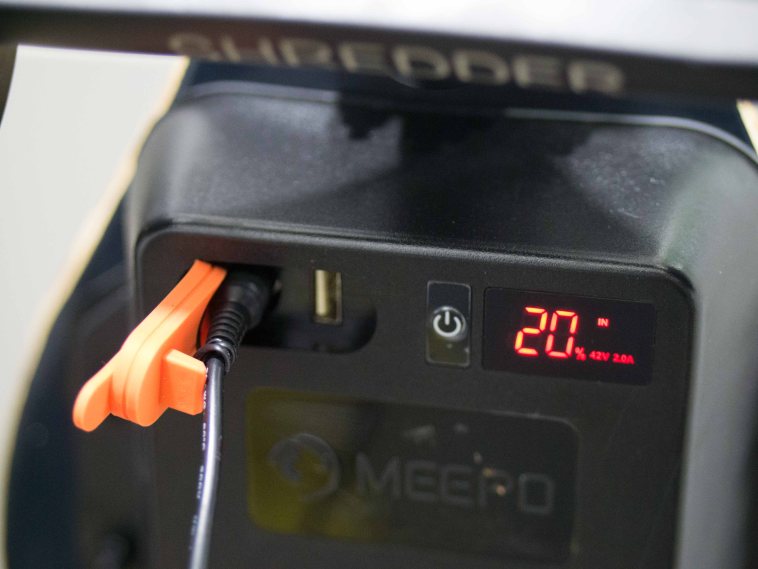
Gone are the generic enclosure as Meepo uses a new plastic enclosure. It’s pretty and with a heat sink attached.

The best part about this enclosure is the button to show battery percentage; a godsend when you are charging the board.

There is a USB port too, but I bet most of us wouldn’t be using our 17lbs Eskate as portable power bank any time soon.

Wheels

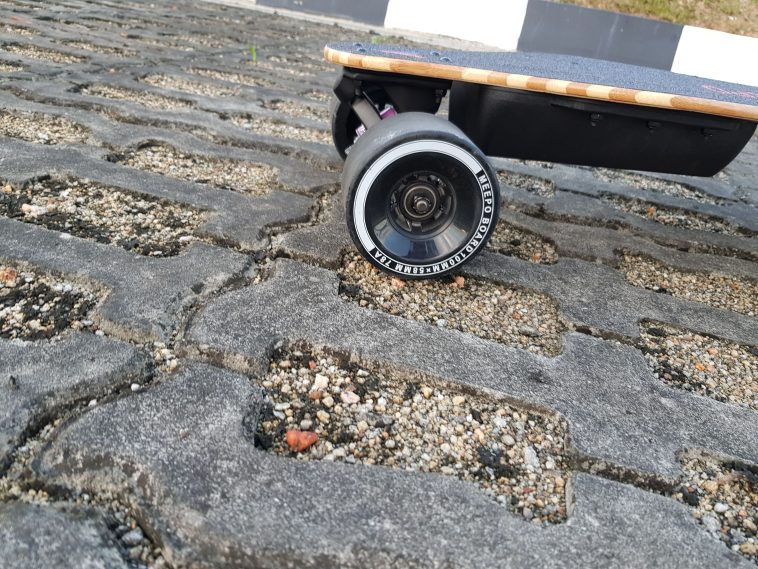
Meepo NLS goes experimental by using huge 100mm wheels.

The front wheel is 78A, and they felt pretty good.

The 100mm hub motors have swappable urethane and are not yet listed for sale on the Meepo website.

I clearly can’t comment on the long-term durability of the hub, but what I do know is that if you are unlucky, or dumb enough to ride on sharp stones, it can only take the first acceleration and some bad luck to chipped the hub.

I peel that piece off and continue on, and so far, the hub sleeves have held up well.

Trucks

For the trucks, the Meepo NLS uses the Shredder trucks, which is a clone of Bear Kodiak trucks. (Of course, it’s not a forged truck like the bears truck is.)

I use to said that Shredder truck is my favorite budget truck, and that still holds true. It allows the use of tall barrel bushing. I find even in stock setting, Shredder truck gave a better return to center and are more springy than any non-branded trucks.

In fact, I would consider swapping all my budget board electric skateboard to shredder truck, that the extent of how much I like it.

Capability

Range

Meepo NLS is rocking a 10s2p 25R battery.
That’s a 5.0AH 180Wh battery pack that set to give you 14 miles or 22.5km of range. My range test falls abit short of the mark and just gets me to 11.8miles or 19km.

Good thing is, there is minimum voltage sag and the board stays fun until almost the very end.

PS: As a rule of thumb in estimating range, use the formula -> watt hour/10 = expected range in km.
*I weigh around 165lbs (75kg) and was riding in a mostly flat area in a warm climate. 

Speed

Hitting the marketed top speed 26mph/42kmh is not a problem. My top speed on the sports tracker shows a high speed of 27mph (43.6kmh).

I was not comfortable riding at top speed on NLS, so testing the high speed is a bit of a challenge. I will get into that later.

Torque

The Meepo NLS’s uses dual 400W hub motors.

Generally, the bigger the wheel, the weaker the torque. NLS can handle most inclines during our standard stop-and-go test; it still passes our standards at a 15% graded incline.

Riding Experience:

Acceleration and Deceleration

The Meepo NLS has four speed modes:

  1. Beginner mode with a top speed of 10mph/16kmh
  2. Eco mode with a top speed of 15mph/ 25kmh
  3. Expert mode with a top speed of 25mph/ 40kmh
  4. Pro mode with a top speed of 25mph/ 40kmh

While some Meepo line-up such as the Classic has begun to switch over to Hobbywing ESC, Meepo NLS still uses the ubiquitous ‘LingYi’ Electronic Speed Controller that can also be found on the Yeeplay M2s, Panther X3S etc.

The behavior of ‘LingYi’ ESC is pretty well known, and it has received a minor update as of recent.

Let’s talk about the acceleration first.

The acceleration of the first two modes is pretty gentle, catering to the beginners and for those who like casual riding.

The majority of riders will spend their time in the 3rd expert mode. It unlocks the top speed of 25mph(40kmh) but will only slowly accelerate up to that.
As compared to the previous versions, the expert mode seems to be toned down a bit in its aggressiveness.

The 4th pro mode is very aggressive, but yet smoother compares to the last generation. The old pro mode is not for me, too aggressive, but I am comfortable riding on the new pro mode now.

All in all, the behavior of this ‘LingYi’ ESC can be described as aggressive, reasonably smooth, and thrilling.

The thing I don’t like about the acceleration is that there is a latency between your throttle input and the response. The acceleration feels like a wave of force that ‘arrives’ after you call for it with your remote.

It gives a sudden initial big push that felt ‘fast’ yet in a drag race; it doesn’t transform to a faster pick up as the initial torque is not sustained.

Some like the thrilling start, but most don’t.

How about the braking?

The unique part of this updated ‘LingYi’ ESC is the ability for you to adjust braking power.

I’ve developed a taste for strong braking recently, and Meepo’s braking is where I want it to be. However, the braking curve is more abrupt, unlike the smoothness of the newest Hobbywing ESC or a VESC.

The strongest braking is really powerful, almost as if you are engaging the ABS braking system on a car. It feels like the wheel is going to stop to a slide, but it doesn’t. This certainly cuts down the stopping distance.

If you are not up for strong braking, you can switch to a weaker braking mode by holding the brake and pressing on the power button.

In summary, with ‘LiYing ESC’ the control of Meepo NLS is, at best, a B+. It is still miles ahead of some last generation control, but with the newest generation Hobbywing ESC (those with Turbo mode) behaving outstanding in everything from torque, to smoothness, to braking, ‘LiYing ESC’ can’t help but feeling half generation behind.

Stability & Maneuverability

Meepo NLS is fun in slow cruising. The maneuvrability is as good as expected with the use of shredder truck.

Carving on NLS is fun.

You will have less worry going through huge bumps as the 100mm wheels roll over everything. Stability however, is not a strong suit for the NLS.

100mm wheels mean you are riding pretty high off the ground. That plus a bouncy deck, soft stock bushing means the NLS felt a bit wobbly and unstable in top speed.

I don’t think this is an over-the-top, top-speed board, even when 26mph (42kmh) felt too fast and unsafe on NLS. Things improved dramatically; however once swapping over to a harder and shorter bushing. As shredder bushing are extra tall (20mm) to allow trucks to lean and turn more, it adds to the instability and wobbliness in high speed.

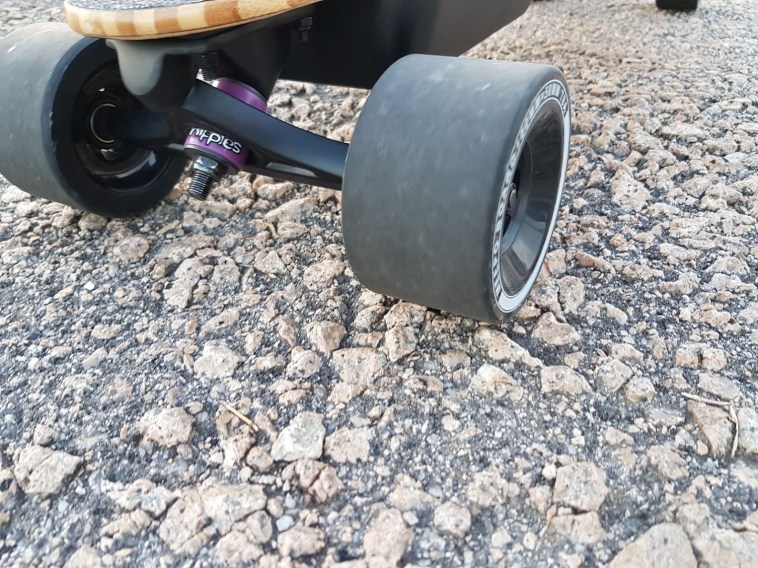
Changing those back to a shorter Orangatang Nipple works wonder for me and allows me to ride comfortably at top speed. I strongly suggest everyone do the same unless you weigh like a feather.

Vibration

The best-selling point for Meepo NLS is undoubtedly its ability to handle poor roads. 100mm wheels with thick urethane sleeves plus flexy deck create an amazing vibration dampening system.

It definitely scores an A+ here, even better than some belt-driven boards!

For those who are wary of road condition, NLS got your back. Be it cobblestone, poorly paved road, cracks or those tactile paving on footpaths, 100mm means Hakuna Matata.

It can even go over rough speed bumps!

Don’t try this with your 96mm wheels. It can’t go over.

Remote

NLS purchase came with an NR remote. I don’t have one with me so that I can’t comment on that. While it looks funny, it is pretty practical with the flashlight attached on the tip.

For those who don’t like the NR remote, rest assure that NLS does still come with the familiar V2 remote.

It has an ergonomic design and is comfortable in hand.
The soft touch plastic gave the remote a premium feel.

You can change between speed mode by a short press on the power button and can similarly change the braking settings by a quick press on the power button while holding the brake.

Ultimately, there were no disconnection issues and is overall, a pretty decent remote.

Customer Service

Before we get into the final verdict, let’s talk about Meepo’s customer service.

Generally speaking, Meepo’s has one of the better customer service teams among the budget brands.  You can reach them via Facebook, Wechat, or email and even some of their brand ambassadors can help you solve your problem.

However, being the best-selling budget board brands means they have a lot more customers to serve and from time to time experience lapses in their customer service.

Most of the time, people who need help eventually get through to them, and even when they reply slow. They always try to do the right things by the customers.

The most valuable part about buying the Meepo is the Meepo community. Every potential issue will be exposed, and a solution found by its community members. Some weird rattling noise? Someone who had that problem knows the exact solution. Want to do some DIY upgrade? Chances are there is already a guide or Facebook post about it.

That’s why I have no trouble recommending Meepo as a brand.

Verdict

Meepo NLS is the most interesting Meepo product so far.

Breaking away from generic parts and general riding experience, NLS is trying something different with super flexible deck, giant 100mm hubs, and quirky but hopefully practical remote.

With NLS, Meepo has reached a level where it is overall a really good board; therefore, what is lacking will definitely stand out. A better ESC or even better, a VESC would have perfected both the control and the performance of the board. And more thoughts on the riding experience would see the board shipped with a shorter bushing as the default setting.

I know it as fact, as my Flipsky 4.20 plus VESC equipped Meepo NLS with purple nipples is freaking perfect.

Good effort Meepo, maybe do a Gen 2 soon!

Check out NLS at MeepoBoard site by clicking here.

If you do decide to buy a Meepo, use our promo code “ESHQ” to get 15 USD off. Not only will it help us, but it will tag your purchase as an ESHQ customer and may even get you some preferential treatment in the process! =P