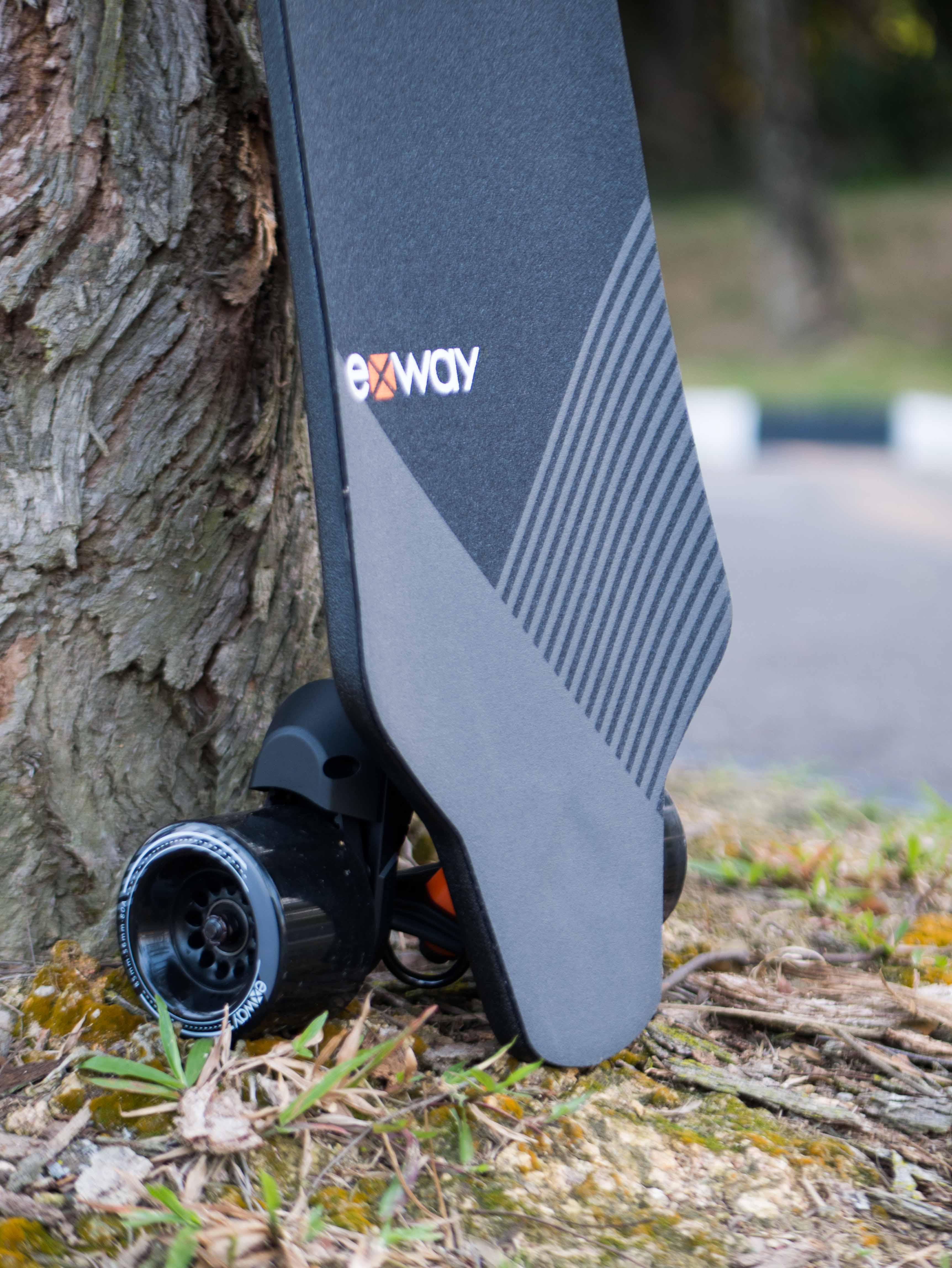
Apsuboard X1 Review – Second swing for the belt-driven budget board

Foreword and Introductions

Apsuboard X1 is special, being the rare budget ($449) belt-driven longboard available on the market. For its price, it also carries an unusually large 10s4p 8AH battery. But we have been here before, haven’t we?

Long-time viewers might remember we reviewed the Apsuboard X1 last year (priced at $599 then) and heavily criticized its control:

We suggested the Apsu team change the ESC from LingYi to Hobbywing, and it turns out they took our advice. (Or it could be from not just us and they just say that to get on our good side.)

So, with the X1 already giving huge value on the specs, is a new ESC going to make it our new darling in the budget segment? Read on.

The Apsuboard X1 Review

This the specs of The Apsuboard X1:

  • Top Speed: 29mph (46kmh)
  • Range: 12.5mil (20km)
  • Weight: 15.4lbs (7kg)
  • Charge Time: 3.5hrs
  • Features: 2 belt motors, regenerative braking, handles up to 30% slope, remote.
  • Price: 599USD 449USD with shipping included.

Build Quality

Packaging

The bigger the battery, the less sophisticated the packaging it seems.
You can be sure that Apsuboard doesn’t invest in the unboxing experience. The board is well-protected with a foam pad, and that’s about it. It is as we have learned to expect from new Chinese brands.

Deck

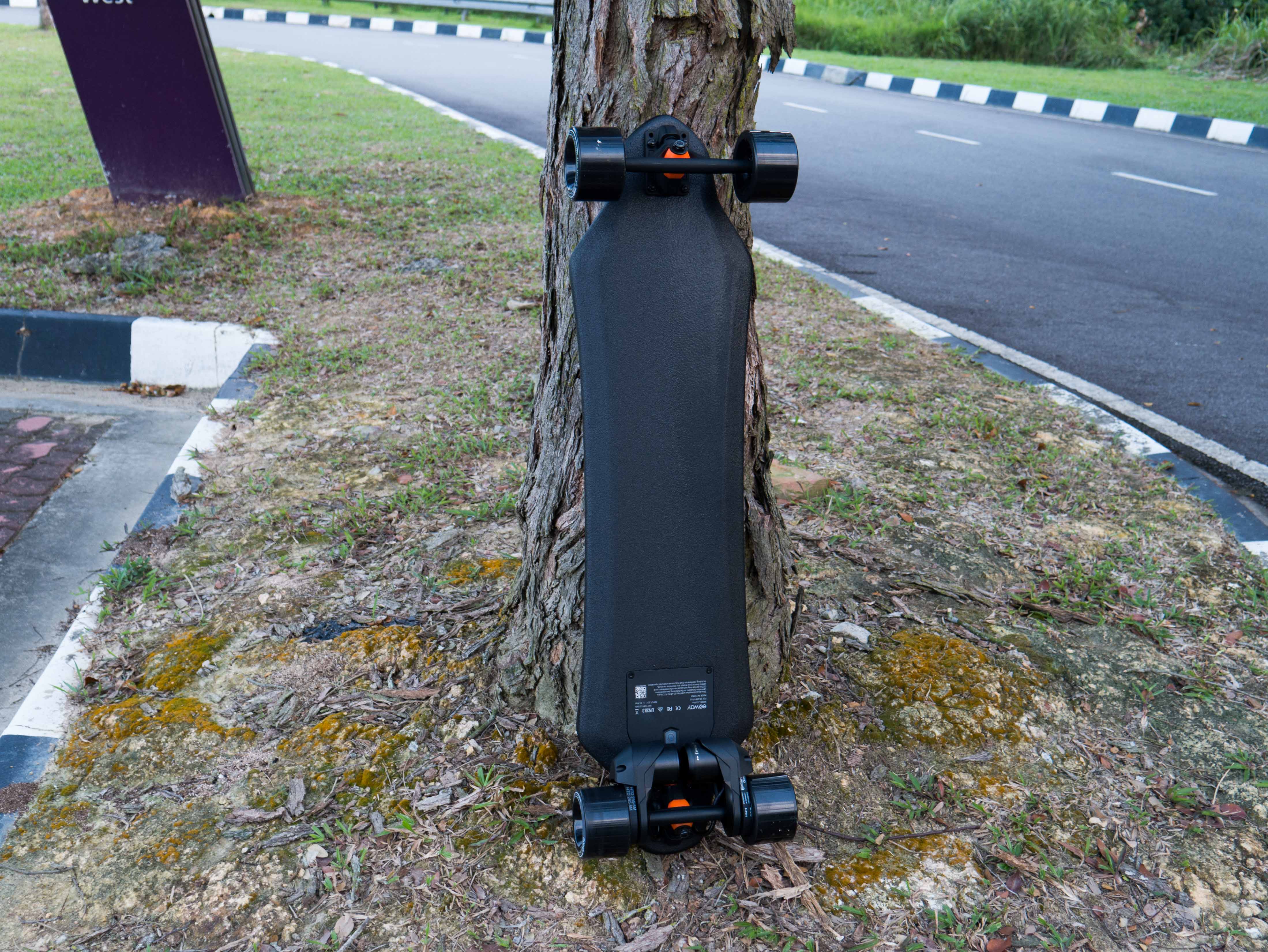
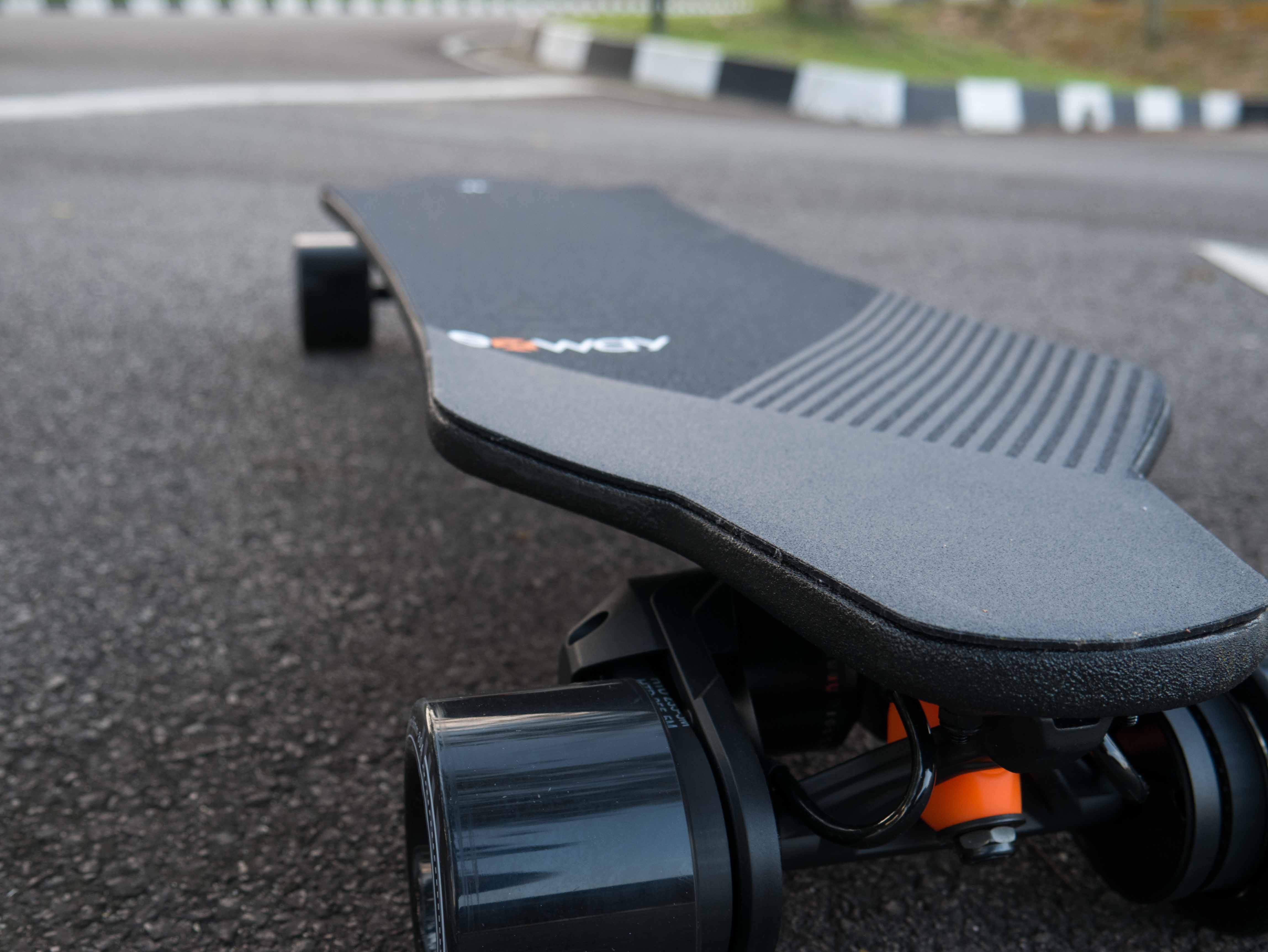
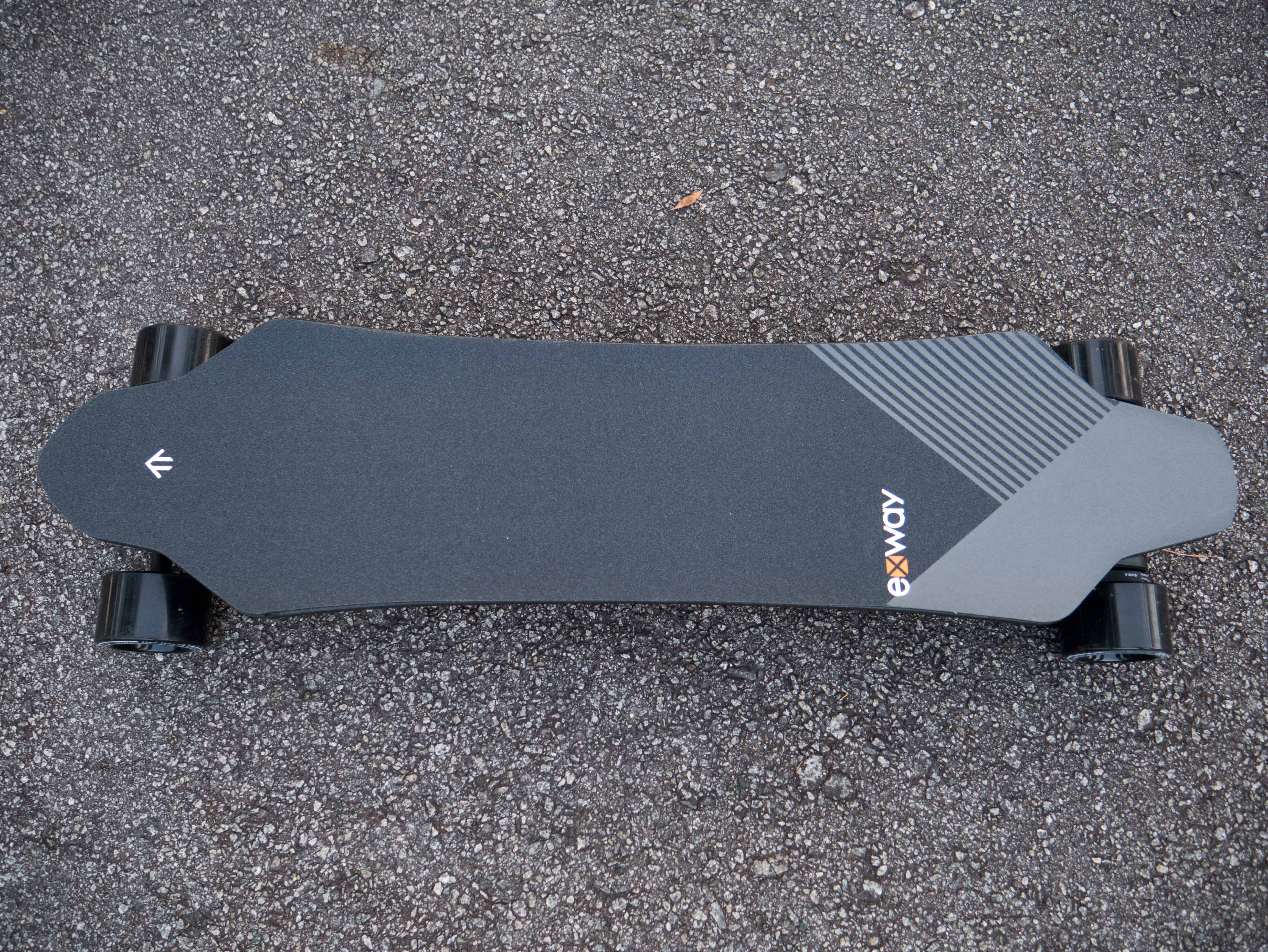
Apsuboard X1 uses a 7-layer Maple + 1-layer bamboo deck. From the photo, I was expecting it to be the same generic deck as the Wowgo 2s or Ownboard W1S; I was proven wrong. As you may recall, I hate those generic decks for being completely flat. This deck that X1 uses has a subtle concave, helping my feet to feel comfortable. It also has as good a flex as the Wowgo/Ownboard deck.

Good deck, I am pretty happy with it.

Component Enclosures and ESC

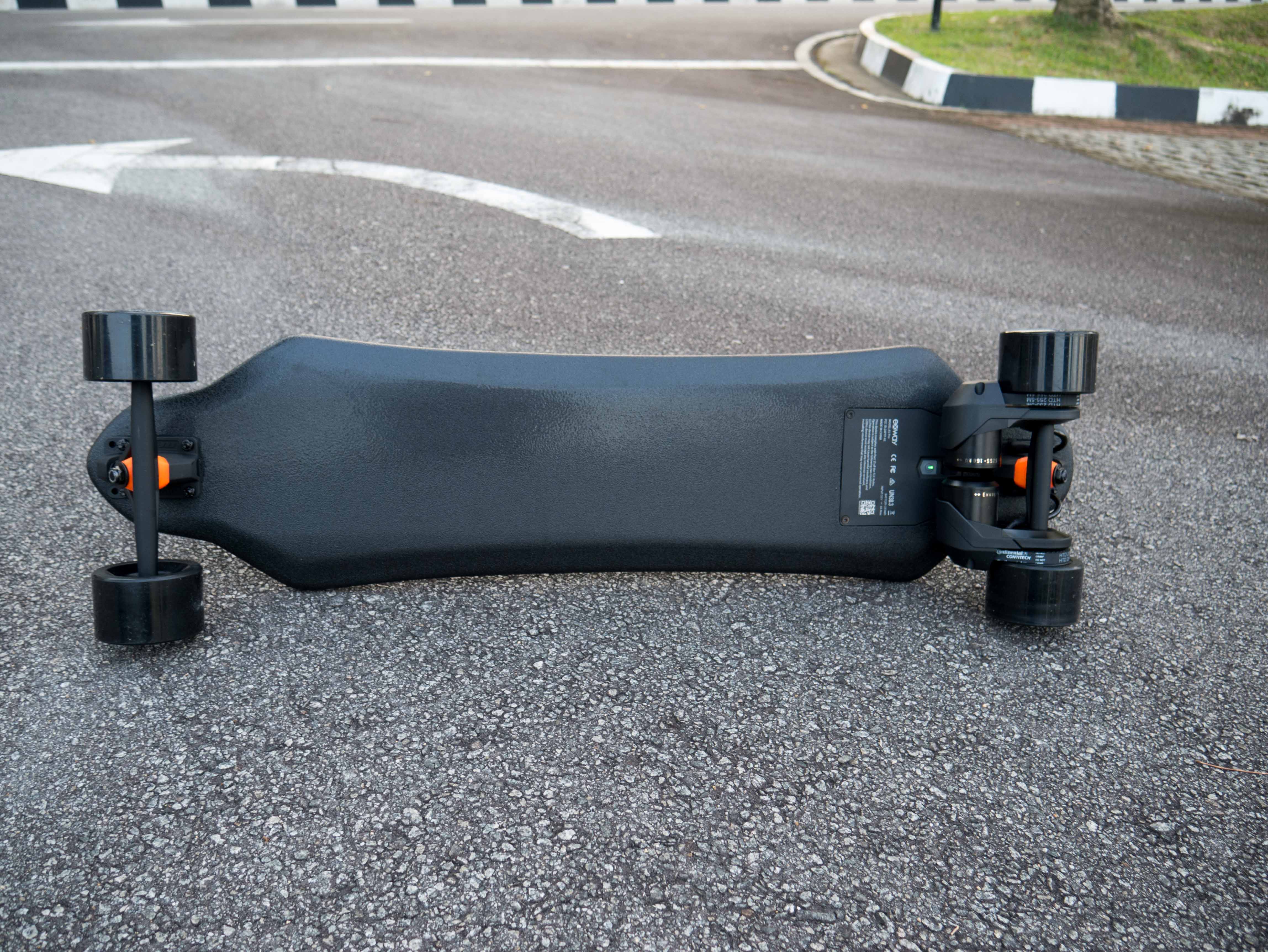
Flipping the deck onto its back, we see the typical 2 enclosure setup. Apsuboard X1 uses an aluminum enclosure, which should be able to withstand more abuse than its plastic counterpart.

There is a USB port on the enclosure, in case you fancy using your 15lbs board as a power bank or, more practically, as an emergency power source to charge your remote.

It is pretty awesome to know they manage to pack 40 batteries into such a small footprint.

Inside the enclosure lies our typical Hobbywing ESC and the whole point of updating this review. The hope is, with a typical generic Hobbywing ESC, Apsuboard X1 can at least have a typical generic Hobbywing ESC’s control – because that would already have eliminated its greatest weakness and make it a good board!

ESC swap

Wheels

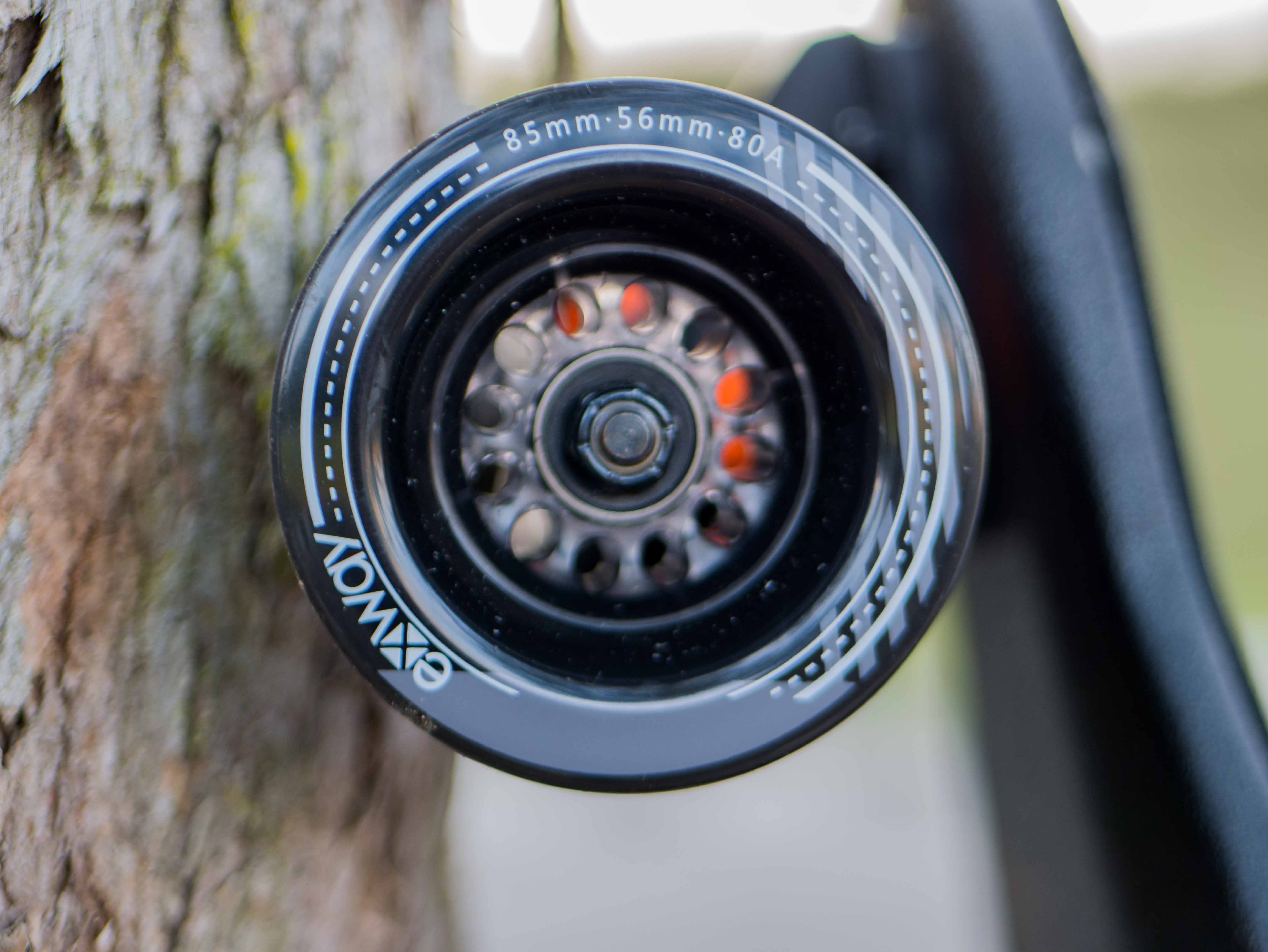
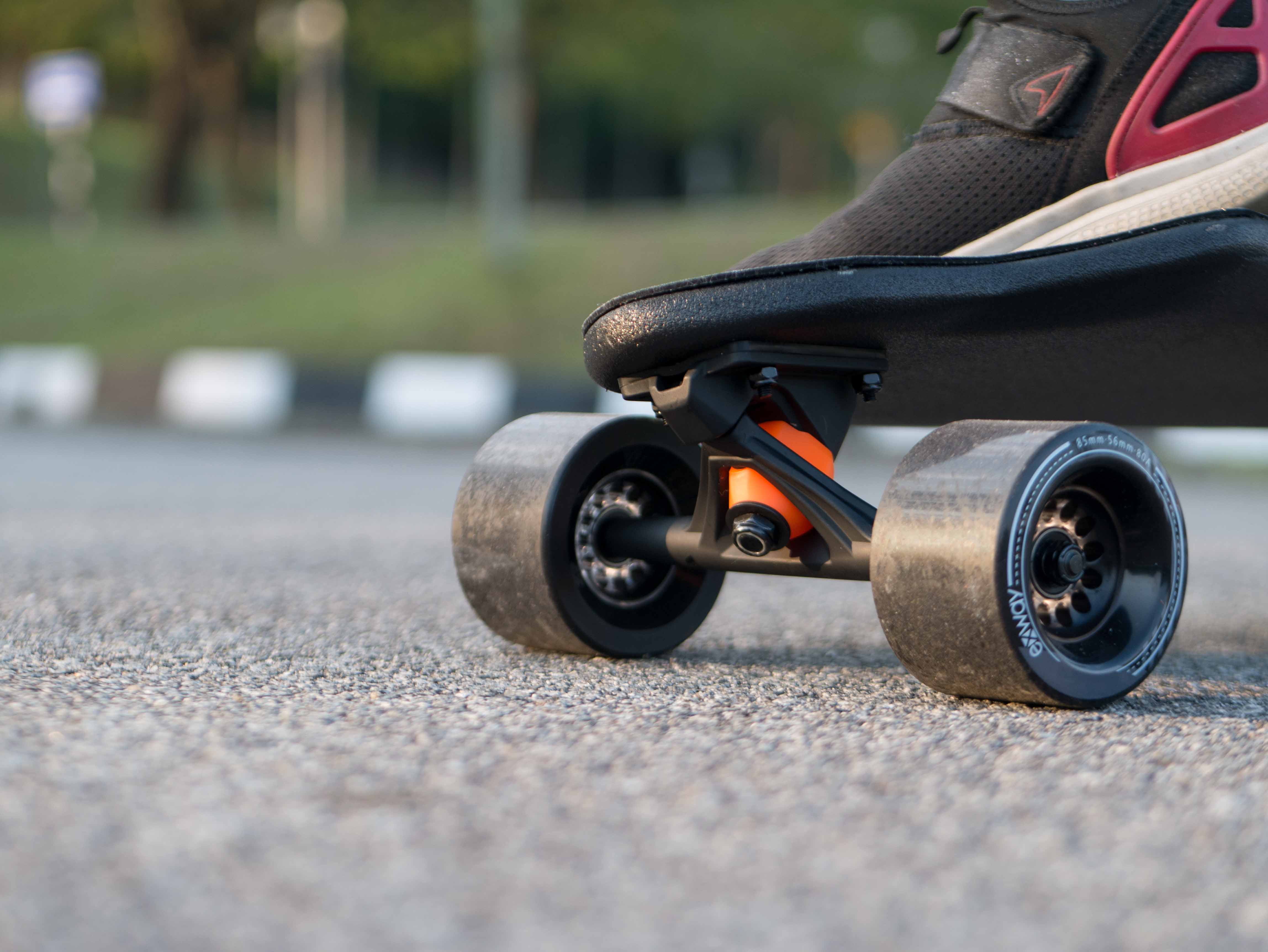
The Apsuboard X1 uses 90mm 80A wheels with an ABEC core. I wouldn’t say they are mind-blowingly good, but they are good enough.

There will be more on how the wheels impact the riding experience later.

Trucks

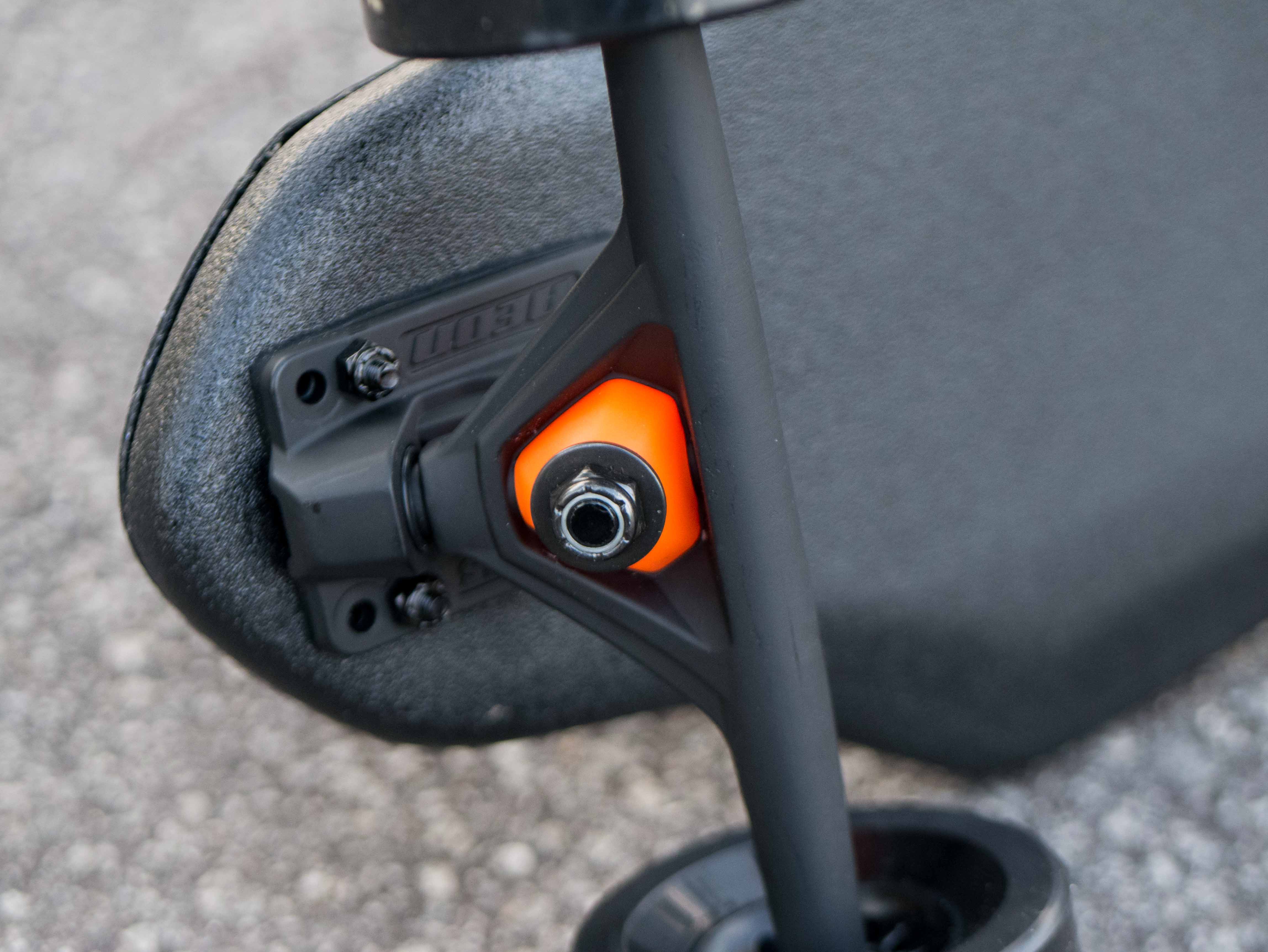
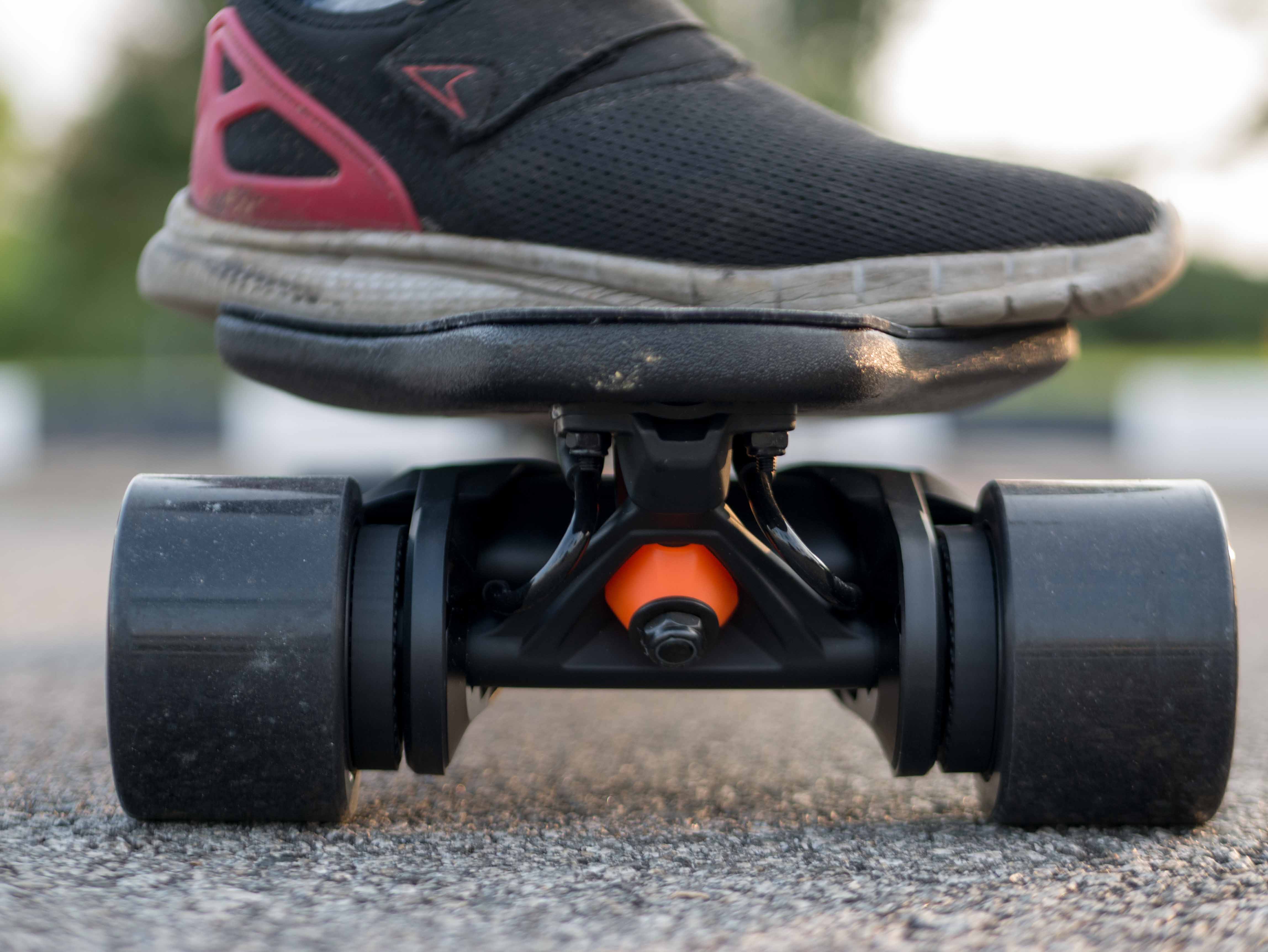
Apsuboard X1 uses a pair of generic Chinese trucks that can be found in most budget boards. They are okay, they don’t break, and are not the most maneuverable but hey, they are pretty stable.

Performance

Note: The range test and speed test were done with old LingYi ESC, because this happened before I got to do the test.

This is what happened when you drove hard into a drain.
I’m not injured, thanks for asking but WHO THE F**K LEFT THAT HUGE DRAIN UNCOVERED!?

Range

When a company claims a range of 17miles(27km), you can be sure that I will be putting that claim to test.

The Apsuboard X1 is rocking a 10s4p 288wh battery pack with 20R cell. On paper, 288wh can get you 28km or slightly over 17miles of range on a hub motor (using the formula of 10 wh = 1km of range).
With that being said, we all know that Belt drives use battery fast. I would ballpark it to last around 20km (12.5miles).

Sure enough, the board lasted 19.8km(12.4miles) before it completely stopped.

The board has pretty negligible sag though. It still goes up to 21mph(34km) at the very last few minutes. It pushes well up to the last half miles, slows down just a few minutes before it stops.

*I weigh around 154lbs (70kg) and was riding in a mostly flat area in a warm climate. 

Speed and Torque

According to Strava, I did manage to go over the marketed top speed and hit 29.5mph/47.5kmh. When the battery wasn’t full, the top speed (according to the remote) is around 26.7mph(43kmh).

The X1 uses two 1000W Motors, and being a belt-driven board, it has no issue climbing hills. It certainly accelerates fast, even at the higher speeds, reaching the top speed quickly and with ease. At no point will you feel that the board couldn’t push you as fast as you intend. The top speed felt more like an electronic setting than the physical limit.

The board is pretty stable for high-speed riding. Riding at 25mph (40kmh) is not too scary, which is good. We will discuss this more later.

Riding Experience:

Acceleration and Deceleration

After the switch to Hobbywing ESC, the smoothness on both acceleration and braking are not in question. Acceleration of Apsuboard X1 is the typical smooth acceleration from Hobbywing that we have known so well.

The braking is smooth now but too tame this time around, as expected from an un-customized Hobbywing ESC. This would be preferable for beginners who are usually unable to tolerate tighter brakes, but any seasoned veteran will agree that it’s too weak, especially when you REALLY need to stop.

With that said, this is still a HUGE improvement over their previous braking control on its LingYi ESC version. Huge, huge improvement.

Stability & Maneuverability

Apsuboard X1 strikes a good middle point of stability and maneuverability.

The generic truck is not too tight, but at the same time is not too turn-y, so speed wobble wasn’t a big issue with X1. The deck has enough flex to be comfortable and ease vibration but not too much to bounce you off the deck.

Vibration

The belt drive had a distinct advantage over the hub wheels in the smoothness of ride, as they have 2 real longboard wheels in place of 2 stiff hub motors.
Even with the generic 90mm 80A wheel that X1 is using, the board handles vibration better than any hub driven board could.

The use of a flexible deck further improves the experience.

In short, this board scores an A- in vibration handling.

Remote

Switching to Hobbywing ESC means we get the generic Hobbywing remote.

There are no telemetry readings and nothing fancy.
3 ride modes, forward and backward mode; just a typical, trustworthy remote that doesn’t drop the connection.

Customer Service

After more than a year in the business, the company still is pretty clean when it comes to reputation. No customer complaints found online, and I didn’t receive any anecdotal complaints from our viewers. Probably because they haven’t been selling enough boards to create enough sample size but, so far, no red flags.

My experience in dealing with them over the months has been pretty pleasant too. Fast and polite responses.

Verdict

So, the TL;DR version of this review:

The new Hobbywing of the Apsuboard X1 is a great deal for its price. At $449, there is simply no belt-driven longboard that competes with its value and riding experience.

Yes, the brake is tame, but there will be as many people who love it that way as those who see it as a deal-breaker.
Yes, the range may not be as good as marketed but still beats other budget boards of similar price soundly.

So yeah, a simple ESC change and a price cut 180-degreed my opinion on the Apsuboard X1. If you want a budget board with a slightly bigger battery than its peer, consider Apsuboard X1. If you want a budget belt-drive and don’t mind a soft brake, your best choice, for now, will have to be Apsuboard X1.

If you are interested in buying a Apsuboard board, be sure to check out our affiliate discount link here and uses code: “ESKATEHQ” during check out.
It will help you get a small monetary discount and helps us out too. On top of that, you’ll be tagged as an Electric Skateboard HQ customer and probably be treated better. Cheers!

Wowgo releases Wowgo 3X

When a big brand like Wowgo released a product, we are compelled to notice it. More so, when the product is an extension of an already successful product. This is precisely the case with the launch of Wowgo 3X, a welcome addition to the electric belt longboard market.

Wowgo as a company has made a name for itself by designing skateboards with cutting edge technology and offering top of the line products at rates cheaper than its competitors. With 3X wearing the price tag of 749 USD, Wowgo expanded its line-up in term of price range by offering an electric belt skateboard the high mid-tier segment. Wowgo 3X is available for pre-bookings and will start shipping for 15th of October, 2019.

A brief introduction to the Wowgo 3 series:

For all those who aren’t in the electric skateboard loop, Wowgo 3 is Wowgo’s bestselling skateboard and has garnered fantastic reviews from experts and users alike. Armed with Paris V2 Front Truck, Bamboo and Fiberglass deck, new, improved wheel design, smart LCD remote, new Hobbywing ESC, new design case, powerful Samsung batteries, Zealous bearings, enhanced performance and speed settings and a 180-day warranty, Wowgo 3 was indeed very well received by both customers and critics. 3X is a further upgrade of this line and comes with enhanced technological advancements and improvements over its predecessor.

Wowgo 3X at a glance:

Wowgo 3X is largely similar to the Wowgo 3, but there are of course updated and improved features, namely the bigger battery, updated ESC and the change to belt-drive.

New- Samsung Batteries

Sporting an overall upgraded power system with higher voltage and more powerful output enabling smooth riding experience of up to 14 miles or 22.5 kilometres. It achieved this by going with excellent Samsung 30Q cells in a 12S2P setting (259.2WH)

New- Hobbywing V2.0 ESC

Hobbywing V2.0 ESC comes with overall upgraded hardware, which was needed to handle the high voltage of the 12S2p setting. In recent months, different vendors have released product using this New Hobbywing V2. We are expecting great things from it, but its performance and reliability have yet to be proven.

New- Powerful High-level motor:

Wowgo 3X’s 2*600W rated power, high quality, high precision motor ensures excellent dynamic balance while making less noise when on the go.

New- High Precision & Strength Self-Designed Rear Truck:

One of the highlights of Wowgo 3, and now 3X is the uses of branded Paris front truck. Wowgo 3X also comes powered with a Self-Designed Rear Truck which is compatible with the Paris front truck. The duo of the self-designed rear truck should work well with the Paris front truck to give a fantastic carving experience.

Smart LCD Remote:

Wowgo 3x uses the same remote as the Wowgo 3. The remote control comes with LCD screen empowered with a display with on/off symbol, speed, and battery levels. It’s pretty elegant in look, everyone likes it, except left hander maybe.

Bamboo and Fiber Glass Deck:

Wowgo 3X continues to use a Bamboo and Fiber Glass Deck that gives plenty of flex and shock absorption. This is to provide a very smooth ride mimicking the experience on a Boosted.

Receptions so far:

Daniel Kwans’ initial impression of Wowgo 3X. Sums it up pretty well.

Initial reception of the eskate community is primarily positive. Wowgo 3X offers excellent torque and speed. The control in both acceleration and braking are as smooth as expected, and it freeroll quite well for a belt-driven board.
On the flip side, there were finding where Wowgo X3 while high on torque doesn’t reach the top speed easily, which might be a downer for those who love speedy accelerations.

Final Word

With all this said, Wowgo X3 as the potential to become a category leader as far as the electric belt skateboard segment is considered. We have said that Wowgo 3 was heavily inspired by Boosted, the new X3 takes that a step further by going with a belt-drive. Would the imitator finally catch up with the OG? Only a full review could probably tell.

Wowgo 3X is available for pre-booking and according to the official website will start shipping from 15th of October.

Check out Wowgo 3x by clicking here and
use $5 off of your purchase.

Please be aware that pre-orders in the Eskate world are more often than not ends in delay. Shit happens, even for a seasoned brand like Wowgo.

Only pre-order a product if you can afford the wait.

Exway X1 Pro Riot Review – Hello Torque

You know how sometimes you really like something and you use it a lot, like every day a lot? That’s me and my X1 Pro. I use it every single day for commuting to work, for running errands, for going to eat, for groceries, everything. I love this board. But you know, I always thought there was a little bit something missing. “you know what?” I would think, “This board needs belt drives.”

My wish was answered when the Riot kit for the X1 Pro came out. It’s a very impressive piece of kit. It comes in a nice box with the drivetrain already assembled for forward mount and all the tools and screws you could possibly need packaged very securely. There’s also an instructions manual with clear steps explaining how everything fits together. The kit also comes with new 2nd generation Exway wheels that have improved urethane and profile.

And also these cute stickers

Let’s talk Riot specs

Since my last review, the Riot specs have changed. Here are the new specs:

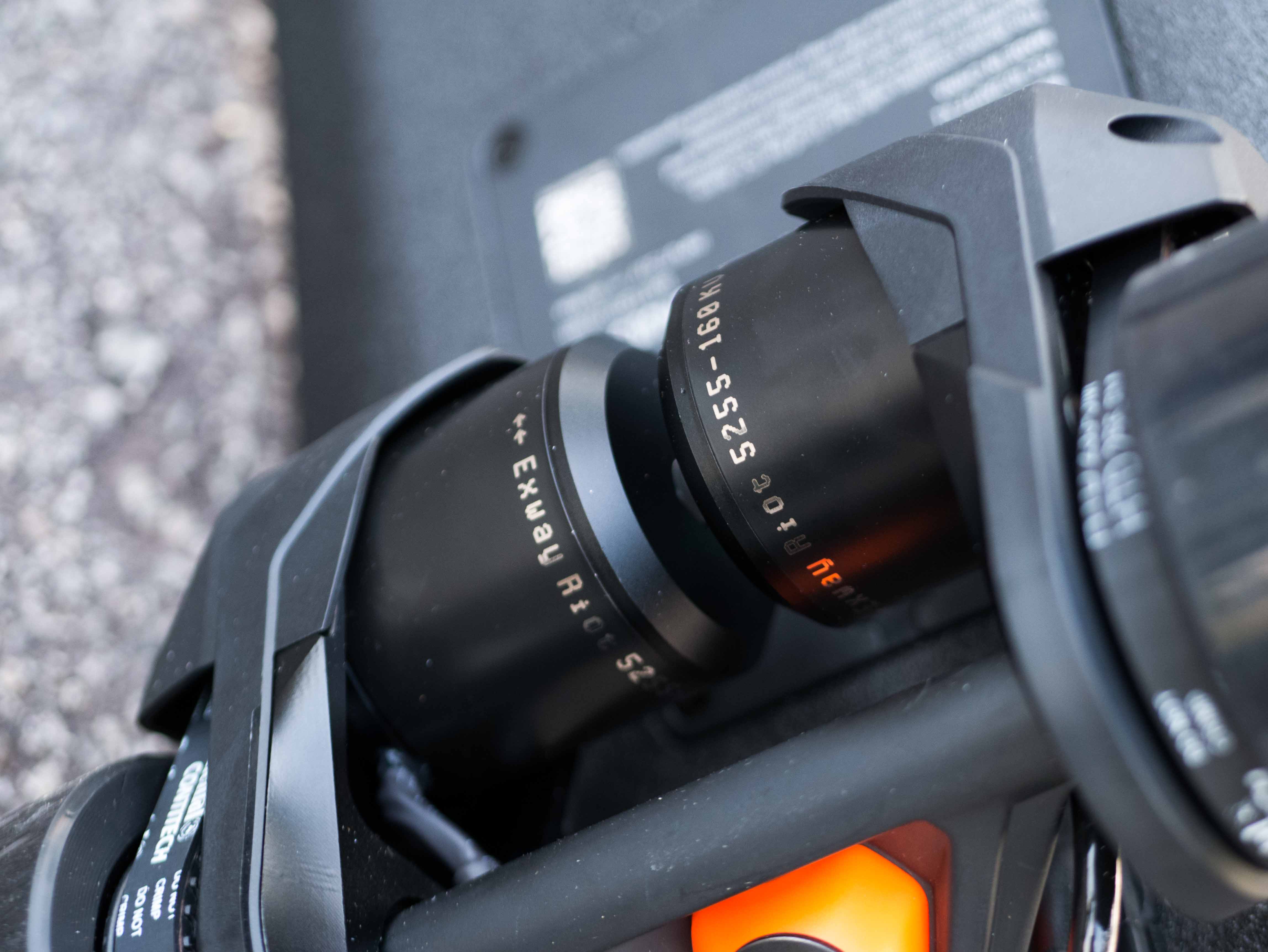
  • Dual 5255 motors with 4235 stators (for reference 5065 motors have 4035 stators)
  • 200KV 160KV winding
  • 1:2.57 gear ratio
  • 35MPH 26MPH top speed
  • 255-5m-10 255-5m-12 belts
  • Rear mountable for better pothole and curb clearance

When I reviewed Riot last, it was still a prototype and Exway was still trying to figure out a good balance. If they had gone to market with the original motor KV, the Exway would have been the fastest production board on the market. However, Exway decided to lessen the motor KV for more torque, which I appreciate as well. It’s a fine balance act between the two, and I don’t envy manufacturers having to make these decisions and sticking with them forever.

Installation

As soon as I received the kit, I immediately installed it on my X1 Pro. I was excited to have belt drives and full urethane on one of my favorite boards.

The installation was simple and straightforward. Slightly peel back the griptape above the back trucks to expose the four baseplate screws, and unscrew them.

The drivetrain simply comes off. Now simply pop Riot on and use the new slightly longer screws provided with the kit to screw them back in. Don’t forget the rubber riser!

But wait, the remote is telling us something

Don’t forget to change your board settings to Riot mode in the Exway app. I love Exway’s attention to detail.

Oh also, Exway’s 2nd generation wheels come in clear and they’re great. They don’t really yellow at all.

Now that it’s installed,

It’s time to ride!

The first thing I immediately noticed was the increase in torque. Off the line, the X1 Pro Riot is significantly more torquey. Braking is also significantly more torquey as well. Before on hubs, the brakes will stop you. But now, they will seriously stop you. I’m able to come to a full stop on steep SF hills without free mode on. That’s an accomplishment on any board.

The ride quality and handling is also significantly improved as well. I feel like a lot of people don’t realize how much of a difference hubs vs full urethane is. A lot of times I see people online talking about belt versus hubs, and in my opinion one of the main things they miss is handling. Most people might not care, but assuming the same exact bushings setup, truck setup, and urethane durometer, the hub setup will loose out on handling. The reason for this is because with a full urethane wheel, depending on the size, you have at least three or four times the amount of urethane to compress when riding. But on a hub motor, you have that one outer layer of urethane, then you hit the solid hub motor can. This means that you will have less grip (less urethane to deform), lower rebound, (again, less urethane to deform), less road imperfection absorption, etcetera.

Ahem. Please excuse my rant.

This isn’t to say that there aren’t some caveats

The standard configuration that Riot comes in has the motors mounted under the board, otherwise commonly known as forward mounting. There are a couple advantages to this configuration, most notably it’s still generally “stealth” looking if you don’t look closely, and you can still kick your board up by the tail into your hand. However, on the Exway, it sort of hinders access to the charge port. This is not to say it’s not completely unreachable, just slightly more difficult to reach.

In front mount, the charging port is partially hidden behind the motor.

There is another configuration supported by Riot, called rear mounting. Basically this means you flip your motor mounts around so that they’re sticking out the back. This is easily done by taking the drive cover, wheel, belt, and wheel pulley off each side, unscrewing the big clamp screw on the side each mount, and turning the mount around until the key sits properly in the keyway in the rear mount position. I must say I’m a fan of Exway’s mount design, especially since it’s for Seismic trucks. I love Seismic trucks.

Anyways, in this rear mounted configuration, port access is no longer a problem. However, now another slight inconvenience arises. You can now no longer easily kick your board up by the tail. To be honest, for me this is a big inconvenience. I use this board for lots of situations where I need to quickly pick it up, and bending down often to pick the board up off the ground gets tiring real quick. I know I’m lazy, but, well, there it is.

Another caveat of the Riot kit is that it’s quite loud. Personally I’m ok with this and like it a bit, but for some people it might be a deal breaker. There is also the issue of belt induced kickpush resistance, however I would say if you tension the belts properly on your kit, you shouldn’t have any big issues. As a general rule, the correct tension should be 3mm of give when you press down on the belt with one finger lightly. There is also a very slight reduction in range in my testing, but i’m talking about near statistically insignificant reductions, so I’m saying this as a warning rather than a true caveat.

All in all,

I think the Riot kit is worth it if you live in a hilly area or if you are a chunkier individual in need of more torque. I also think it’s worth it if you want great ride quality. So what about me? For me, I think I’ll swap back to hubs because bending down every time I want to pick the board up is getting to me. I know I did wish for a proper belt drive for the X1 Pro, but alas, I’m just too lazy.

Click here to check out the Exway X1 Pro Riot (Asia), (USA).

The Peak Review – Reborn from the ashes

Foreword and Introductions

Some of you might remember that back in 2016, a Kickstarter campaign for ‘World’s 1st Single-Dual Motor Switchable Electric Skateboard’ was launched. It’s called the Buffalo board. The project was successfully funded and delivered, but Buffalo the company fizzled out pretty soon after that.

At 2019, out of the ashes of Buffalo board, rises a new brand – The Peak.
The Peak utilized some of the design left over by Buffalo board and created a new product of their own. It was as if this was Buffalo reincarnated.

You shouldn’t assume they are the same product though, even though I never get to put my hand on a Buffalo, just by reviewing the ‘literature’, I found the similarity of both these products starts and ends with the look.

The Peak Review

This the marketed specs of The Peak:

  • Top Speed: 25mph (40kmh)
  • Range: 9mil (14.5km)
  • Weight: 17lbs (7.75kg)
  • Charge Time: 4.5hrs
  • Features: 2 belt motors, IP64 waterproof, Regenerative braking, handles up to 30% slope.
  • Price: 599USD with shipping included.

Build Quality

Packaging

The Peak came double boxed and cleanly packed. Nothing fancy, nothing flamboyant, just one practical package.

Deck

The Peak uses a deck made out of 7 layers of bamboo material with two layers fiberglass. I love the defined concave that this deck have, but is disappointed that it is actually a pretty stiff deck.

I have no problem with stiff deck, but I just think that it is wasteful to have a good flexible battery configuration and battery case yet didn’t make use of it. From my research, I think the old Buffalo has a pretty flexy deck.

‘Though the deck still has some flex to it, it’s still pretty stiff.

Component Enclosures and ESC

The enclosure of The Peak is the most defining feature of the board. It is designed to allow a huge array of 18650 batteries to flex, but unfortunately, as mentioned, it didn’t take good use of that.

There is a USB port on the enclosure, in case you fancy using your 17lbs board as a power bank.

I couldn’t recognize what ESC The Peak is using, but more on its performance later.

Wheels

The Peak use 83mm 85A wheels with an abec core. They are not the most comfortable wheels, but that the advantage of a belt drive isn’t it?
You can easily swap the wheels to flywheels of your fancy.

More on how the wheels impact the riding experience later.

Trucks

The Peak uses cloned Paris truck, which is my preferred version of Chinese generic truck. Outside of branded truck or Shredder truck, this cloned Paris is the best a Chinese manufacturer could pick.

It provides better maneuverability than another generic variant, and was pretty stable too.

Capability

Range

The Peak is rocking 10s2p Samsung 25R battery pack. That amounts to 5AH and 180wh.

It needs to, as the nature of using dual belt drive really eats up battery.
I would expect a 5AH to go at least 11miles(18km) with dual hubs but with The Peaks dual belt set up my range test ends at 9miles (14.5km).

The board has pretty negligible sag though, it still goes up to 18.5mph(30km) at the very last few minutes. Be careful on challenging the range though, as unlike other board which you can feel the battery drying up, this one just push till it can’t accelerate anymore. And being a dual belt drive it really can’t freeroll so don’t think about kick pushing back home.

*I weigh around 165lbs (75kg) and was riding in a mostly flat area in a warm climate. 

Speed

Hitting the marketed top speed 25mph/40kmh is not a problem. My top speed on the sports tracker shows exactly 25mph.

It’s not the faster board for acceleration, some belt drive does do better than that.

Torque

The Peak uses two 1200W Motor, and being a belt drive, it has no issue climbing hill.

Riding Experience:

Acceleration and Deceleration

The Peak allows you to change the acceleration and braking mode separately. Both have 3 different strength to choose from.

The control works alright, but it is definitely not the most refined control I have ever use. And it is pretty difficult to describe the flaw. I would say the flaw lies within the consistency of the control. Sometimes the acceleration comes pretty instant, sometimes it seems to have a delay. I never notice any delay with the braking though, always the acceleration, and especially when starting from a standstill.

The acceleration is definitely smooth enough, so even when the control doesn’t seem to be all that consistent, there wasn’t too much of a jolt and at no point, I am afraid of the board. It is pretty annoying though.

The smoothness of the braking largely depends on the strength setting. In the weakest mode, the braking is pretty tame, and the strongest mode, strong.

When applying the strong brake at a faster speed, sometimes the brake seems to bite and release in alternate succession, causing a few jerks before fully stopping. Again, this is not a consistent finding on every braking attempt. It’s not a big issue as you would already be bracing yourself before braking strongly, but it does take away from the experience.

Stability & Manoeuvrability

Stiff deck, low riding height with 83mm wheels makes The Peak a pretty stable board. I have no problem riding on top speed. (Or maybe just me getting better on an eskate?)

The board is pretty maneuverable, with the Paris truck clone, turning and carving are pretty comfortable. Nothing to write home about though.

Vibration

Belt drive’s had a distinct advantage over the hub wheels in the smoothness of rides as they have 2 real longboard wheel in place of 2 stiff hub motors.
This advantage, however, is something The Peak didn’t take advantage of right out the box. The stock 83mm wheels are just not that good, and despite not having stiff hub motors, the board still vibrate pretty bad on rough roads.

This is made worse as the deck, as I mention, is pretty stiff.

This, I am pretty sure, can be addressed by swapping over to better quality and bigger wheels. But it is up to you to do the switch.

Remote

Argh, this is by far the worst remote I ever used.

Having a dead man trigger is thoughtful, making it stiff and at an awkward angle is not. After pressing down hard on the trigger for half an hour, I felt as if my hand is gonna cramp.

The awkward placement of the dead man trigger in relation to the throttle dial also means I am unable to reach the full throttle with one hand as I am pushing down on the dead man trigger.

Remember I mention about the board not being consistent in control? Part of me wonders if that is due to the dead man trigger not engaged properly. I have no way of testing that, pretty frustrating situation.

The remote has telemetry on it, telling you the speed and allowing you to change speed modes. It has a calibration setting for it but I have no idea what it does. I played around with it and nothing happened. Can’t find any instruction on the manual either.

In short, this is a bad remote design. It’s usable, but just… uncomfortable.

Customer Service

The Peak is pretty new to the scene and pretty unknown even to me even after some research. They offer a 3-month repair warranty and they do not entertain a refund.

They promise to provide customer service over email, or you can reach them via Facebook.
If you purchase it via online retailer EskateboardPark, they too will offer their after-sale service.

Verdict

When I see The Peak, I see a board with a lot of wasted potentials.
It didn’t use a flex deck to take advantage of its battery and enclosure set up; it also didn’t use good quality wheels to take advantage of the belt drive system.

The flaws in control and remote is not deal breaker, but pretty annoying.

All in all, the board from top to bottom, are pretty average.

It is a good base for DIY though, imagine what you can do with the flexible enclosure and battery packs. hmmm.

Click here to checkout The Peak board here.