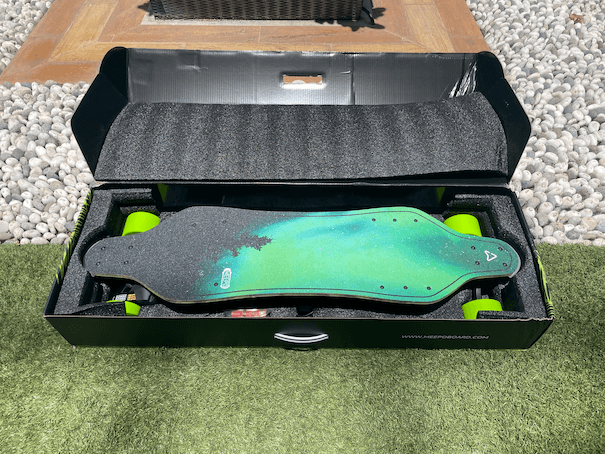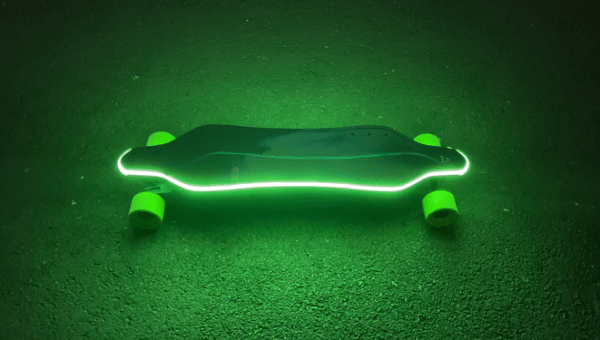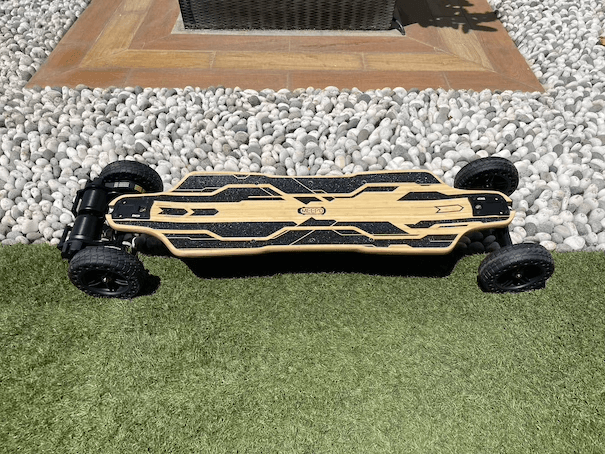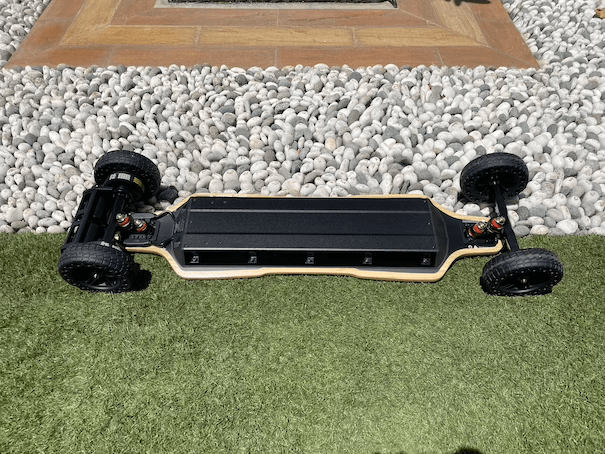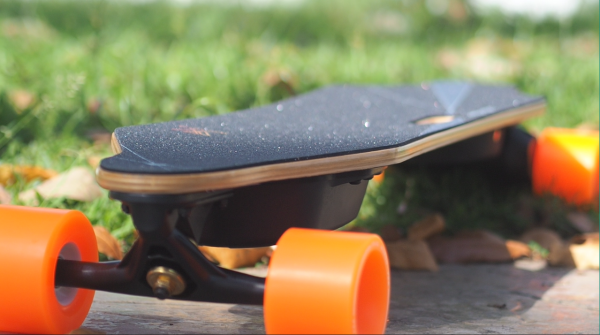
Meepo Hurricane Vader Review- Gear Drive FTW!

In late 2021, Meepo launched the $1699 Meepo Hurricane to great acclaim. It was much more powerful and had a significantly larger battery than the similarly priced Exway Atlas, which was the board to beat in the carbon fiber all-terrain category.

Fast-forward to 2023, and the field has become much more competitive. In response, the Hurricane has been upgraded to the Hurricane Vader. Besides boasting a slightly lower price of $1599, it also features several changes from the previous version of the Hurricane.

Meepo Hurricane Vader Specifications

Price$1599
Battery12s4p Molicel P42A (725.8WH / 16.8AH)
Controller12s Lingyi ESC
Top Speed32 mph / 52 kph
Range31 miles / 50 km 
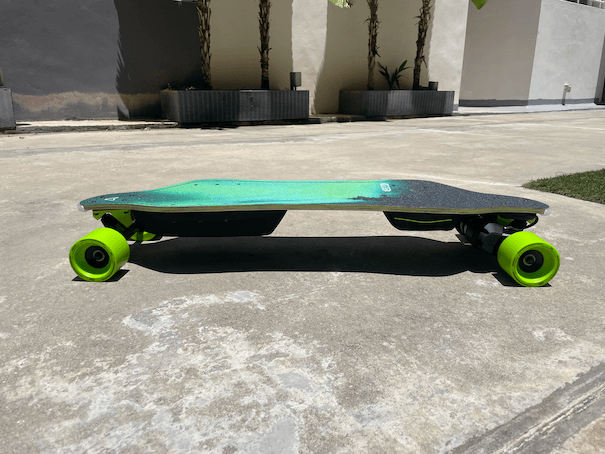
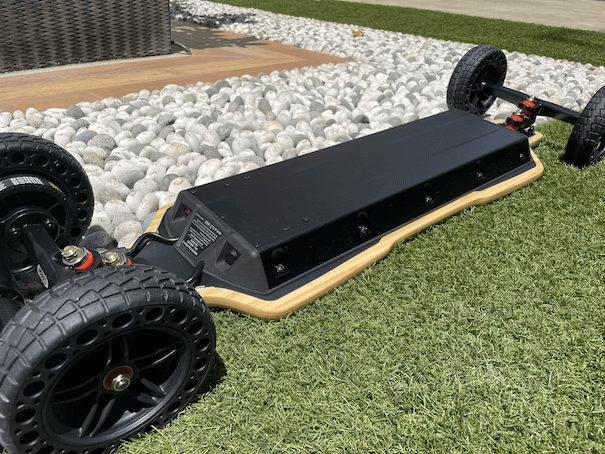
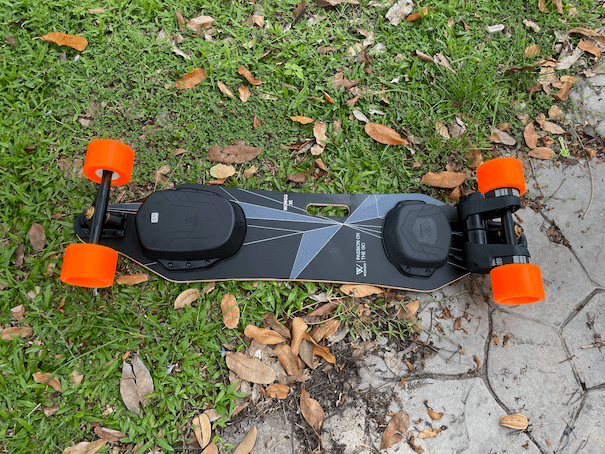
DeckCarbon fiber, Double-drop deck
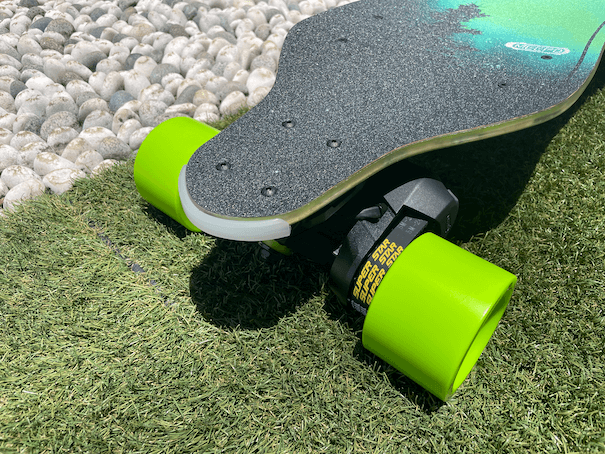
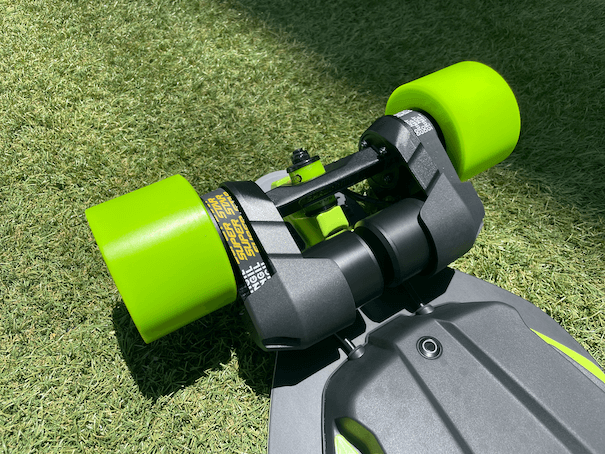
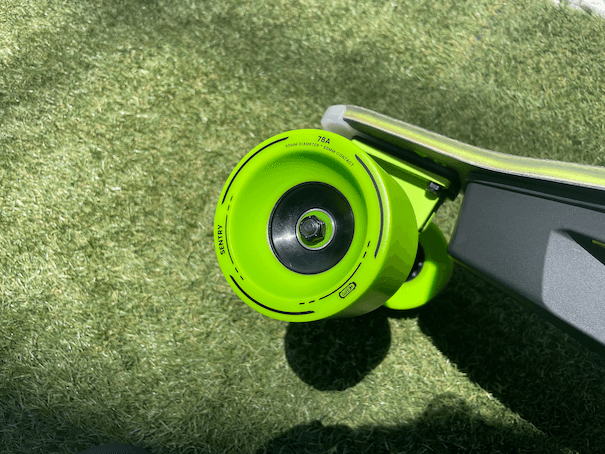
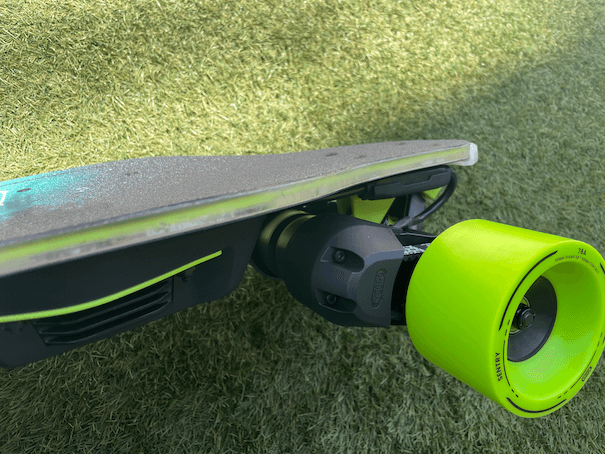
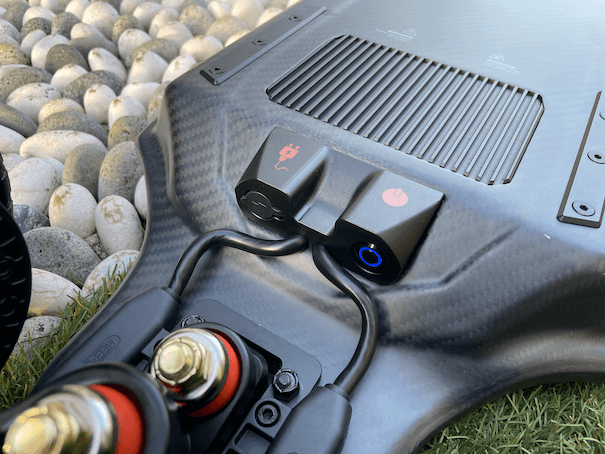
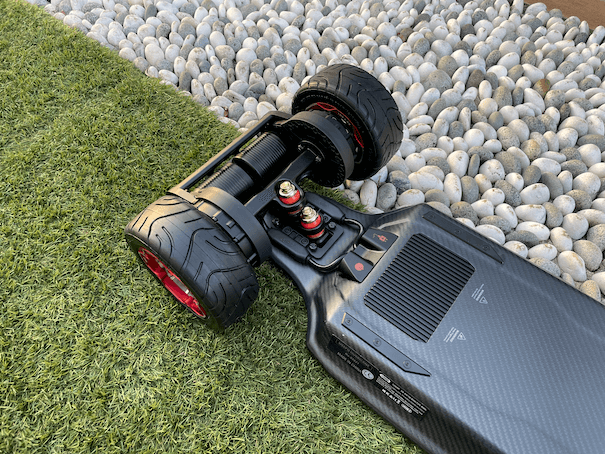
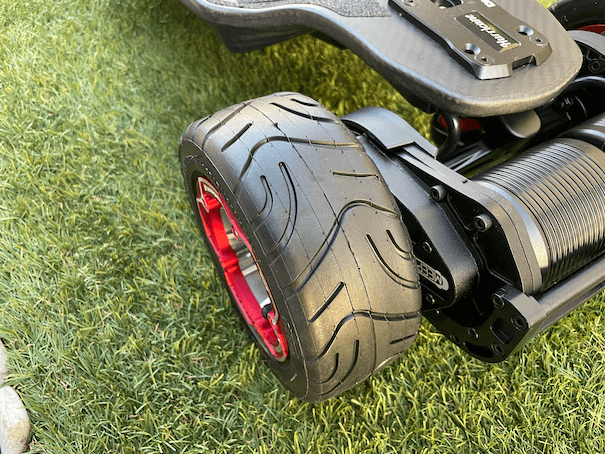
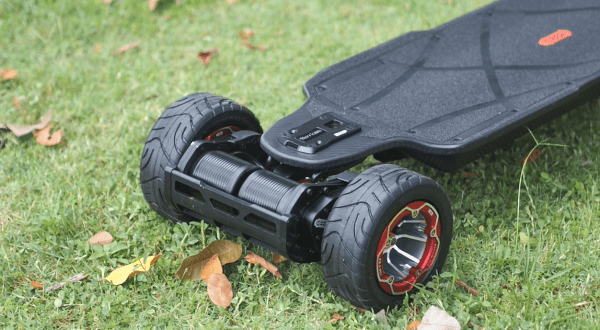
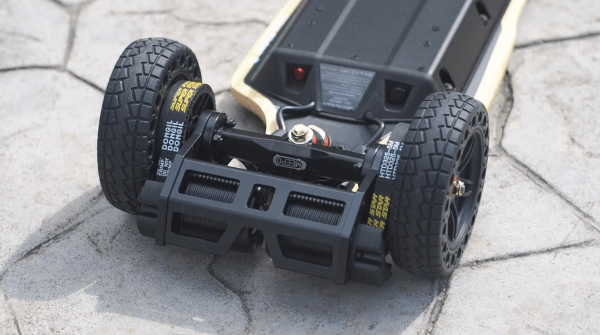
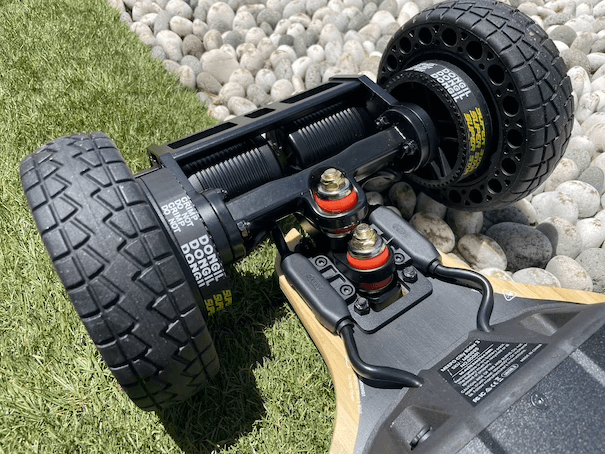
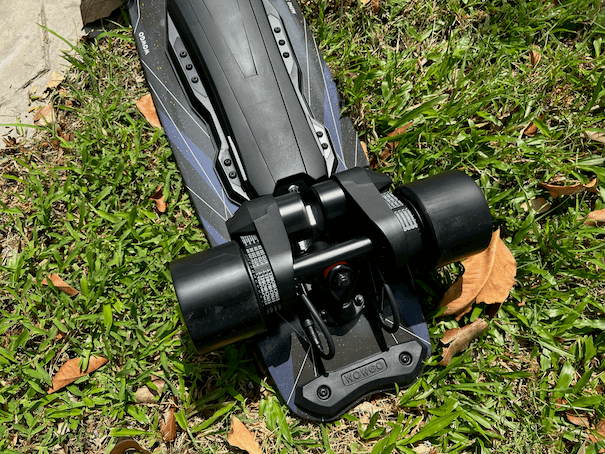
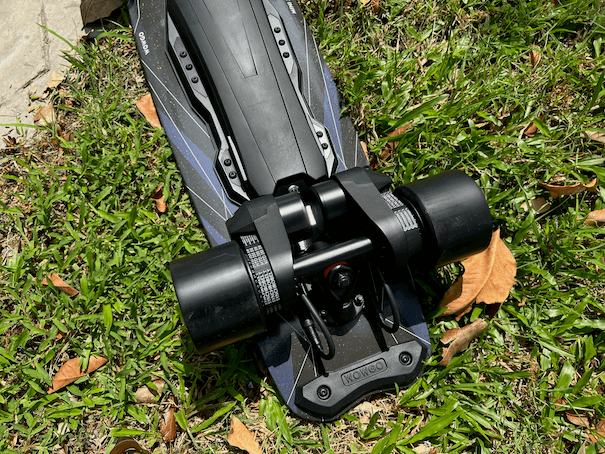
Motor3500W x 2 Gear Drive Motors (Gear Ratio = 1:4.4)
Net Weight38.8 lbs/ 17.6kg

Deck – Same Great Material, Sleeker Design:

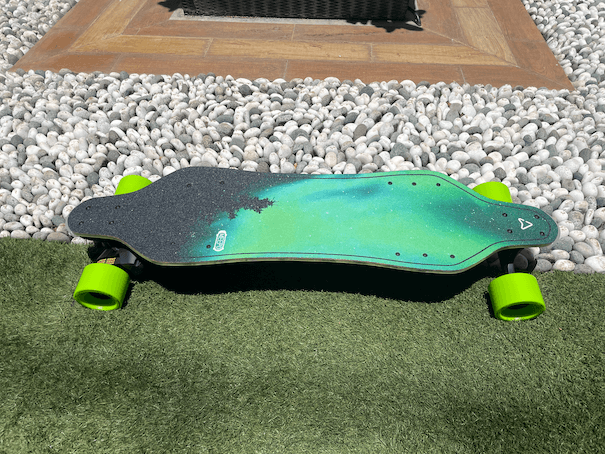
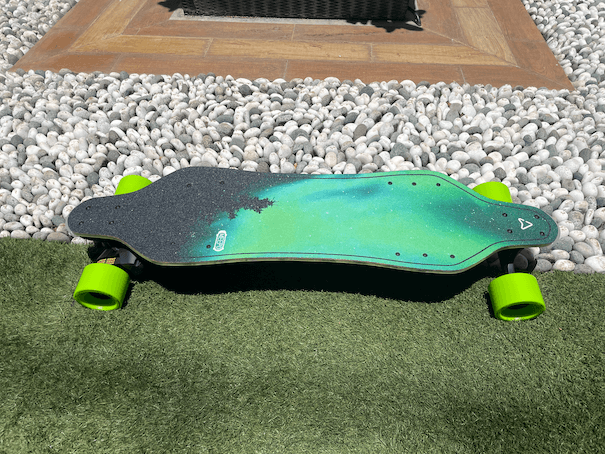
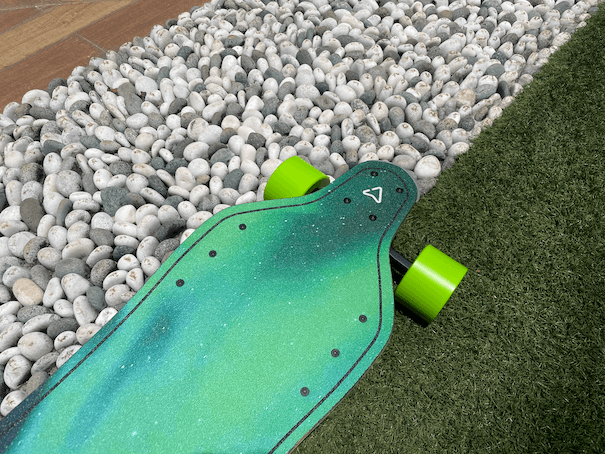
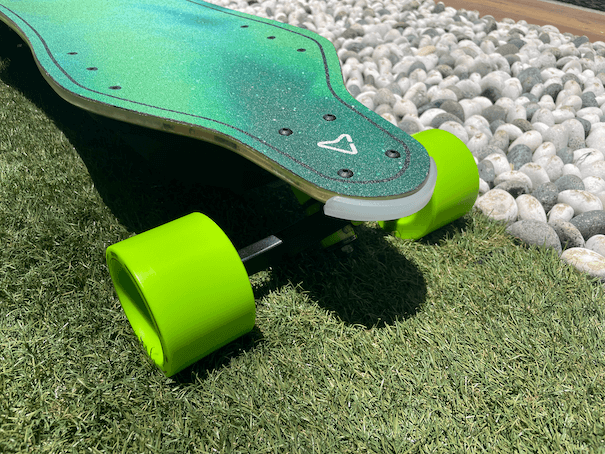
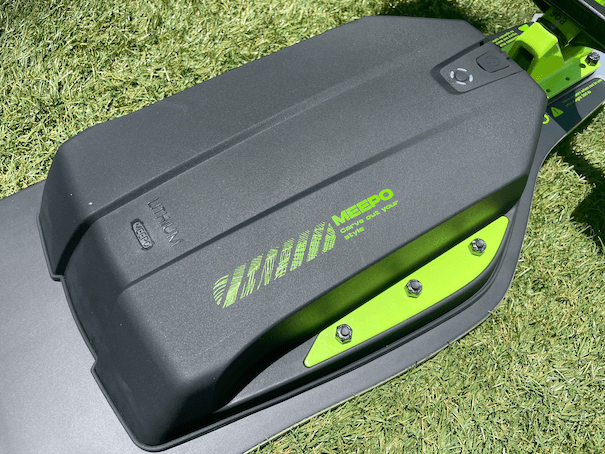
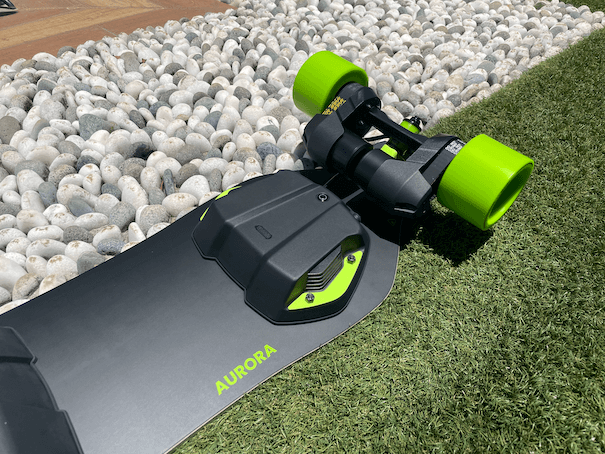
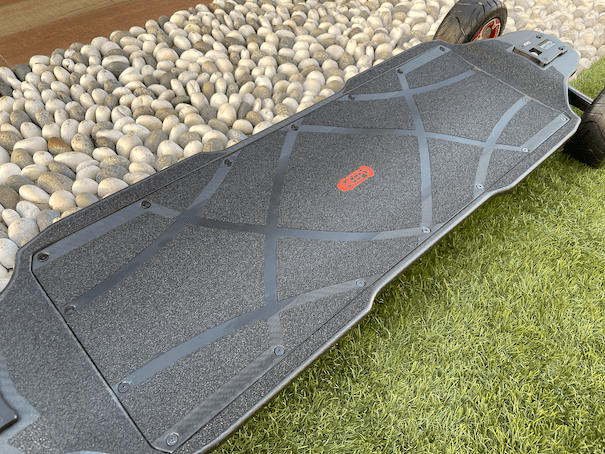
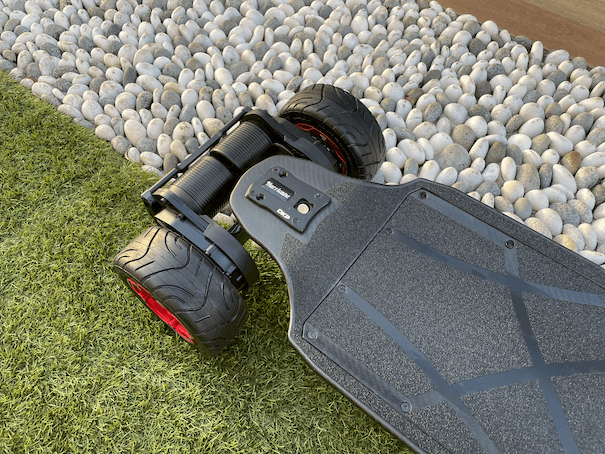
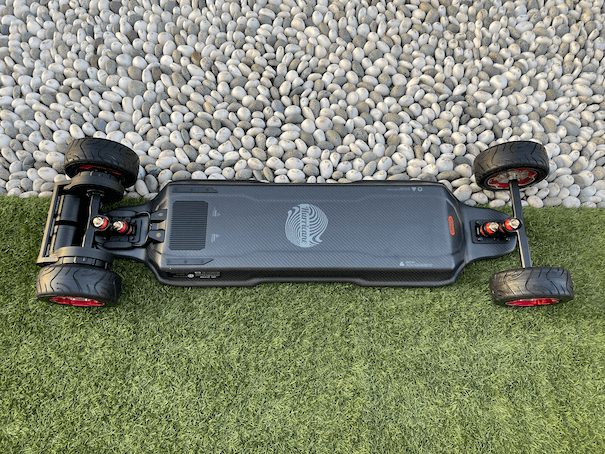
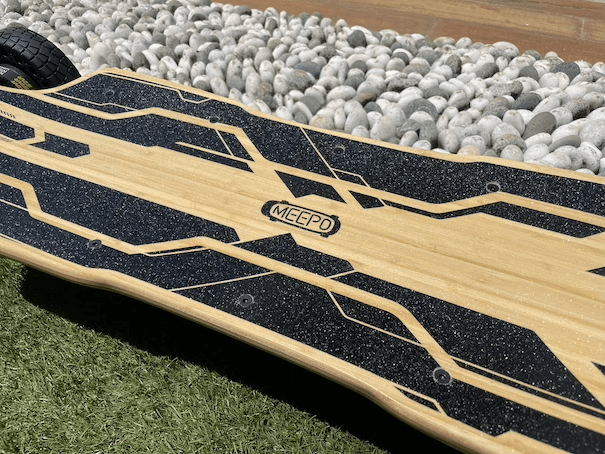
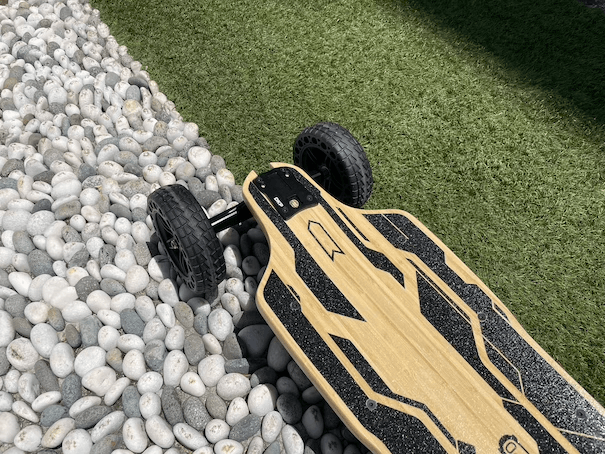
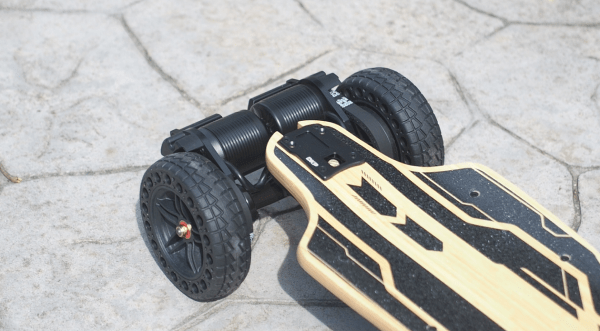
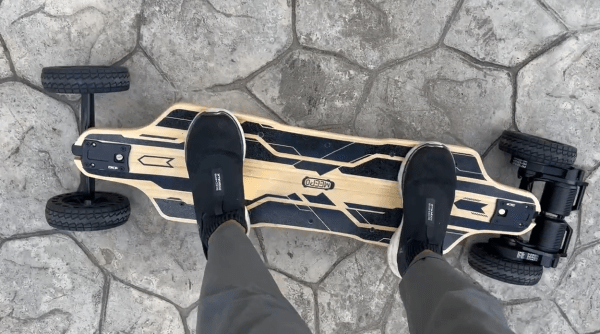
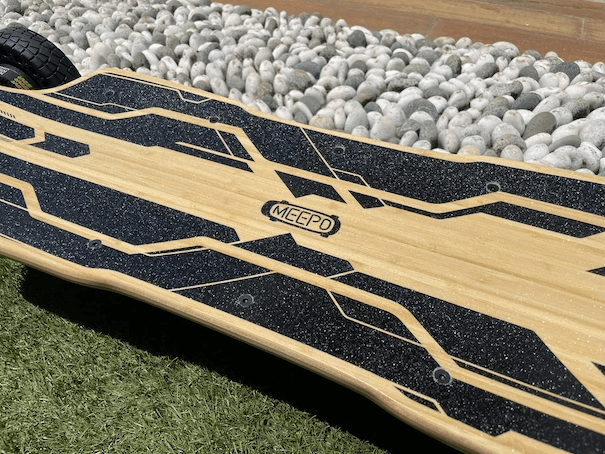
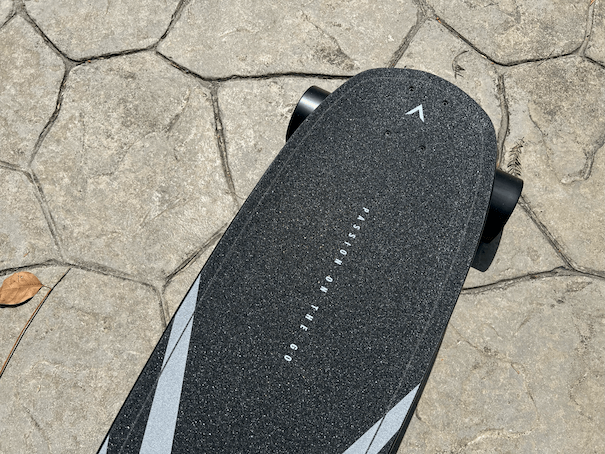
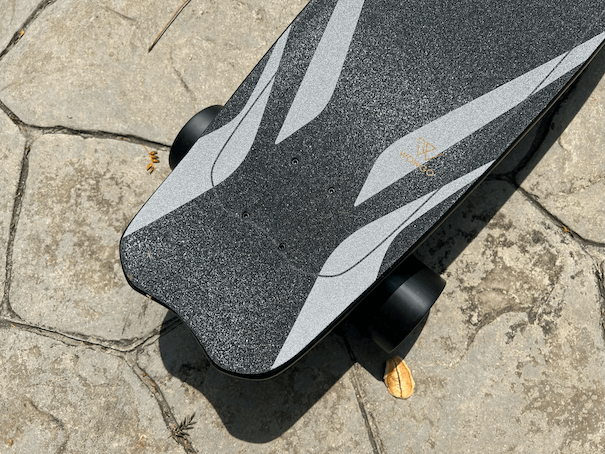
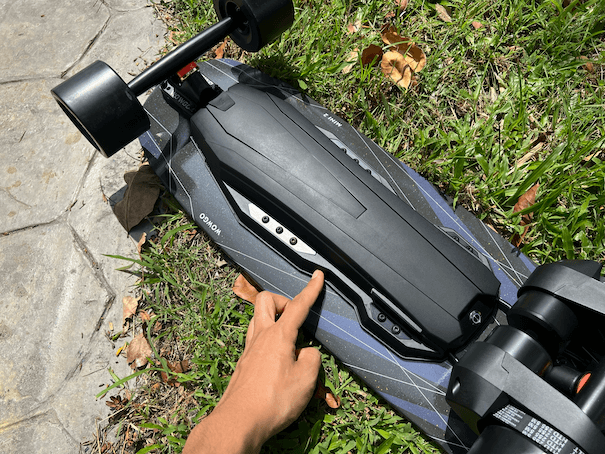
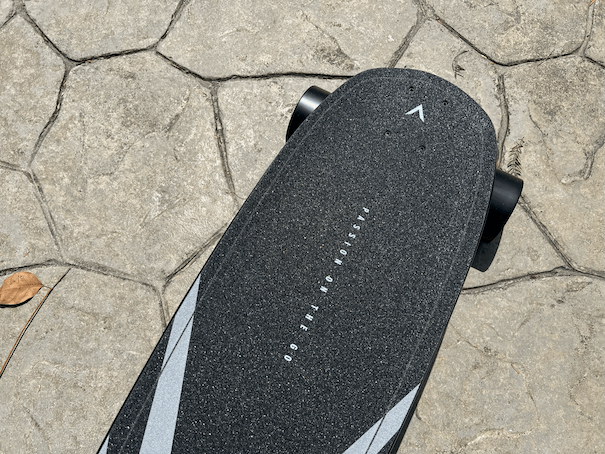
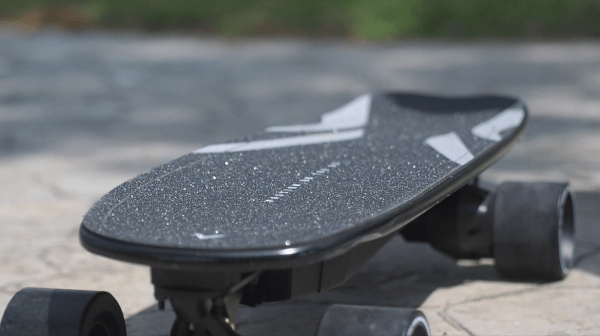
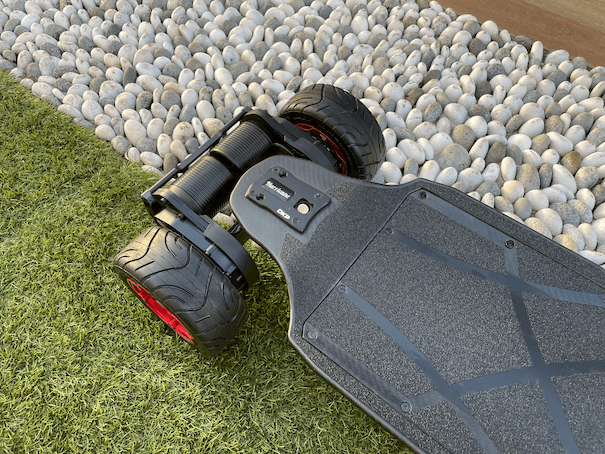
This deck is identical to the one on the original Hurricane but with a modified grip tape print design. It has a more subdued design and a smaller logo, which, to us, looks more sleek and contemporary.

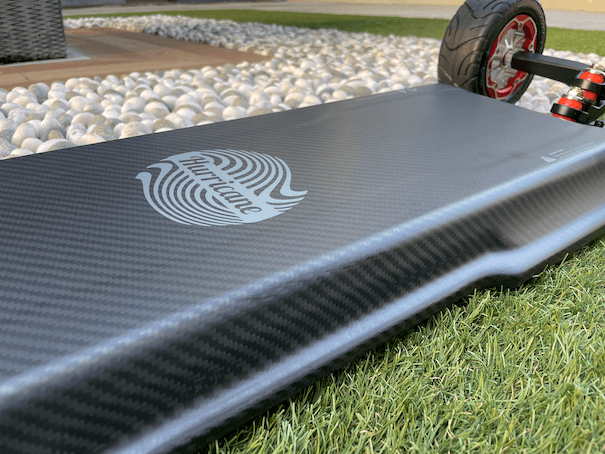
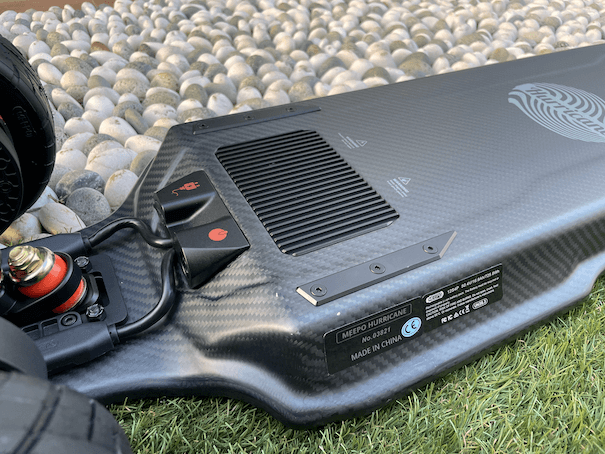
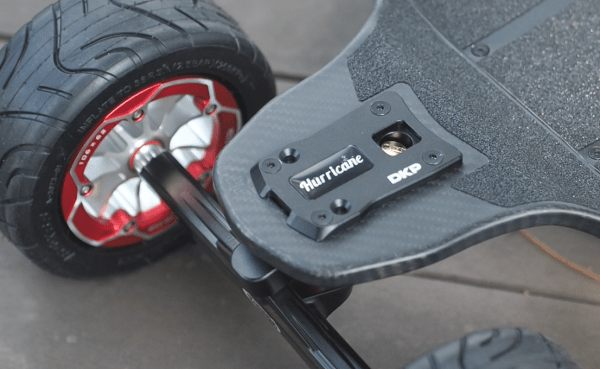
Beyond aesthetics, this is the same double-drop deck constructed from T700 3k Carbon Fibers. It’s worth noting this material since it’s used in manufacturing professional drones.

It is stiff with no flex, and It is wide with a pronounced concave. 

ESC and Remote – 12s LingYi ESC and M4s Remote

For its ESC, the Meepo Hurricane Vader has once again chosen the 12s LingYi ESC. This ESC features a push-to-turn-on function and offers four speed modes as well as four brake modes. By 2023, Meepo had begun integrating the Hobbywing ESC into some of its boards. Therefore, it appears intentional that Meepo chose LingYi for this model, suggesting that Meepo wants this board to have a more aggressive speed control. .

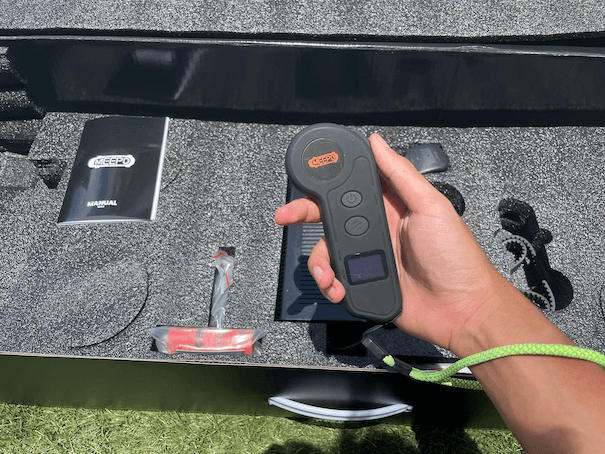
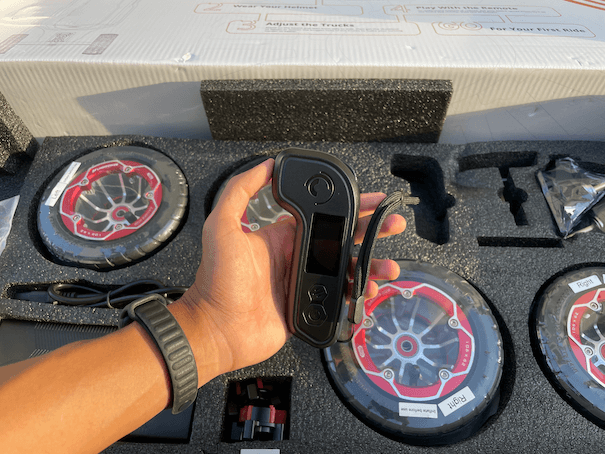
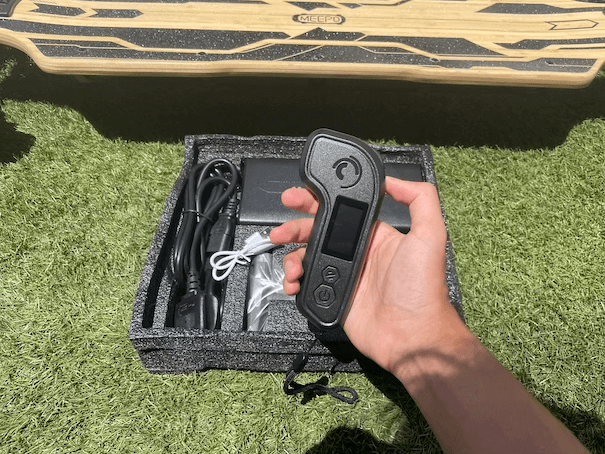
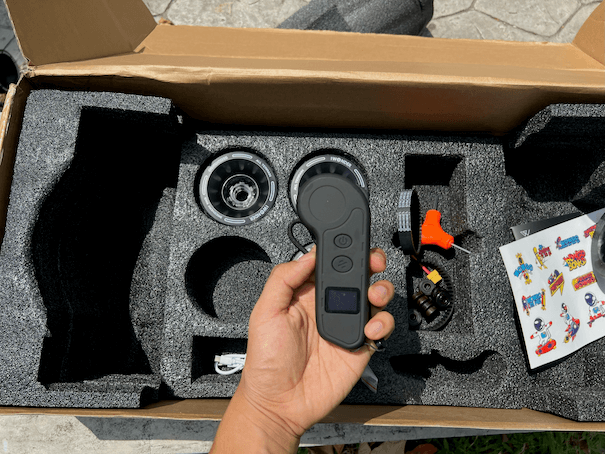
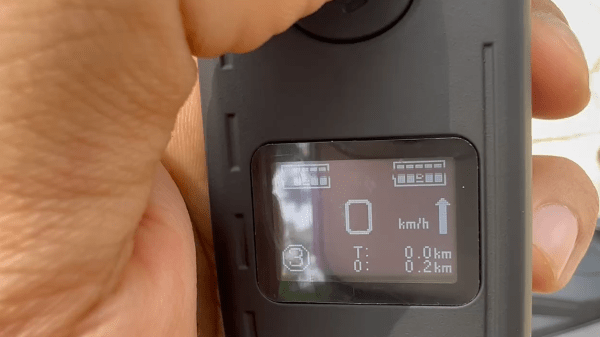
The ESC is paired with the standard M4s Meepo remote, which is the same one used for the previous Meepo Hurricane. This remote includes a display that shows speed, battery status, and other useful information.

Battery – 12S4P Molicel P42A:

The Meepo Hurricane Vader’s battery remains unchanged. It continues to be powered by a big 12S4P battery using Molicel P42A, and provides a total of up to 725.8WH or 16.8AH. By 2023, this no longer outshines the competition, but it remains competitive for its price point.

Meepo advertises a range of 31 miles (50km). In our tests, we achieved up to 22 miles (35 km) while riding in the highest speed mode. This is a significant improvement over the 18.5 miles (30 km) range of the previous Hurricane. We believe this increased efficiency is due to the gear-drive being more energy-efficient than the belt.

Motor – 3500W X 2 6374 motor with  Gear Drive System 4.0:

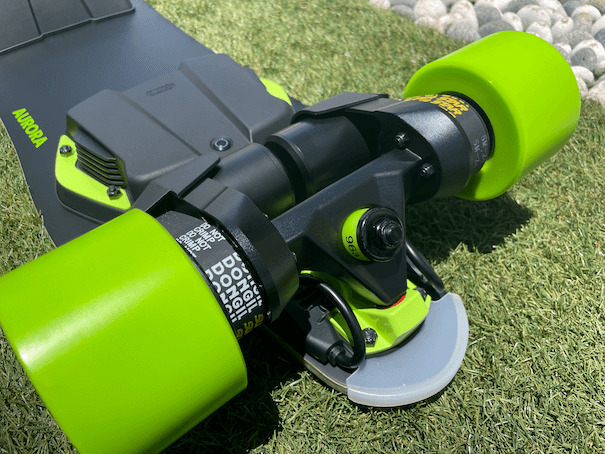
So, let’s talk about the gear drive. These are a pair of 3500W, 6374 motors. Meepo refers to this as the Gear Drive System 4.0, a name that doesn’t mean much to us other than the fact that it is not the planetary gear drive used on the previous City Rider 2 and Ecomobl boards. Gear drives are always exciting because while keeping the smooth ride that results from not having a hard hub core inside the wheels, they offer better battery efficiency than belt-drive. These gear drives are generally more expensive; for example, Meepo allows customization of the Hurricane via the Hurricane Ultra product page, and the gear drive option is priced $100 higher than the belt version. While these drives must still be time-tested for durability, so far, we haven’t heard much about failures related to the gear drive. 

The marketed top speed of these motors is 32 mph (52 km/h), which is a little slower than the previous belt-driven Meepo Hurricane. We suspect this difference may be due to gear ratio settings that prioritize torque over speed. (Gear Ratio = 1:4.4)

Additionally, we lacked a long, straight stretch of road during our test, which prevented us from reaching the top speed. The board accelerated powerfully from a standstill, but its acceleration tapered off as it reached higher speeds. As a result, it took some time to reach its maximum speed, and our test ended when we ran out of roads, reaching 28 mph (45 km/h), which we can tell is well below the board’s limit.

Truck and Wheels – Double KingPin and Cyclone 165s Racing Wheels

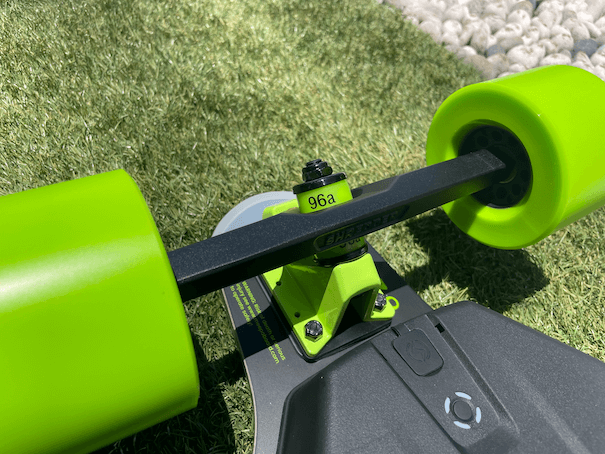
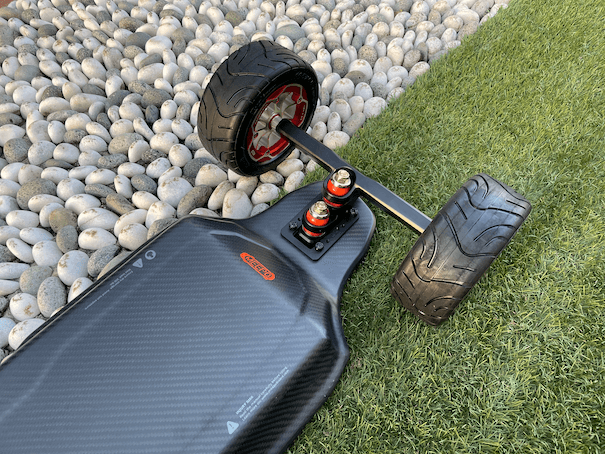
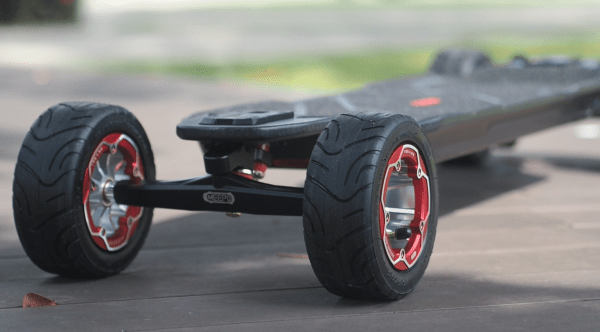
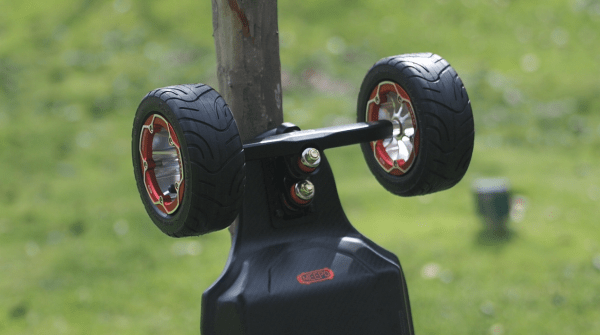
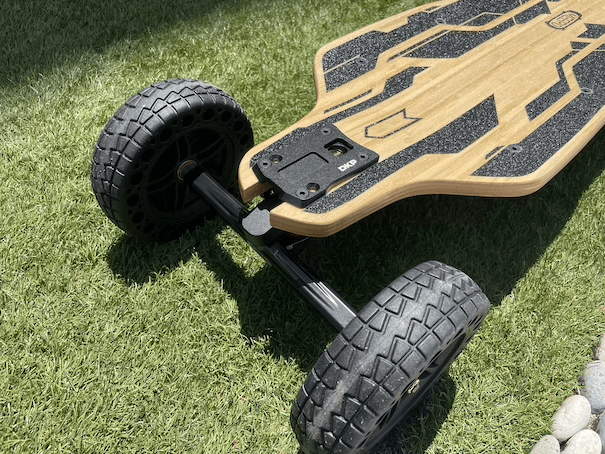
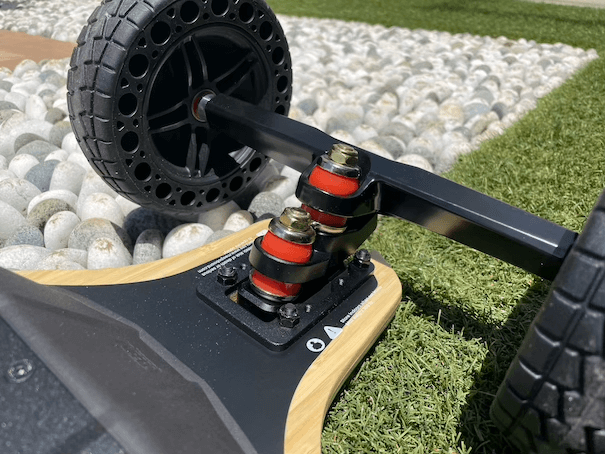
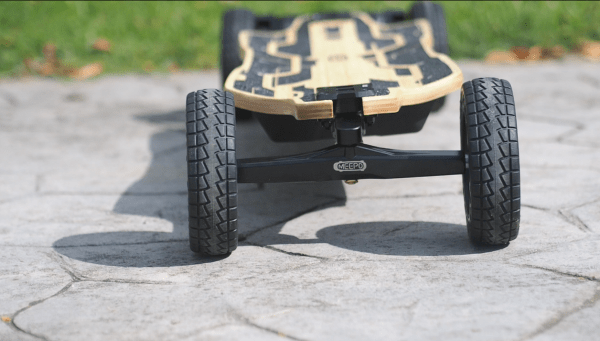
As for the trucks, Meepo sticks to what works and uses the same double kingpin trucks as on the Hurricane. We already know that they work well and have a good balance between stability and responsiveness. 

Meepo still allows customization and the true kingpin option through Meepo Hurricane Ultra X for people who prefer stability. 

Check out Meepo’s Hurricane Ultra X customization page here

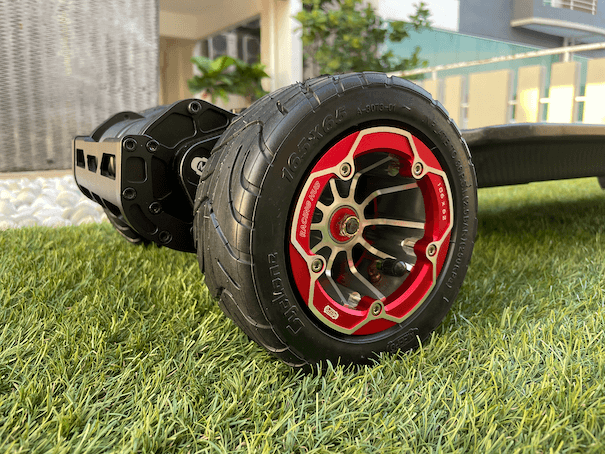
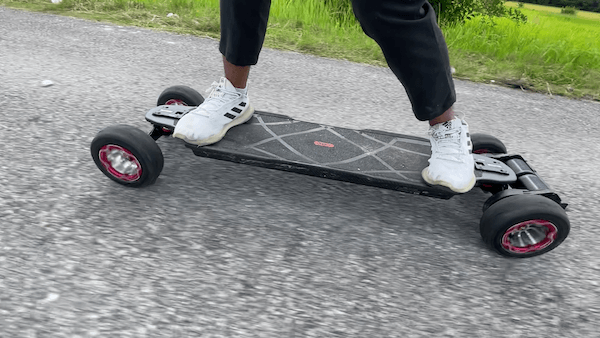
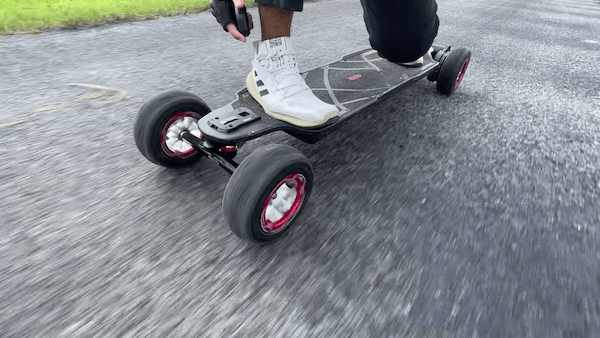
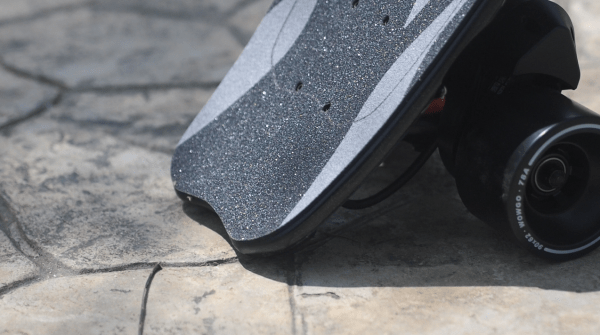
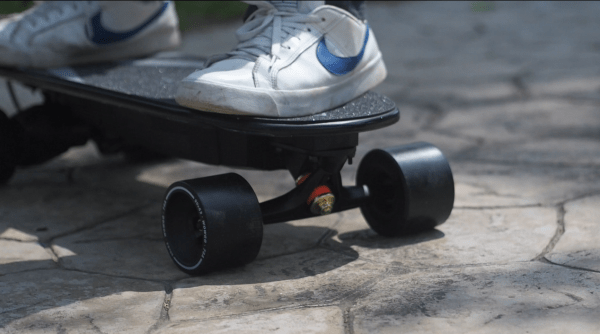
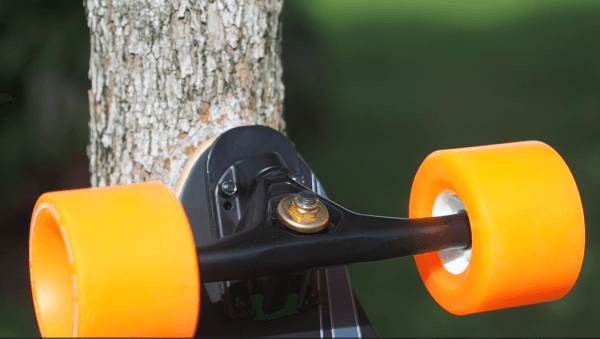
There have been adjustments to the wheels. The Hurricane Vader uses Meepo’s new Cyclone 165S Racing Wheels with CNC machined rims in place of 155mm pneumatic wheels.

The board weighs a hefty 39 lbs (17.6kg). It’s definitely on the heavy side with this one.

Specification Summary

Overall, the Meepo Hurricane Vader offers great specs for $1599. While I wouldn’t say it’s jaw dropping in terms of value for money, a 12s4p carbon fiber board with gear drives, constructed with such finesse, is about as good as it gets for $1599.

Riding Experience of Meepo Hurricane Vader:

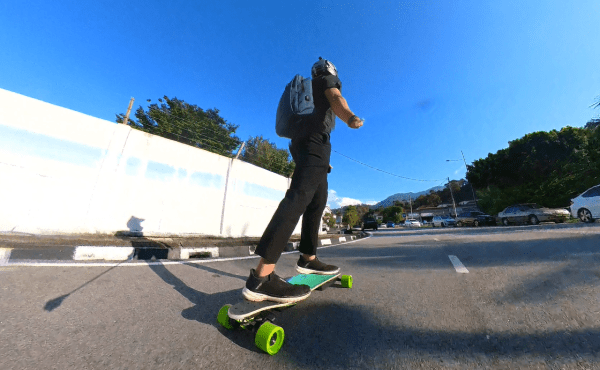
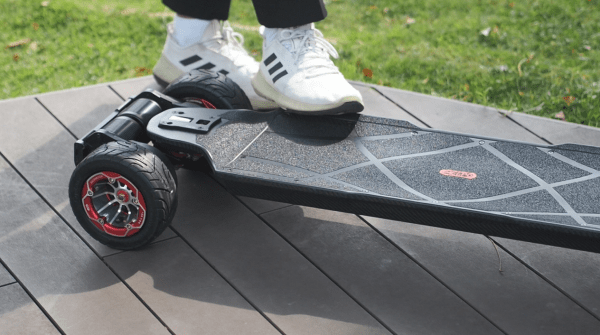
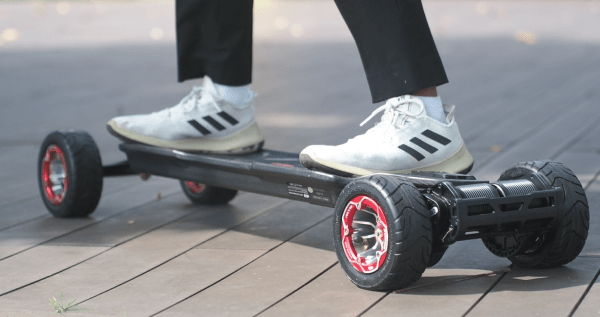
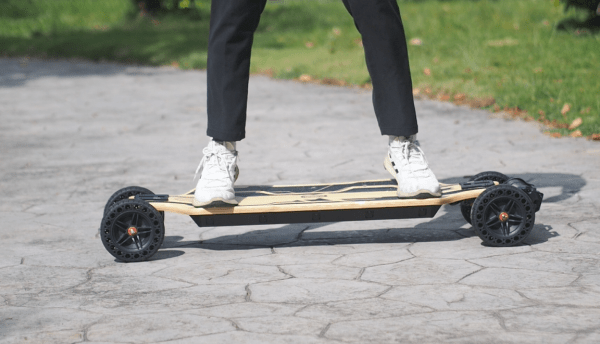
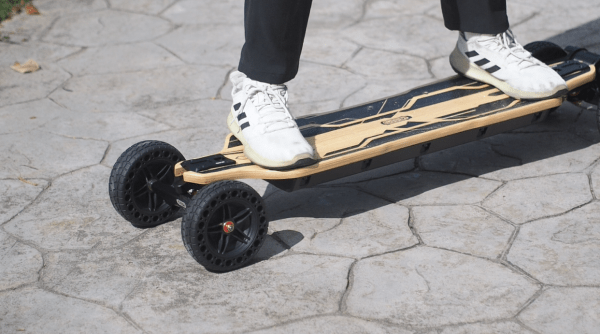
For those who are unfamiliar with the Hurricanes, this stunning carbon fiber deck is nice to ride, too. It’s nice and wide, with enough room for people with larger feet. Given that this is a very, very powerful board, it is crucial that the board remain stable at high speeds, which was made possible by the stiffness of the deck and the pronounced concave. 

For Vader, the speed control is better than the previous Hurricane. The speed controls for mode 1 to mode 3 are now perfectly smooth and intuitive, as good as Hobbywing ESC. And as per typical Meepo fashion, Mode 4 is aggressively powerful and has that extra punch, which is often more for the thrill than for any practical reason. It is, however, helpful for uphill hikes. Mode 4 will undoubtedly be too powerful for a beginner because of how quickly the board moves ahead, thanks to its steep acceleration curve. If you like that kind of thrill, it is quite exciting, but for the majority of riders, mode 3 is a lot more comfortable and usable and is already very strong.

Meepo Hurricane Vader has a very distinct riding feel. It uses double kingpin trucks, but the board feels more stable than it is responsive. We believe the 165s Cyclone Wheels, which have large contact patches and are incredibly grippy, are a big factor in this. This means that while we can maneuver the board with ease and carving is fun, the board isn’t nimble, and executing sharp L turns is not easy. 

We also blame the grippy-ness of the cyclone wheels for holding back the acceleration. When we test the top speed, it feels like the wheels are too glued to the tarmac, stopping the board from leaping forward. Additionally, the board will abruptly lose speed when the throttle is released, which could cause wobbles for inexperienced riders. This was unexpected because, typically, belt systems provide better free-rolling than gear drives, but the 165S Cyclone wheels appear to offset that advantage.

But it doesn’t mean we don’t like the cyclone wheels. They are quite comfy; there was virtually no road vibration at all. And all the credit has to go to the wheels, as the stiff carbon fiber deck wouldn’t have done anything to help reduce road vibration.

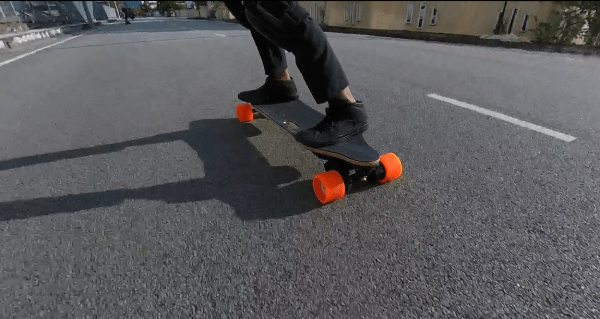
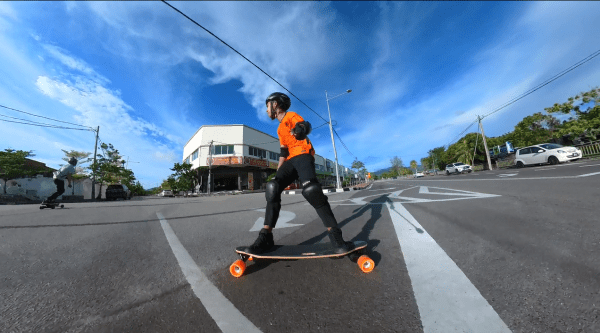
Meepo Hurricane Riding photo

Not sure how important this is to you, but the gear drive is also quieter. It is about as loud as the quietest belt drive. 

Verdict – Meepo Hurricane Vader:

 Meepo Hurricane Vader is no longer an underdog that dramatically undercuts the competition in terms of price and specs. Instead, it has evolved into an uncompromising premium board featuring quality parts, a refined finish, and an amazing ride. Its ride profile leans more toward torque, power, and stability. It is a complete package at a slightly lower price than its competitors (I’d value it at around $1799), and if you’re in the market for a powerful board with great specs, you can’t do much better than the $1599 Meepo Hurricane Vader.

If you are interested in buying the Meepo be sure to check out our affiliate discount link here and use code: “ESKATEHQ23” to receive $5 off during checkout.
It will help you get a small monetary discount and help us out too. On top of that, you’ll be tagged as an Electric Skateboard HQ customer and probably be treated better. Cheers!

Meepo Hurricane Bamboo Review – Big wheels but stay on road!

While Meepo’s original City Rider might have flown under many people’s radar, it was a board that I was really fond of. It was Meepo’s first board with all-terrain wheels, and it was launched with an affordable $749 price tag. 

I love that board because I am generally pretty lazy, and when I need an All-terrain wheeled board to get around poorly paved city roads, the City Rider is the easiest board to use and maintain. It has hub drives that don’t require maintenance and airless tires that don’t need to be pumped and won’t get punctured. And while the board wasn’t as powerful as it looks, it stood out as being a hassle-free board to own.

The new Meepo Hurricane Bamboo (previously known as the City Rider 3), however, might have a different identity than the original City Rider. By switching to belt-drives, the $899 Hurricane Bamboo actually has more similarities to the Meepo Hurricane Series, the company’s current flagship model, more than it does the earlier City Rider models. 

Meepo Bamboo Hurricane Specifications:

Price$899
Battery12s3p Molicel P42A 544Wh
Controller12s Lingyi ESC
Top Speed29 mph / 48 kph
Range21miles / 35km 
DeckW Concave Canadian Maple and Bamboo 
Motor3500W x 2 Belt Drive Motors
Net Weight30.4 lbs/ 13.8kg

Deck: 8 ply Canadian maple + 2 ply bamboo 

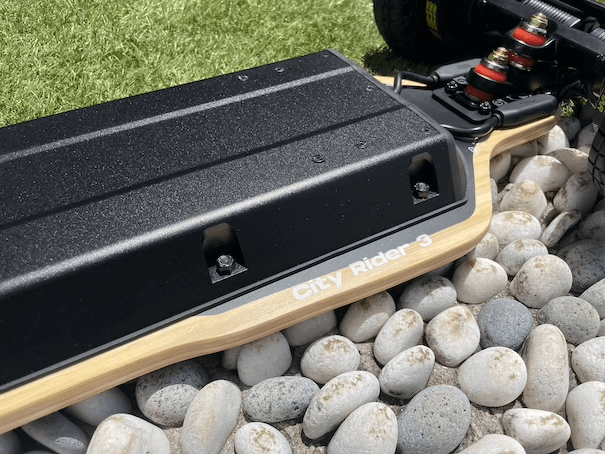
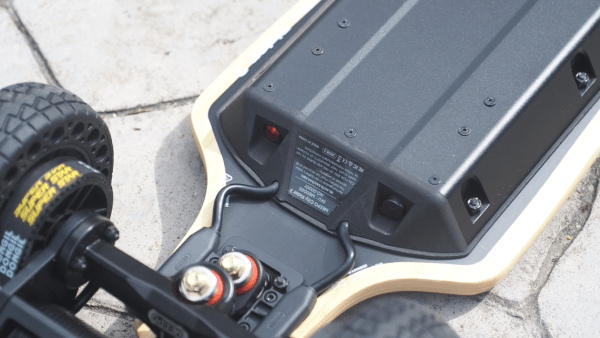
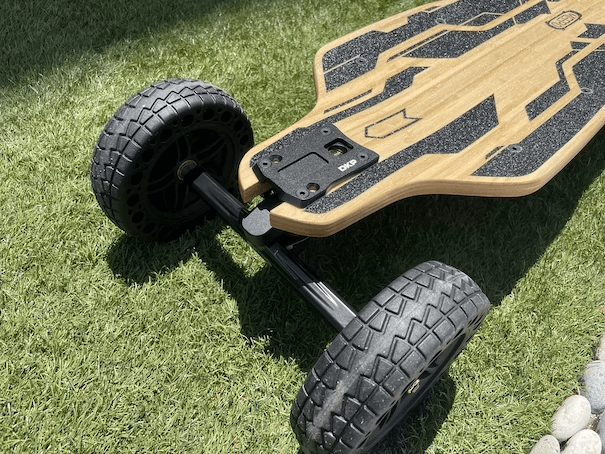
Starting with the deck, Hurricane Bamboo uses this beautiful minimalistic grip tape design. The transparent grip tapes show off the polished sand-blasted Canadian maple underneath. It’s made of a combination of 10-ply Canadian Maple and Bamboo. However, the board-length aluminum enclosure installed beneath the deck makes the deck extremely stiff.

The deck features a nice W concave. Like most all-terrain boards, this is a double-drop deck that’s good for reducing riding height.

ESC and Remote: 12s Lingyi ESC and Meepo M4s Remote Combo

For the ESC, the Meepo Hurricane Bamboo uses a 12s Lingyi ESC, which has a push-to-turn-on feature and comes with four-speed modes and four brake modes.  It’s interesting to see Meepo choose LingYi on this one since, as of 2023, it’s no longer allergic to using Hobbywing ESC on its boards. For those who are new, LingYi ESC is known to have a fourth-highest speed mode that is typically more aggressive and a little less smooth than the Hobbywing ESC. I guess we will know how well it works for Hurricane Bamboo soon.

This ESC pairs with the standard M4s Meepo remote, which is the same remote used with the Meepo Hurricane. It has a display to show the speed, battery life and other data.

Battery: 12s3p Molicel P42A 544Wh

The Meepo Hurricane Bamboo uses a 12s3p Molicel P42A 544Wh, which is a step down from the Hurricane’s 12s4p configuration in terms of battery capacity. It’s advertised to run for 21 miles(r35 km), but in our tests, we managed to hit 16 mile(25 km) range riding fast. This is about what we’ve expected from the 12s3p 544wh battery, so we can’t say we were disappointed.

Motor: 3500W x 2 Belt Drive

For the motors, Meepo decided to shake it up by switching to the tried and true belt drive motors. In previous installments, the City Rider 2 used a planetary gear drive, while the first City Rider went with hub drives. I’m not sure what is the rationale behind switching over to belt drive; perhaps it is to streamline the productions as Meepo also has stopped using gear-drive in its other products for now. These are the same exact motors as the one on Meepo Hurricane, and they are huge, 3500W a piece. The top speed is 30 mph(48 kmh), which is similar to the Hurricane.

Trucks And Wheels: Double Kingpin And 150x150mm Honeycomb Rubber Airless Wheels

As for the trucks, Meepo sticks to what works and uses the same double kingpin trucks as on the Hurricane. We already know that they work well and have a good balance between stability and responsiveness. 

For wheels, these are 150x50mm Honeycomb rubber airless wheels. Airless wheels are great for the lazy, as you don’t have to worry about tire pressures, and it won’t get flat tyred. The ride feel is still as good as traditional pneumatic tires, but I’m sure AT-purists will hate to not be able to play around with the tire pressure. 

The board weighs 30.4lbs (13.8 kg), It is heavy, and the handlebar that was on previous city Riders is sorely missed. 

Riding Experience of Hurricane Bamboo

The first thing we wanted to test was the speed control. LingYi ESC is just like a box of chocolate sometimes; you never know what you’re going to get. Some versions of it were perfectly smooth and indistinguishable from the perfect standard set by Hobbywing ESC, while the other versions were rough like it was 2017 again. Fortunately, this time, it is a good one. The Hurricane Bamboo’s speed control is flawlessly smooth and virtually identical to the Hobbywing ESC. 

Meepo city rider 3 riding photo

We are comfortable with staying on 4th-speed mode all of the time and prefer to keep our brakes mode on 3rd-brake mode. 

While the Hurricane Bamboo’s speed control is great, the power is not. The Hurricane Bamboo doesn’t have the insane power and torque that can take the board off-road while going uphill, so we could be wrong, but we’re starting to assume that it was designed to be ridden in the city. It’s a bit of a bummer; I suppose, we’re just accustomed to Meepo packing insane power onto all of their boards.

The board can get to top speed, but it takes a while to get there. It is obviously strong enough to climb any regular hill, but it certainly doesn’t blast through them like a Hurricane. For comparison, the Propel Pivot S felt 10% stronger than the Hurricane Bamboo, and Meepo Hurricane Vader felt twice as powerful.

It turns out that while Hurricane Bamboo has the same motors as the Hurricane, it is significantly less powerful than the Hurricane since its ESC has a lower output. Yet another good example is that motor wattage only paints a partial picture of a board’s power.

Meepo city rider 3 riding photo

While Hurricane Bamboo wasn’t powerful, it certainly was comfortable. It starts with the deck. The deck is undoubtedly the highlight of the board, and we especially love the W-Concave this deck has. It is super comfortable to stand on. It is easy to tell where our feet are and keep them secure at high speed. It feels like Meepo and Exway are two of the Chinese brands that have the best decks on their boards.

Another big part that helped with ride comfort was certainly the big 150mm wheels. They are less cushy than pneumatic wheels and absorb less vibration but work well enough to smooth out vibration on rough roads. For us, riding pneumatics is clearly preferable, but owning one? That is up for debate. Going airless eliminates the inconvenience of maintaining pneumatic AT tyres, which include checking tyre pressure and replacing them when they get punctured.

Meepo city rider 3 riding photo

And going double kingpin also helped with ride comfort. The board is fun for carving and super easy to turn thanks to the double kingpin trucks. It allows for a tight turning radius and makes U-turns possible. Similar to the Meepo Hurricane, the Hurricane Bamboo is also pretty stable at high speed; it just takes a while to get to the top speed.

The Verdict – Meepo Hurricane Bamboo is great, but not for off-roading.

The $899 Hurricane Bamboo can no longer make the claim that it is the most affordable AT board, as its predecessor previously could, because there are so many fantastic options on the market right now. When comparing boards with AT wheels, veteran Eskater would probably scoff at Hurricane Bamboo middle-of-the-road power and go for something more thrilling like the Hurricane or the Propel Pivot. 

Beginner or casual riders would, however, appreciate Hurricane Bamboo for how comfortable and relaxing it is to ride. Hurricane Bamboo fits the bill nicely if you don’t want to go off-roading but still need a big-wheeled board to manage tough city streets. Whether you are going uphill or downhill, riding on good roads or over potholes, sticks, and stones, Meepo Hurricane Bamboo will keep you comfortable. After all, why pay more for off-road power if you aren’t doing off-road? At the end of the day, who can not love a $899 12s3p AT board that rides really well? 

If you are interested in buying the Meepo be sure to check out our affiliate discount link here and use code: “ESKATEHQ23” to receive $5 off during checkout.
It will help you get a small monetary discount and help us out too. On top of that, you’ll be tagged as an Electric Skateboard HQ customer and probably be treated better. Cheers!
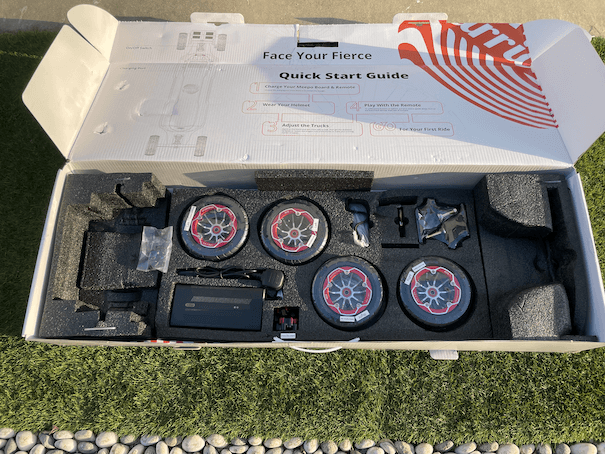
Wowgo Mini 2s Review: How much of an upgrade?

Today, we are reviewing the Wowgo Mini 2s, a new belt-driven electric shortboard from Wowgo.

In July 2023, Wowgo launched the Wowgo Mini 2s into stiff competition. Just this year, we saw a ton of new electric skateboards occupying what I called the mid-tier price segment ($500 – $800). For shortboards, we have the Tynee Mini 3 ($569) and Tynee Mini 3 Pro ($869), and for cruisers, we have the very good Meepo Flow ($729), Meepo Envy ($699) and Backfire Zealot S2 ($849).

And now, the Wowgo Mini 2s. Priced at $699, it is the upgraded sibling of the Wowgo Mini 2. However, with the Mini 2 now selling for $469, does the Wowgo Mini 2s do enough to justify that extra $200?

Wowgo Mini 2s Specifications:

Price
$699 (Street)
$819 (2 in 1)
Battery12S2P, 260Wh, 6.0Ah, Samsung 30Q
ControllerHobbywing ESC V5.0
Top Speed28 mph (45 kph)
Range18.6 miles (30km)
DeckCanadian Maple, Bamboo, and Fibreglass
Motor2 x 700W Motors/Belt Drive
Net Weight17 lbs (7.7 kg)

Deck – Same!

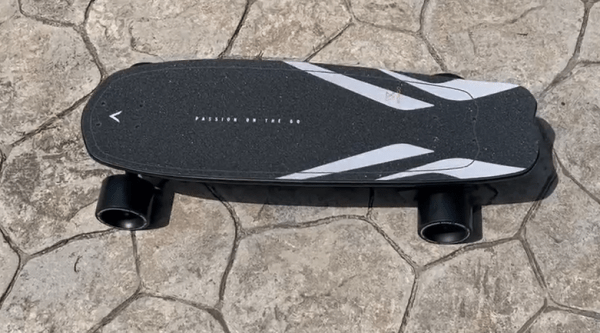
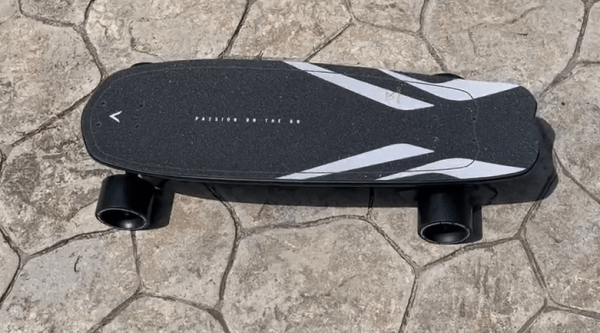
The deck remains largely unchanged from the Wowgo Mini 2, using a blend of bamboo, and fiberglass. It is completely stiff; the full-length enclosure underneath the deck makes sure of that.

The U-shaped concave design, popularized by the late-boost Mini, can be seen here, though with a more subtle concave compared to others like the Boosted Mini or Exway Wave. This concave provides a responsive yet comfortable stance for riders.

  • Material: Bamboo, and fiberglass hybrid.
  • Design: A milder U-shaped concave compared to the Boosted Mini or Exway Wave.

ESC and Remote – 12s Hobbywing ESC

The Wowgo Mini 2s employ the 12s Hobbywing ESC, offering four-speed modes and ensuring a smooth ride. Hobbywing ESC comes with a smart power-on feature ( the board power on automatically when you switch on the remote). The ESC pairs with the latest Hobbywing remote instead of going with the usual Wowgo remote. This is a bit sad, we like the Wowgo remote; it has an elegant look. 

A smartphone app is now available for the 12s Hobbywing ESC, thanks to a recent update. You can select one of four preset speeds or download the Tuya app and adjust the speed profile.

  • Powered by the 12s Hobbywing ESC, the Mini 2s provides four-speed settings.
  • Supported by a smartphone app, users can modify their speed profile via the Tuya app.

Battery – Disappointing

The Mini 2s comes with a 12S2P battery using Samsung 30Q cells. This is bigger than the 10s2p of the Wowgo Mini 2, which gives the Mini 2s a larger 260 wh battery as compared to the Mini 2’s 10s2p 187 wh battery. Not gonna lie, we were a little disappointed here seeing the $729 Tynee Mini 3 Belt have a much bigger 393 Wh battery in 13S2P configuration and also use a 21700 battery in the Molicel P42A. I was expecting Wowgo to at least go with 21700 cells instead of 18650 cells in the Samsung 30Q, which, don’t get me wrong, are one of the best cells for an electric skateboard, but it’s not that juicy.

At the very least, it outperforms the Exway Wave, which costs the same $699 and has a measly 180-watt-hour battery.

Fortunately, this 12S2P pack still performs well. It’s claimed to last 19 miles (30km); however, in our tests, our 155-pound (70 kg) rider got to 15 miles (24km) by riding fast. While longer is always better (that’s what she said), 15 miles of range should be enough for a shortboard.

Click here to read our review of the Tynee Mini 3 (hub)

Despite this, the 12S2P promised a range of 19 miles (31 km), which, in real-world tests, translated to about 15 miles (24 km) at top speed.

  • Equipped with a 12S2P battery using Samsung 30Q cells, totals to 260 Wh, bigger than the 187 Wh of its predecessor.
  • Advertised range: 19 miles (31 km).
  • Real-world test: 15 miles (24 km) riding fast.

Motor Type – The Star of The Tale

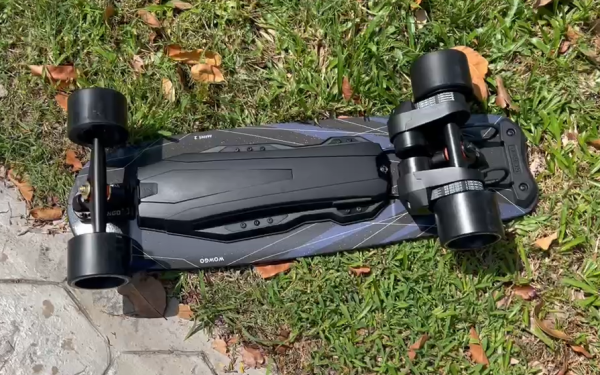
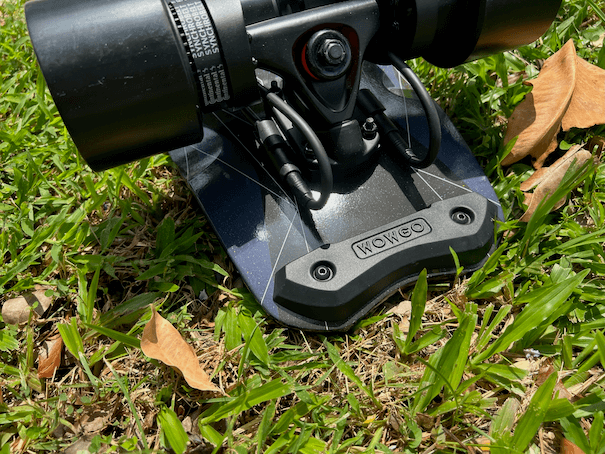
The belt drive is without a doubt, the biggest improvement going from the Mini 2 to the Mini 2s. The Mini 2s uses two 700-watt belt motors compared to the Wowgo Mini 2’s two 680-watt hub motors. These are the same size as those in the Wowgo Pioneer X4!

The motor is significantly more powerful, and the Mini 2s has a marketed top speed of 28 mph, or 45 kph, and we hit that in our test. This is definitely a lot faster than most riders need, but I’m sure some of you have an appetite for the adrenaline rush.

Although the extra power is exciting, the belt drive’s main advantage is a smoother ride. The original Wowgo Mini 2 was already incredibly powerful with efficient large hub motors; however, they have a tendency to transfer road vibrations a little too well.

  • A significant leap from the Mini 2, the Mini 2s is powered by two 700-watt belt motors.
  • Marketed top speed: 28 mph, which was consistent with our tests.

Trucks – Wowgo’s Proprietary Trucks

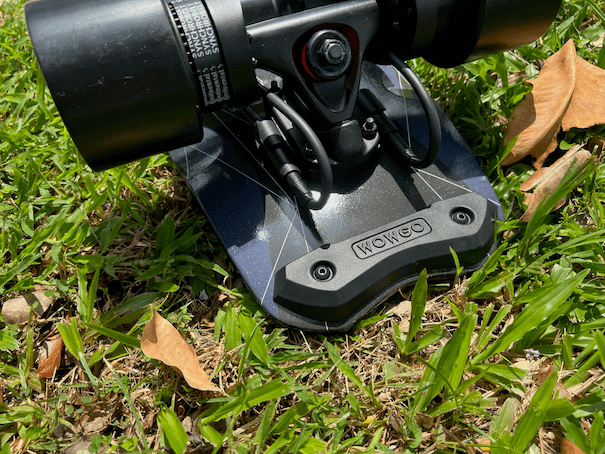
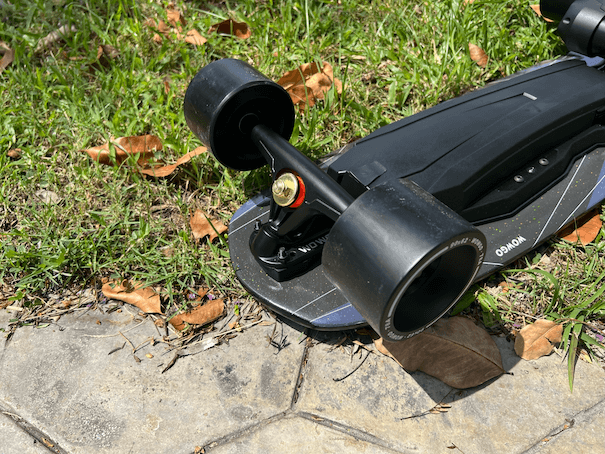
The trucks are Wowgo 45-degree RKP trucks with double barrel bushings. These are the same trucks seen on the Wowgo 3E and Wowgo Pioneer X4, and we already know they are pretty good.

Wheels – Cloudwheels Compatible

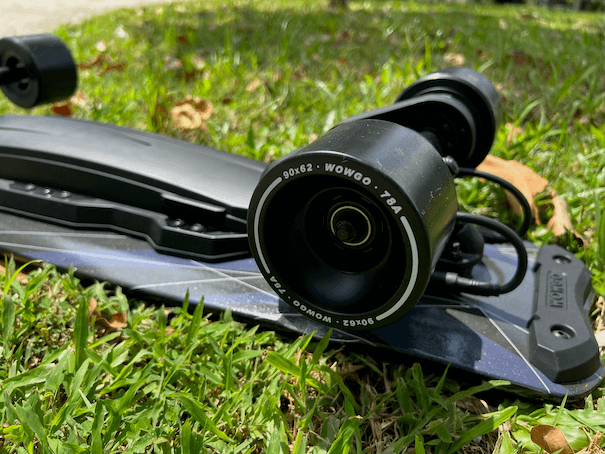
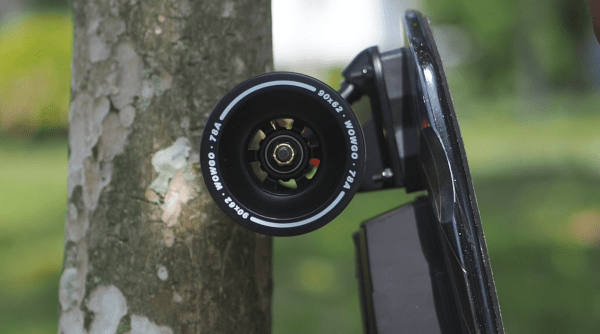
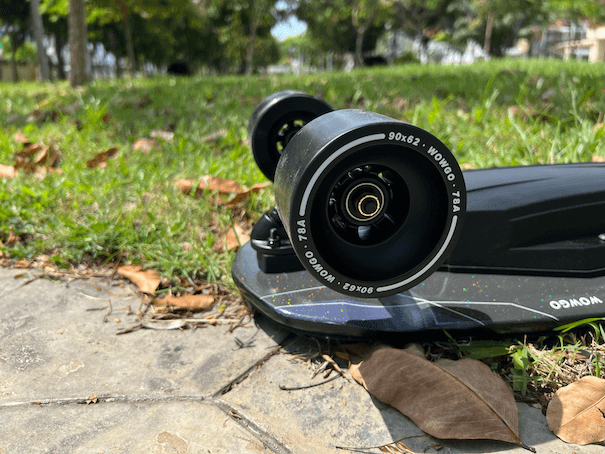
The board comes with standard 78A 90mm polyurethane wheels, and you can upgrade to 105mm cloud wheels for an additional $100 or get both wheels for $819.

  • Standard: 78A 90mm polyurethane wheels.
  • Optional: 105mm cloud wheels for an additional $100 or bundled at $819.

Weight

The board weighs 17 pounds (7.7 kg), making it slightly lighter than typical electric longboards but heavier than the Wowgo Mini 2, which weighs 15.32 pounds (6.95 kg).

Summing Up the Specs

To summarise, the $699 Wowgo Mini 2s is essentially a drivetrain and battery upgrade over the $469 Wowgo Mini 2.

At $699, the competition is fierce, with shortboards like the Exway Wave and Tynee Mini 3 and cruiser boards like the Meepo Flow all competing. The Wowgo Mini 2s features a decent battery for the price and two powerful motors. It looks nice, so let’s see if it rides better than the competition.

The Riding Experience of Wowgo Mini 2s

It’s no surprise that the Wowgo Mini 2S has flawlessly smooth and intuitive speed control; after all, it’s powered by a Hobbywing 12S ESC.

The Wowgo Mini 2s, like many of this year’s shortboard debuts, offer a lot of power and torque, even more than most electric longboards. It’s always exciting to take off from a standstill, and the Mini 2s accelerate quickly but smoothly, owing to the Hobbywing ESC. It is still punchy and quick, but the acceleration ramped up smoothly enough that it wasn’t jerky. It can also accelerate quickly to near top speed. And, as a powerful board with belt drive, traveling uphill would be no problem for even the heaviest rider. In terms of power, the Wowgo Mini 2s outperforms the Exway Wave and falls somewhere in between the Tynee Mini 3 Hub and the Tynee Mini 3 Pro.

Click here to read our review on the Exway Wave

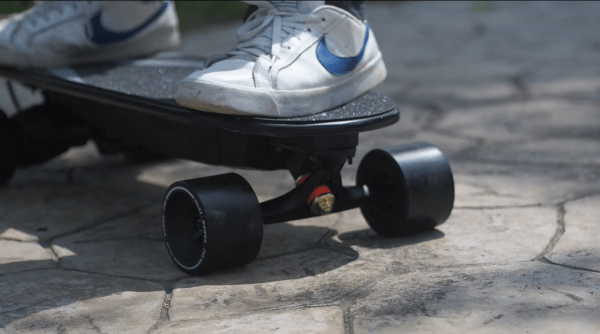
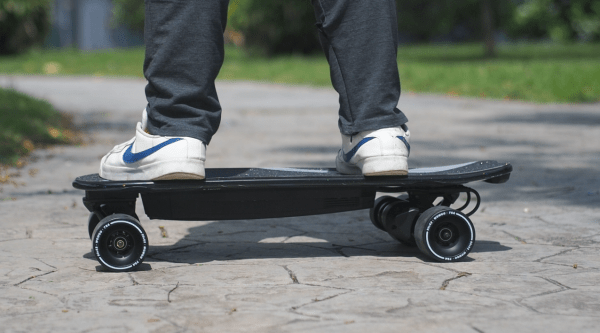
And just like Uncle Ben said, with great power come great needs for stability, especially for a shortboard. The Wowgo Mini 2s performed well in this aspect; it has a short, narrow deck, but the trucks are well-balanced in terms of stability and ease of turning. We feel pretty comfortable going 25 mph or 40 km/h on it, but afterward, it starts to get scary for us. Again, we believe that no one should ride a shortboard this fast.

After all, most people ride shortboards for the agility they provide, such as maneuvering around pedestrians on the sidewalk and rounding tight corners. And these are the things that the Wowgo Mini 2s excelled at. The truck is responsive and easy to control, and the kicktail, despite its tiny size, is useful for kick turns.

When it comes to reducing road vibrations, the Wowgo Mini 2s outperforms the hub version of the Mini 2, but that’s obviously a very low bar to clear. On uneven roads, all shortboards felt awful, but those with belt drives fared significantly better than those with hubs. The 105mm cloud wheels helped a lot, but we still wouldn’t recommend owning a shortboard if you mostly ride on rough roads.

Verdict – Should you buy the Wowgo Mini 2s?

We really enjoy riding the Wowgo Mini 2s. I mean, we like the Wowgo Mini 2, and the Mini 2s is a lot more powerful and has a smoother ride after switching hub motors for belt drive. Black and grey also look better to our eyes than the purple color of the Wowgo Mini 2. For $699, we wish it came with a bigger battery, but if you are not that concerned about maximizing battery per dollar, the Wowgo Mini 2s is a great electric shortboard to get.

If you are interested in buying the Wowgo, check out our affiliate discount link here and use code: “ESKATEHQ” to receive $15 off during checkout.
It will help you get a small monetary discount and help us out too. On top of that, you’ll be tagged as an Electric Skateboard HQ customer and probably be treated better. Cheers!
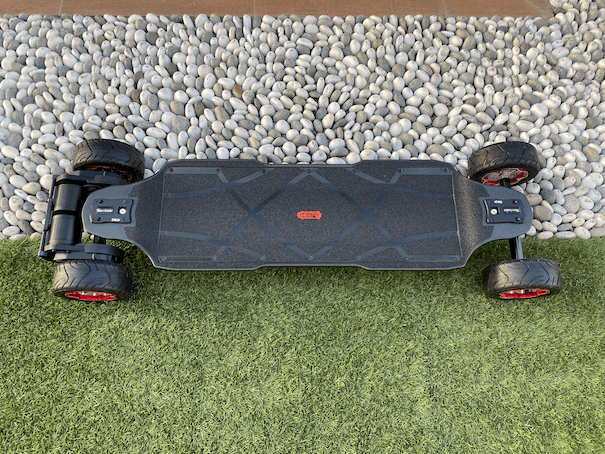
Wowgo 3E Review – Are we entering the age of Affordable Belt-Drives!?

On 1 July 2023, Wowgo introduced the Wowgo 3E, a belt-driven electric longboard for just $499. It’s rare to find such boards for less than $500. Belt-driven electric skateboards are often more expensive, and the majority of those under $500 are either older models after price reductions or underpowered boards from lesser-known brands.

With so much talk about rising prices everywhere else, it’s nice to see quality electric skateboards becoming more affordable. Score for us!

The Wowgo 3E and Wowgo Pioneer series, which were released earlier this year, are the 2023 successors of the massively popular Wowgo 3X. They’ve retained what works: a flexible deck, the reliable smoothness of a Hobbywing ESC, and a dual belt drive system.

Read our press release on the Wowgo 3X here.

I’m betting the “E” in 3E stands for “Economic”, especially when you consider the Wowgo 3X was launched with a price tag of $749. At the moment, the Wowgo 3E is also the budget-friendly alternative to the Wowgo Pioneer X4, a mid-tier board currently priced at $699.

Read our review of the Wowgo Pioneer X4 here.

Wowgo 3E Specifications:

PriceFrom $449.99
Battery12S2P, 216Wh, 5.0Ah
Controller12s Hobbywing ESC
Top Speed45 Kph / 28 Mph
Range13 Miles / 21 Km 
DeckConcave Canadian Maple, Bamboo and Fibreglass
Motor2×650 5055 Belt Drive Motors
Net Weight16.5lbs / 7.5kg

Deck – Canadian Maple, Bamboo and Fiberglass hybrid

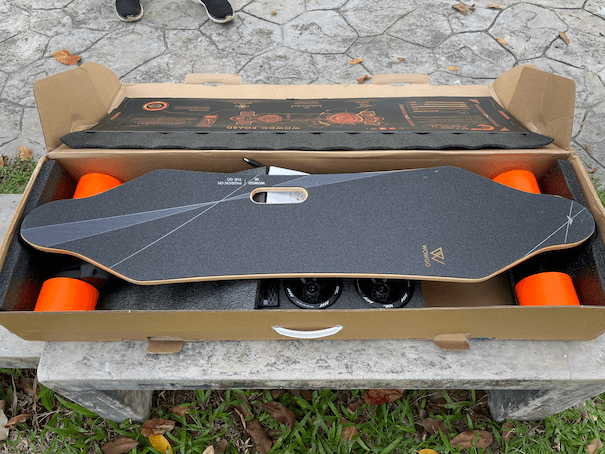
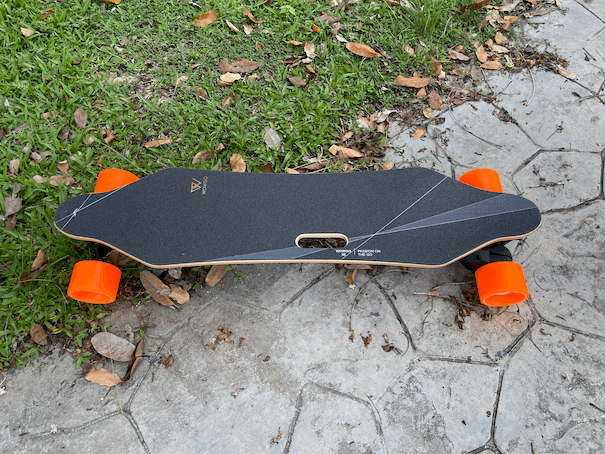
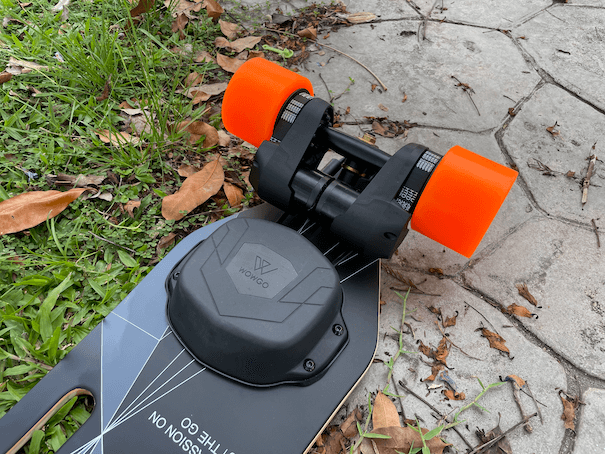
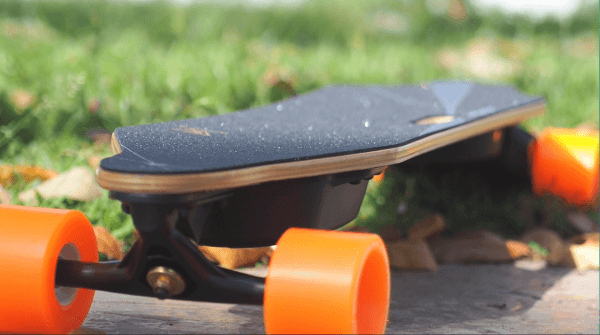
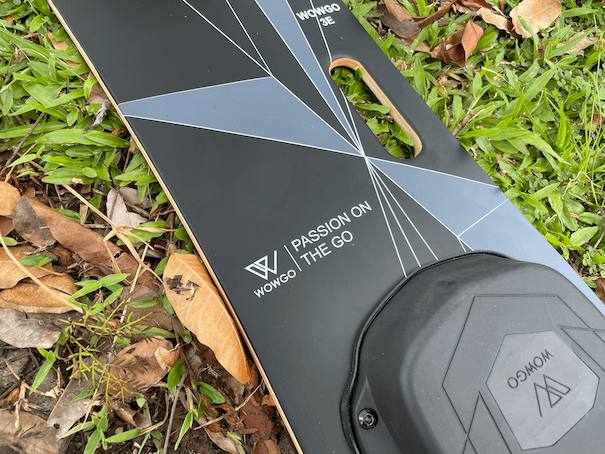
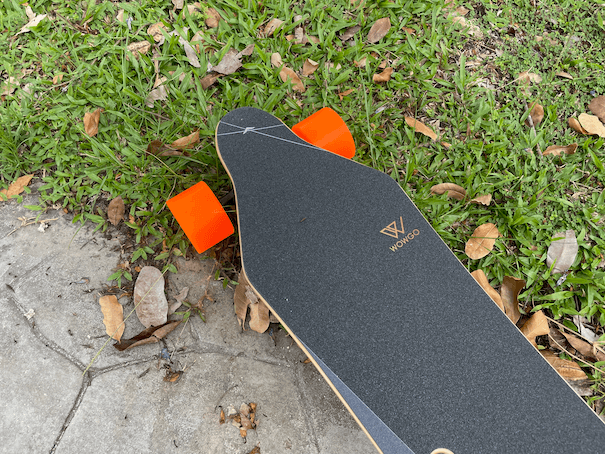
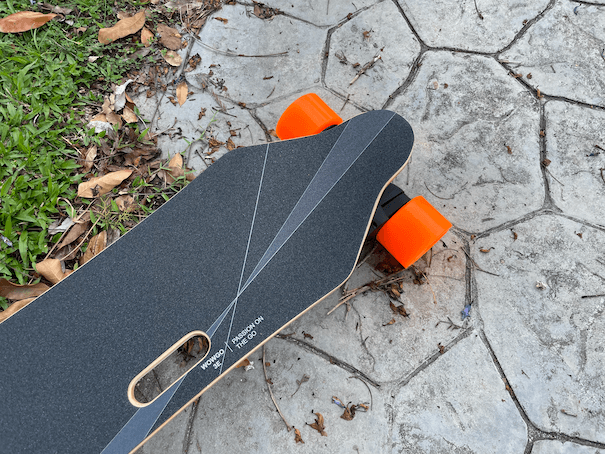
The deck is made from a mix of Canadian maple, bamboo and fiberglass, making it very flexible. It features a nice concave and a handle cut-out which may make the board look a bit cheaper, but it’s always handy when carrying the board around. The board weighs in at 16.5lbs (7.5kg), making it one of the lighter options.

Electronic Speed Controller (ESC) – 12s Hobbywing

The Wowgo 3E uses the trusted 12s Hobbywing ESC, which has four-speed modes and provides smooth and intuitive control. This board also has a smart turn-on feature, which means that turning on the remote automatically turns on the board.

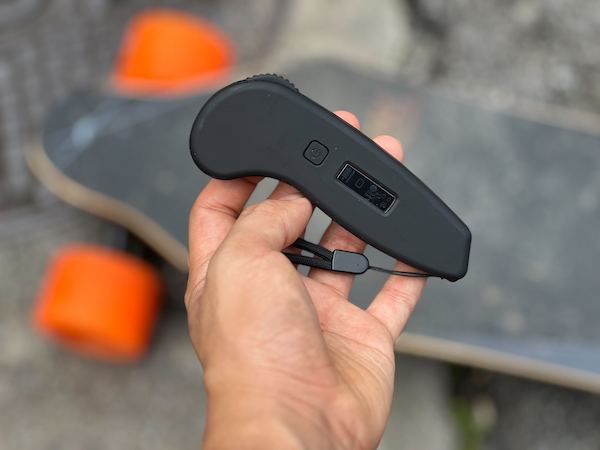
This ESC is partnered with Wowgo’s proprietary remote, which is likely one of the most attractive on the market.

Battery – 12S2P, 216Wh, 5.0Ah:

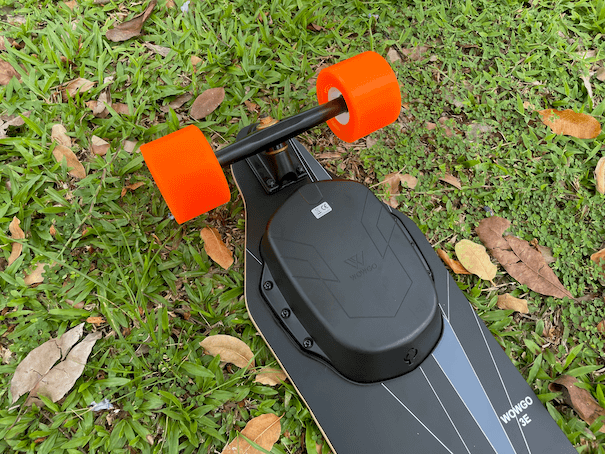
Photo of Wowgo 3E battery enclosure

This is a 12s2p , 5AH pack. This totals up to 216Wh. This is a solid size for a $500 board, and a 12s system is important to get the most out of a belt-driven system.

It’s advertised to last for 13 miles or 21km, but in our tests, our 155 lbs (70 kg) rider managed 9.3 miles (15 km) at high speeds. It’s not great, but it’s a decent range.

Motor – 2×650 5055 Belt Drive Motors:

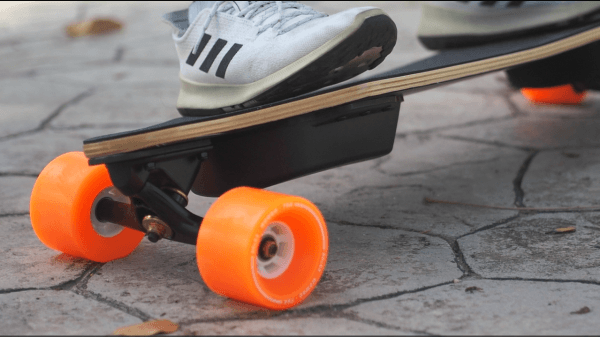
The Wowgo 3E is equipped with two 650 Watts 5055 motors, just slightly smaller than the Wowgo Pioneer X4’s dual 700W 4230 motors. It boasts a top speed of 28 mph or 45kph, which we were able to achieve throughout our tests.

Reverse Kingpin Trucks and 90mm PU Wheels:

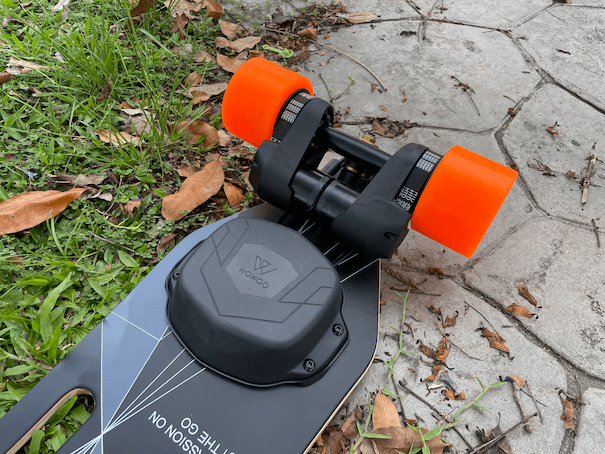
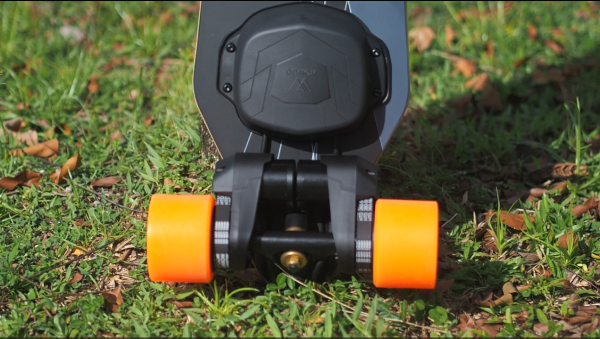
Wowgo 3E uses Wowgo’s proprietary reverse kingpin trucks with 90A bushings. These trucks are similar to those found on the Wowgo Pioneers, and we know they operate well based on our experience with the Pioneers.

Two wheel options are available. The base model, priced at $449, comes with 78A 90mm wheels. For $529, you can upgrade to 105mm honeycomb wheels.

Specs summary of the Wowgo 3E:

From what we’ve seen, the Wowgo 3E offers impressive specs for a $500 electric skateboard. Typically, boards in this price range feature hub motors, a 10s2p battery, and perhaps a 26 mph top speed. The Wowgo 3E, on paper, seems like a fantastic deal. As always, we recommend checking our comparison page if you would like to do your own detailed analysis.

The Riding Experience of Wowgo 3E:

Unsurprisingly, the board offers an exceptionally smooth ride. With the 12s Hobbywing ESC, you’re guaranteed perfect smoothness in both acceleration and braking. The board grips the tarmac effectively thanks to its flexible deck, responsive trucks, and the presence of all four soft polyurethane wheels, making it a joy to carve.

It also excels in handling road vibrations. This, I believe, is the Wowgo 3E’s main selling factor. Many e-skaters I’ve known couldn’t stand the feel of stiff hub motors and ended up paying $600 or more for a good belt-driven longboard. If this describes you, the Wowgo 3E is a great choice.

Again, we expected the Wowgo 3E to be a buttery smooth ride, as was the case with the previous Wowgo 3X. What is surprising about the Wowgo 3E is its power. While the acceleration isn’t insane, it is powerful. It packs a punch while remaining smooth. When compared to its bigger brother, the Wowgo Pioneer X4, the 3E feels nearly as powerful. This means that the Wowgo 3E outperforms its pricing in terms of power and torque.

The other aspects of the ride are quite good too. The trucks remain stable, even when reaching its top speed of 28 mph or 45 kph. The rather prominent concave on the deck also helps; it makes our feet feel more secure on this flexible deck.

Verdict – Great Bang for your Buck

All in all, it’s hard to find fault with the Wowgo 3E. While it doesn’t have a premium look and has a limited range, the Wowgo 3E offers a buttery smooth ride with power surpassing other boards in its price category. It has all of the advantages of a belt-driven board and is a safe bet for anyone looking for an electric skateboard under $500 right now.

If you are interested in buying the Wowgo be sure to check out our affiliate discount link here and use code: “ESKATEHQ” to receive $15 off during checkout.
It will help you get a small monetary discount and help us out too. On top of that, you’ll be tagged as an Electric Skateboard HQ customer and probably be treated better. Cheers!
Meepo Flow Review – Simply The Best Cruiser

Let’s first introduce the elephant in the room: Meepo Flow is the blatant copy of the Evolve Stoke, first released back in 2019. It has the exact look and uses very similar parts – a 35’ cruiser deck paired with double kingpin trucks.

However, a closer look at the specs shows that the $749  Meepo Flow might be quite a lot better than the $999 Evolve Stoke.

Specification – Meepo Flow

Price$749
Deck35-inch Bamboo and fibreglass. Stiff, wide concave
TrucksDouble Kingpin Trucks
Wheels35-inch Bamboo and fiberglass. Stiff, wide concave
ESC12s Hobbywing ESC
MotorsDual 2519W belt-drive motors​
Battery12S2P, Molicel P42A, 362.8 Wh, 8.4AH
Top Speed32mph (52 kph​)
Range24 miles(38 km​)
Weight24.2 lbs/(11 kg)

Deck

The Meepo Flow has the same transparent grip tape as the Evolve Stoke. It has an additional foam grip tape on the kicktail of its slightly longer 35-inch Bamboo and fiberglass composite deck. Similar to the Evolve Stoke, the Meepo deck has a wide concave and is stiff. 

Looking at the photo, you might mistake the Flow as a shortboard, but at 35″ by 13.5″, it’s actually a ‘shorter’ longboard with a kicktail or a cruiser board.

Truck: Double Kingpin 

The Meepo Flow is equipped with a double-kingpin truck, as per the Evolve Stoke formula. Let’s hope these trucks are good.

Wheels: OEM 105mm wheels

In contrast to the Evolve Stoke’s 85mm wheels, Meepo decided to go big with 105mm wheels. It is good to see these soft 105mm resurfaced to the market. They are the OEM wheels for the late-Boosted 105s, which Boosted previously sold at about $170 a set. 

Battery:  12S2P Molicel P42A, 362Wh / 8.4AH

The Meepo Flow, like the NLS 3, has a 12S2P Molicel P42A, 362Wh / 8.4AH battery, which is significantly larger than the Evolve Stoke’s 144Wh battery. The advertised range is 23.6 miles (38km) but in our tests, we got a range of 16 miles (25.4 km) for our 155lb (70kg) rider riding fast. Again, the outcome is similar to that of the NLS 3.

Click here to read our review of the Meepo NLS 3 (AKA Meepo Envy)

ESC (Electronic Speed Controller): 12s Hobbywing ESC

The Meepo Flow uses a 12s Hobbywing ESC, which is smoother than the current-generation LingYi ESC and far superior to any ESC used by Evolve on their boards. This ESC is paired with the Meepo M4s remote, which includes a display which displays your speed and other information.

Motor: Dual 2519W belt-drive motors​

This model has the same dual belt system as the NLS 3 and is far more powerful than Evolve Stoke’s dual 1500W motors. The advertised top speed is 32 mph (51.5 km h), and our tests clocked it at 30 mph.

Specs Summary of the Meepo Flow

Meepo Flow is almost the same board as the Meepo NLS 3, just with a new deck and double kingpin trucks. These are good specifications for $749, especially if you put it beside the 10s2p 144wh Evolve Stoke. But, hey, the ride experience is more important than the stats on paper, so let’s get to it.

Riding Experience

Luckily, the Flow did not disappoint. It’s a lot of fun to ride the Meepo Flow.

Speed control on the Meepo Flow is perfect, and that is no surprise at all. After all, it was using the tried and true 12s Hobbywing ESC that delivers perfectly smooth and intuitive controlsWe are also not surprised by the power that the Flow has, since it is using the same exact motors as the NLS 3, which we reviewed a while ago. Much like the NLS 3, Meepo Flow is not insanely powerful, but is powerful and comparable to any board under $900. Accelerating uphill is not gonna be a problem even for the heaviest rider. 

The biggest highlight for us is definitely the cruiser deck. We don’t see cruiser boards too often, but more companies ought to make them. The board’s length is somewhere between a shortboard and a longboard. And it offers the best of both worlds; the board is stable at high speeds yet nimble for short turns. Because of the double kingpin trucks and shorter wheelbase, it can make a very tight U-turn.

These double kingpin trucks are also pretty good among the best; they clearly turn very well, as do all double kingpin trucks, but they aren’t too loose and stay stable at high speeds. We feel comfortable riding them at top speed.

Despite the weight of the board, the kicktail is easy to use, too. However, there is a flaw in this design. The motor guards will rub against the ground when you use the kicktail, so you are bound to get scratches on it.

Another highlight of the board is the 105mm wheels; now we know why the Boosted 105s were so talked about.

Amongst oversized street wheels, they’re the best we’ve tried so far at handling bumps, even better than the 105mm cloudwheels. They are also really grippy, giving the ride that nice sticky feel. If you enjoy soft wheels, you will like these 105mm wheels.

Our team generally likes big wheels because we don’t have the smoothest roads where we ride, and 105mm gives us peace of mind when riding because sticks, stones, and potholes won’t catch the wheels and send us flying.

Having 4 meaty yet soft wheels also takes away most of the road vibrations.

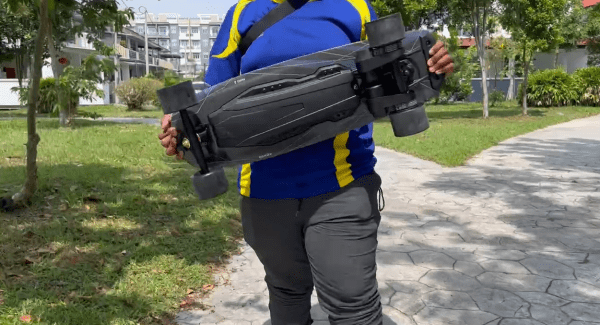
One big downside, though, is that the board is bulky and hard to carry around. Unlike most longboards, you can’t pull it like a suitcase, and lifting it can be a real workout. The board might be shaped like a shortboard, but it is certainly far from portable.

The Verdict

For the past 6 years, we’ve been reviewing electric skateboards, and not many have a cruiser deck. The last cruiser we reviewed was, in fact, the Evolve Stoke! It gave a fantastic ride but was overpriced for what it was. The Meepo Flow, on the other hand, is everything that the Evolve Stoke could be at a lower cost. It’s a comfortable cruiser board with 105mm wheels, has 12s Hobbywing ESC for ultra-smooth speed control, double-kingpin trucks for tight bends, and an easy-to-use kicktail.
Coming into the review, we thought the Meepo Flow was merely a cheap knockoff of the Evolve, but it turned out to be an “Evolve Stoke done right” and is now one of our favorite boards.

If you are interested in buying a Meepo, be sure to check out our affiliate discount link here and use code: “ESKATEHQ” to receive $10 off during checkout.
It will help you get a small monetary discount and help us out too. On top of that, you’ll be tagged as an Electric Skateboard HQ customer and probably be treated better. Cheers!