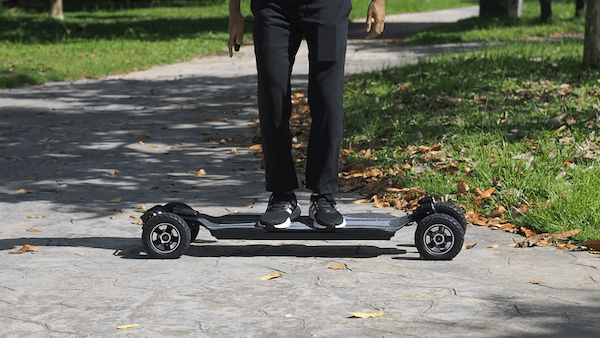
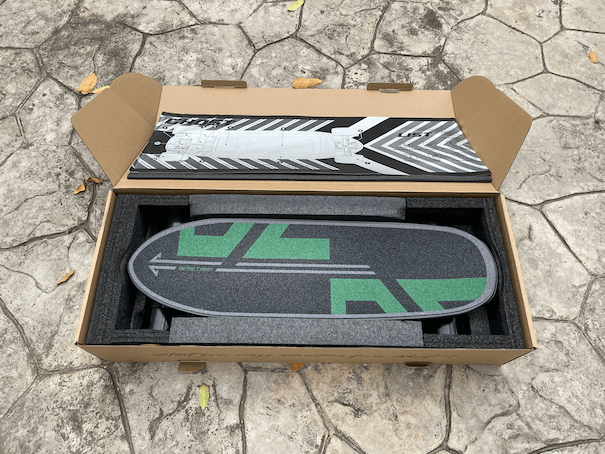
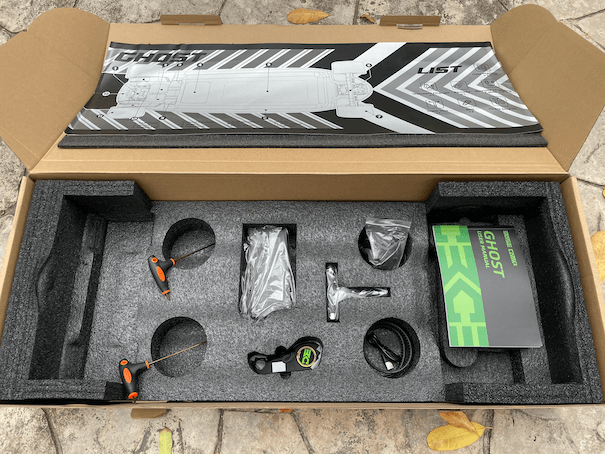
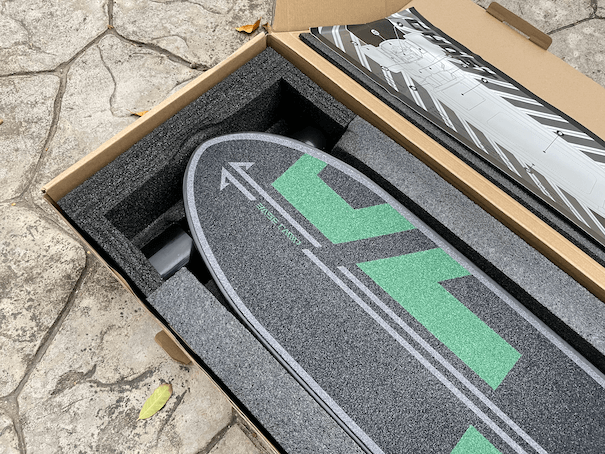
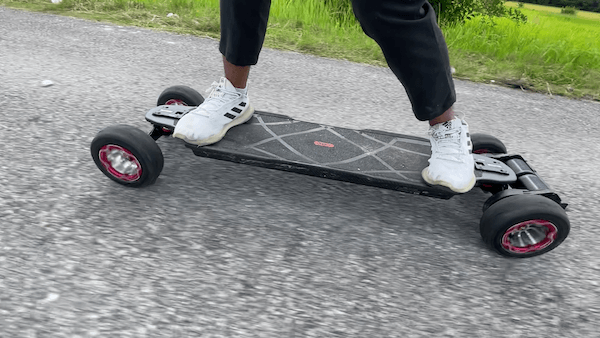
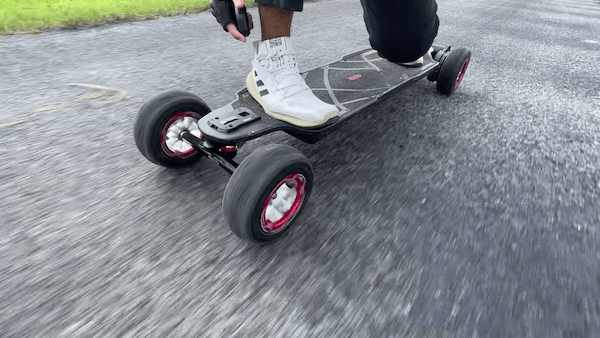
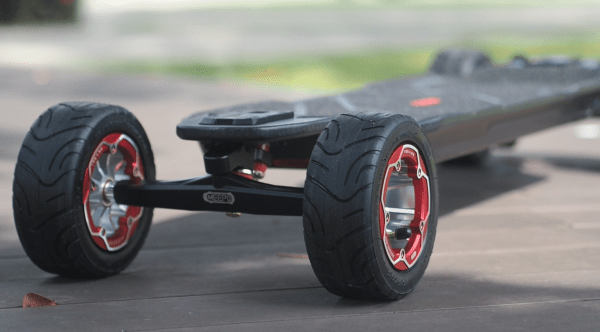
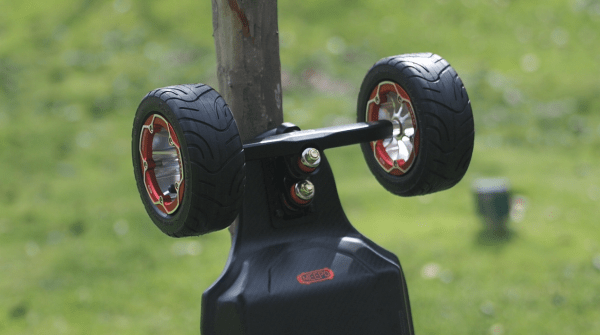
By now, you should have heard about the Evolve Renegade, the $2,499 mountain-style board with Trampa deck and suspension trucks.
But hold your wallet if you are in the market for a carbon fiber board with a Trampa-style deck because there is a new board by a new brand that offers something similar for a lot less.
This new brand is aptly named On My Way EV, and it’s on its way with its debut board Cavalry.
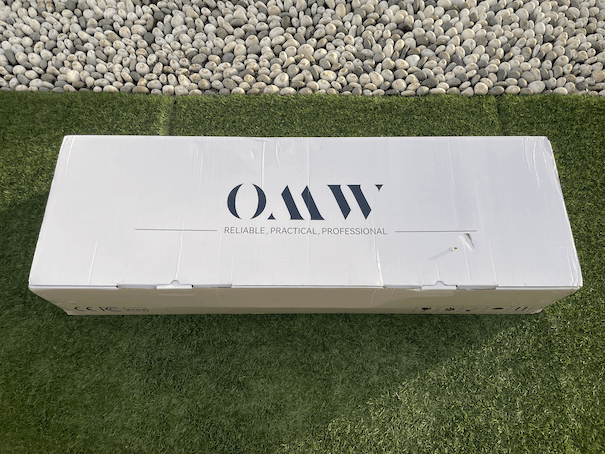
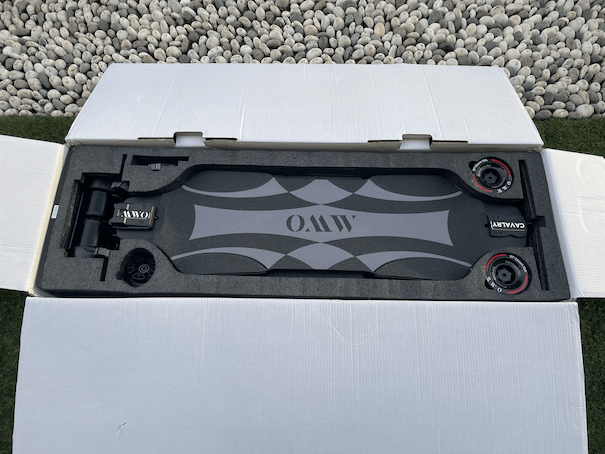
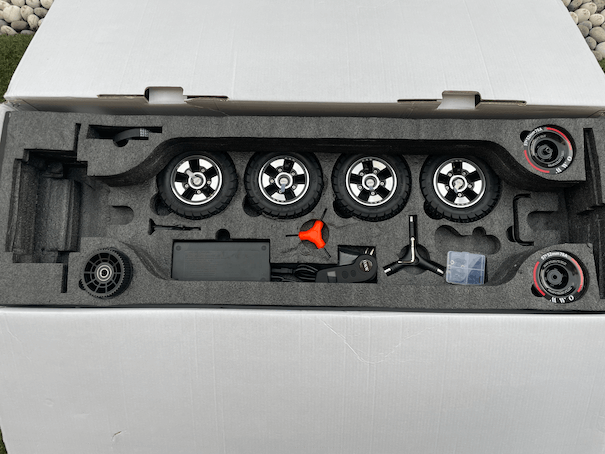
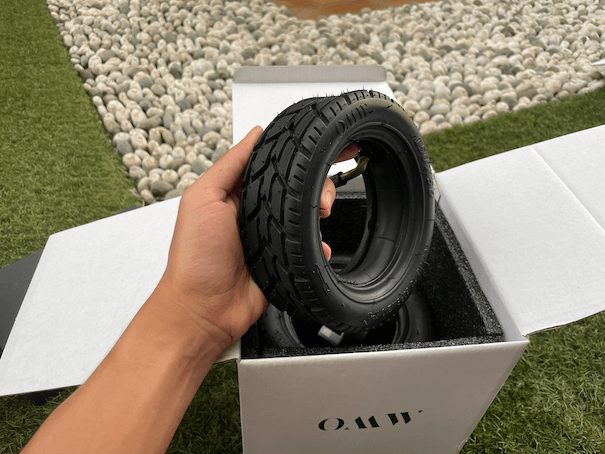
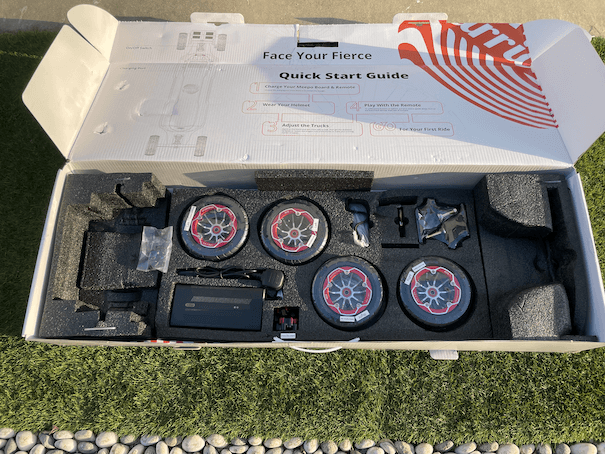
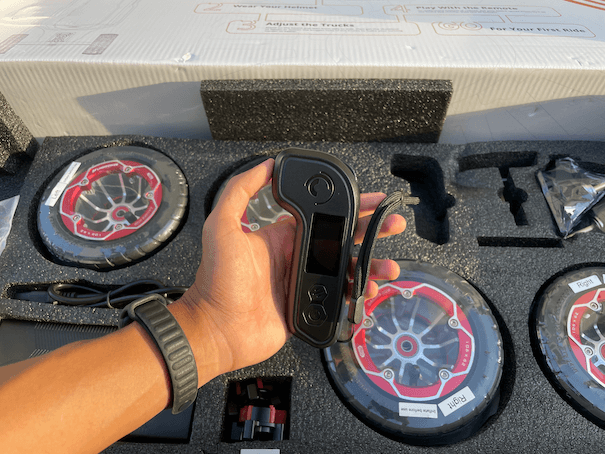
Unboxing of the OMW Cavalry
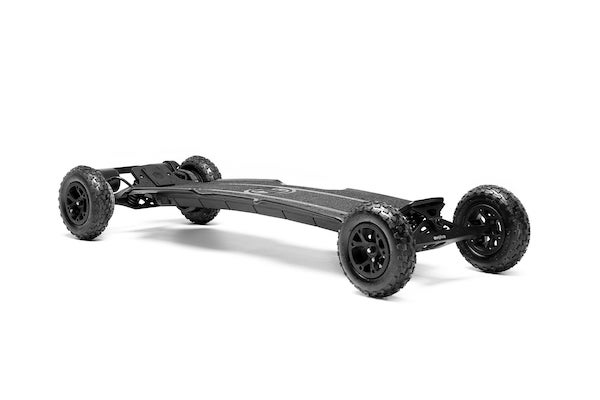
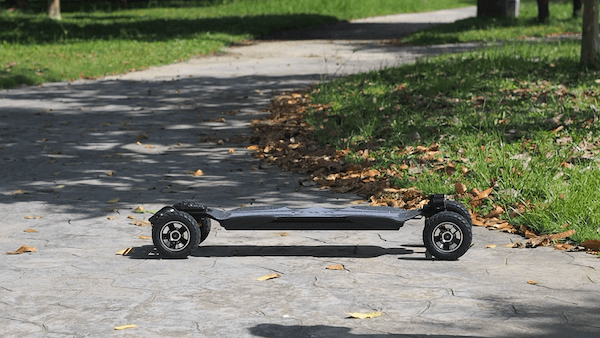
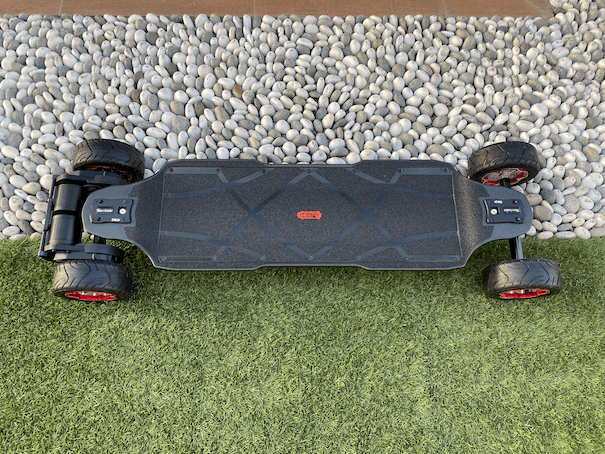
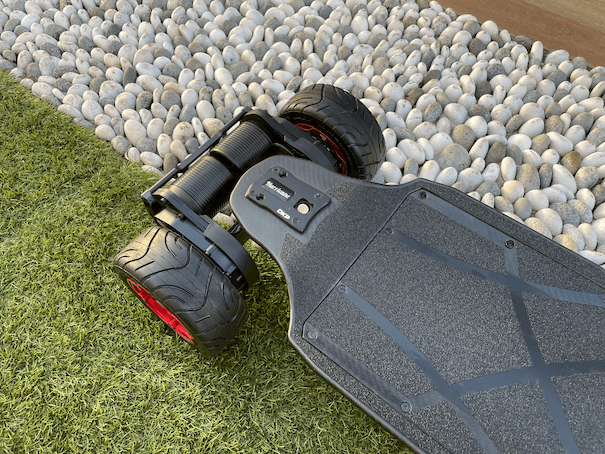
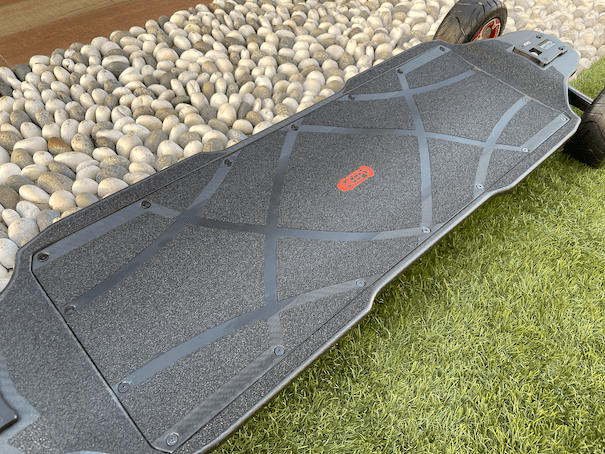
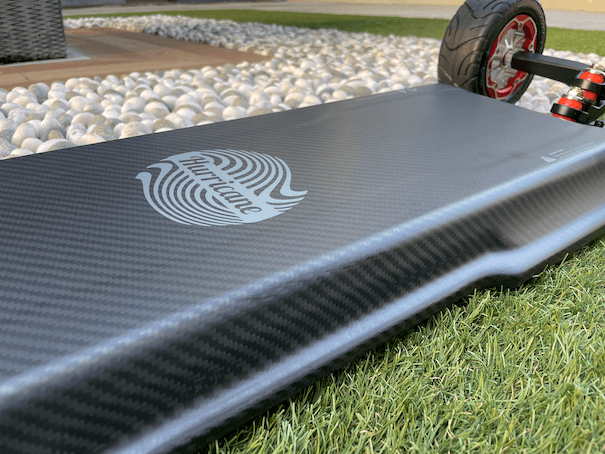
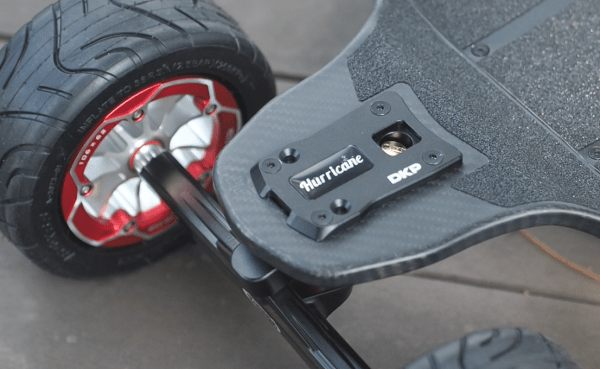
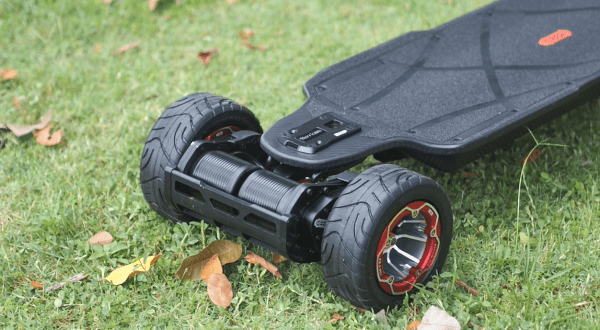
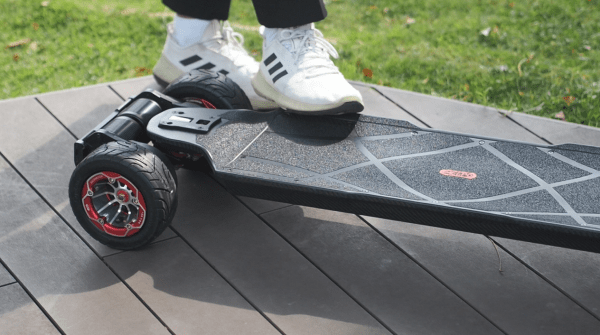
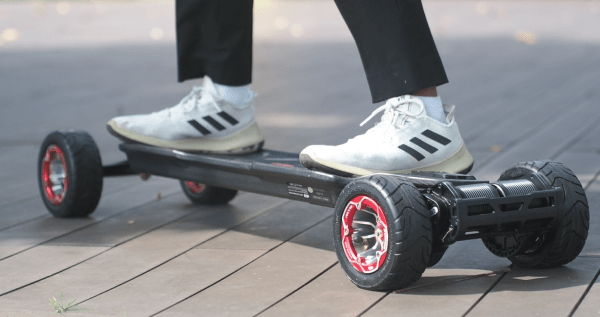
OMW Cavalry is another premium heavy-duty All-Terrain Board
OMW Cavalry is pretty similar to the Evolve Renegade, a premium board designed to have a ton of power and a lot of battery and to handle rough terrains.
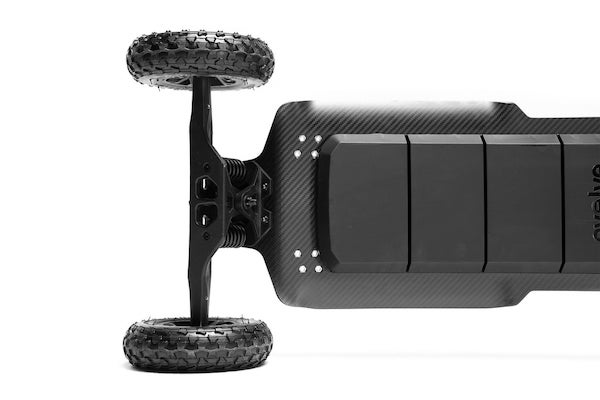
Similarly, it uses a flexible Trampa-style deck.
Similarly, it is rocking 12s4p Samsung 50S battery ( 864WH – 20AH)
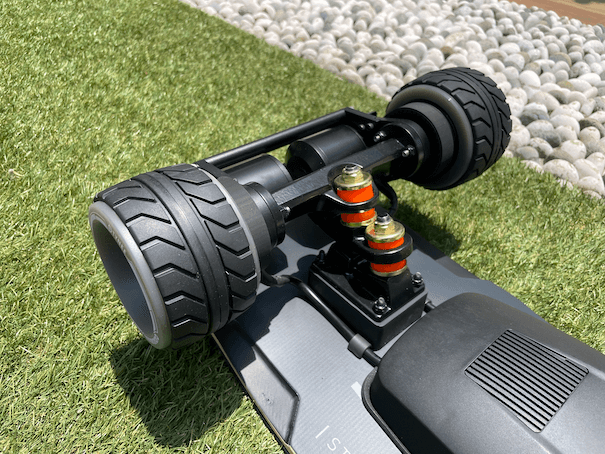
Unlike Evolve Renegade, however, the Cavalry is using DKP Trucks, meaning it wasn’t a hardcore off-road board but instead was designed to be as easy to turn as possible.
While we are still working to put the Cavalry through the paces, it looks very very promising and is an alternative worth considering before pulling the trigger on the pricey $2,499 Evolve.
Plus, OMWEV is a new brand that is eager to prove itself, while Evolve (with all its good and bad) put a premium tax on its board. While both boards have comparable specs, the Cavalry is almost $1000 cheaper at $1,599 (launch price).
If you are interested in buying the OMW Cavalry be sure to check out our affiliate discount link here and use code: “ESKATEHQ” to receive $30 off during checkout. It will help you get a small monetary discount and help us out too. On top of that, you’ll be tagged as an Electric Skateboard HQ customer and probably be treated better. Cheers!
Comparison Specification of OMW Cavalry vs Evolve Renegade
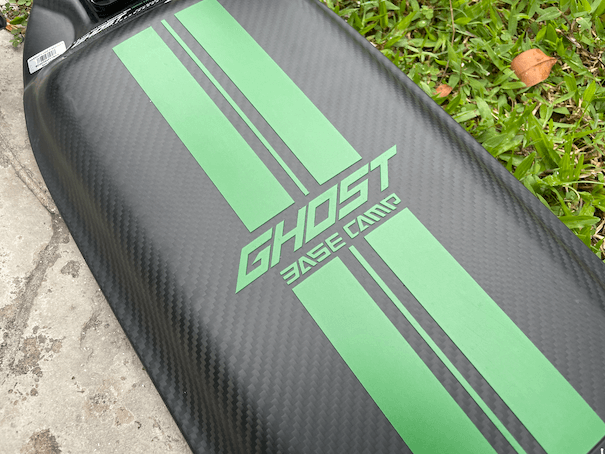
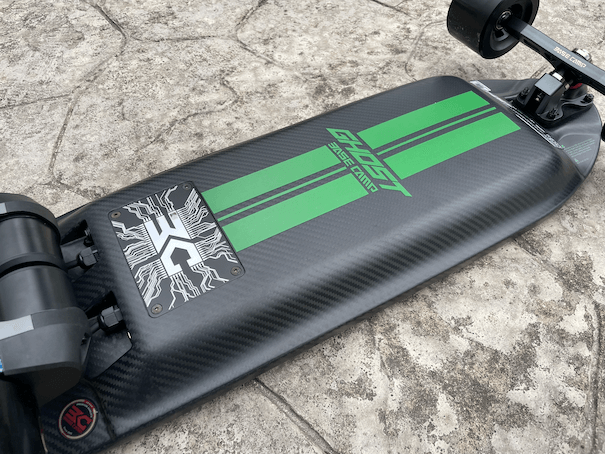
For a new company to enter the eskate scene with a premium board, especially a premium shortboard, is a rather bold move, but that’s exactly what Basecamp has done with the Basecamp Ghost. In 2022, Basecamp had just begun producing electric skateboards, and in 2024, they will introduce the $1,599 Basecamp Ghost, an electric shortboard. Even though it’s on pre-order for $1,299, it’s still one of the most expensive electric shortboards available. We expect premium parts throughout the board because of the hefty price tag.
Basecamp Ghost Specifications
Price
$1299
Battery
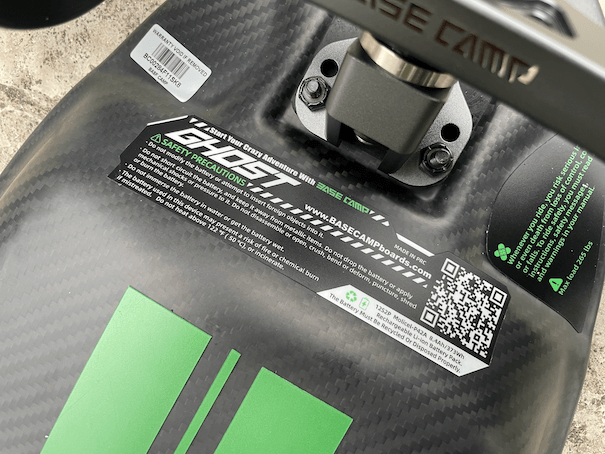
12S2P, Molicel P42A, 373 Wh, 8.4AH
Controller
Basecamp custom ESC
Top Speed
34mph (55kph)
Range
25 miles (40 km)
Deck
31.1 inches T700 3K Carbon Fiber
Motor
Belt, 2 x 3000W Hobbywing 5255
Net Weight
19 LBS / 8.6 KG
Deck: 31.1 inches T700 3K Carbon Fiber
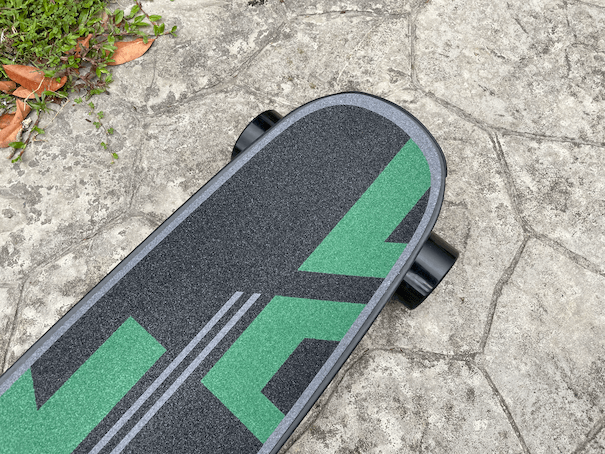
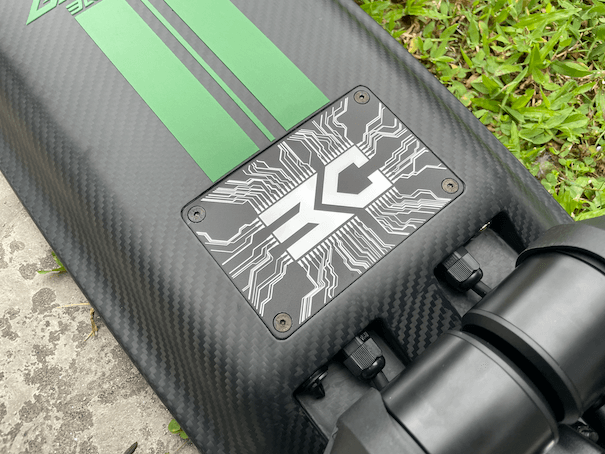
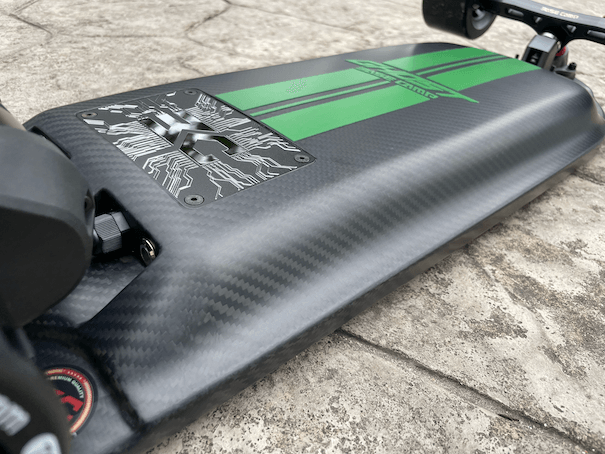
Starting off with the deck, it’s a sleek 31.1-inch Carbon Fibre Deck with a unibody design and no bulging electronic enclosures. The deck of the Meepo Hurricane is also built of T700 3K Carbon Fibre, but unlike many carbon fiber decks, which are designed to be perfectly flat, the Ghost has a nice concave to it.
The Basecamp Ghost also has a tiny kicktail, which means two things: 1) It’s more for show than anything else, and 2) Despite the deck’s overall length of 31.1 inches, which is comparable to a mini-board, the wheelbase and stance are actually quite wide, resembling cruiser boards like the Tynee Stinger and Meepo Flow.
This means it is far more stable than a typical mini board without expanding the footprint or compromising portability.
Portability is also a unique strength of this board; the carbon fiber material allows the deck to be lighter, and the whole board comes together at a carry-friendly 19 lbs or 8.6 KG.
Truck and Wheels: 7075 aluminum alloy and 90 MM 76A PU Wheels
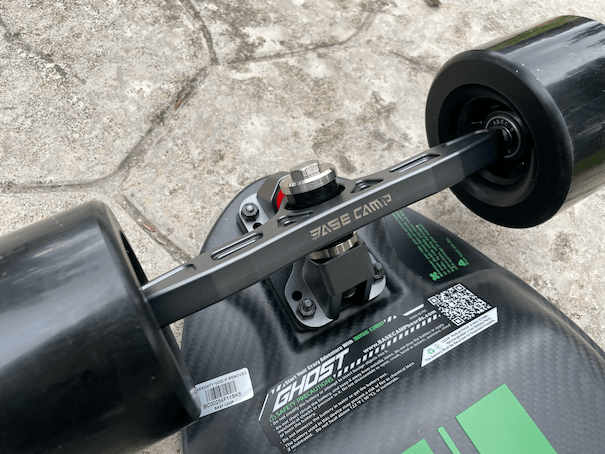
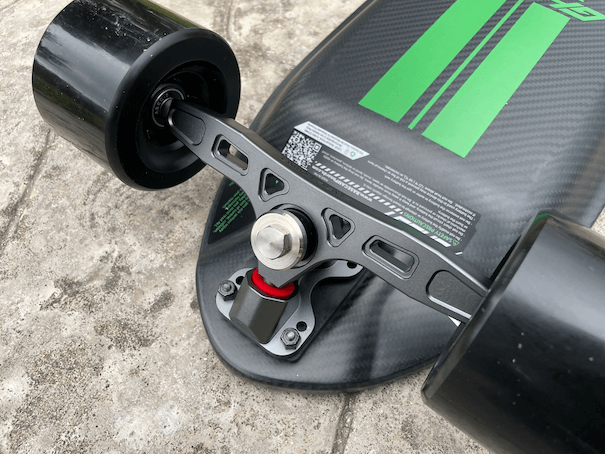
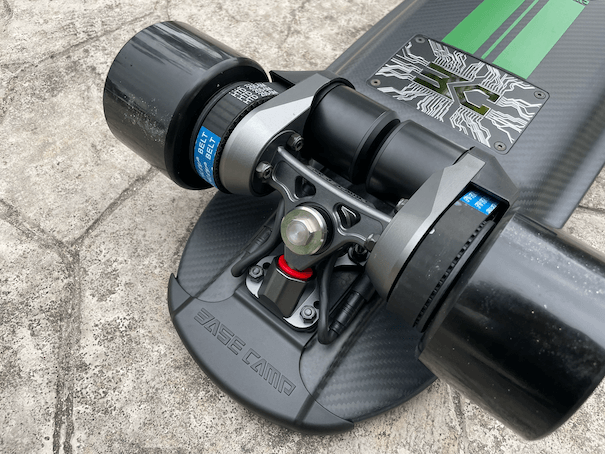
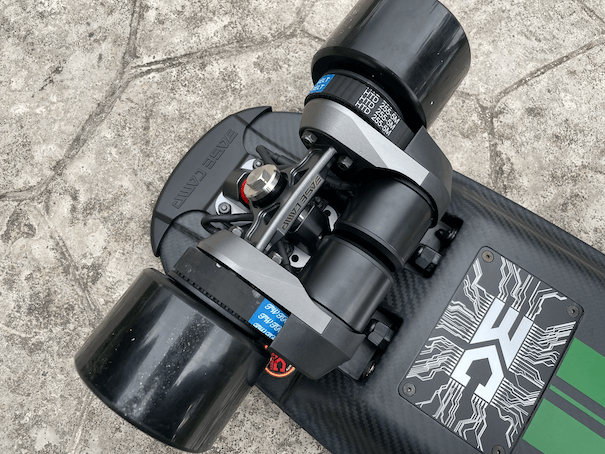
Now let’s talk about trucks. These are high-quality CNC trucks that are engraved from 7075 aluminum alloy, so they should perform incredibly well and be a lot more durable than conventional cast trucks.
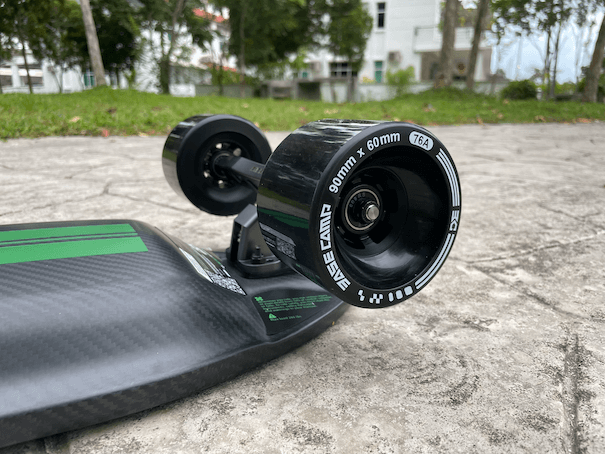
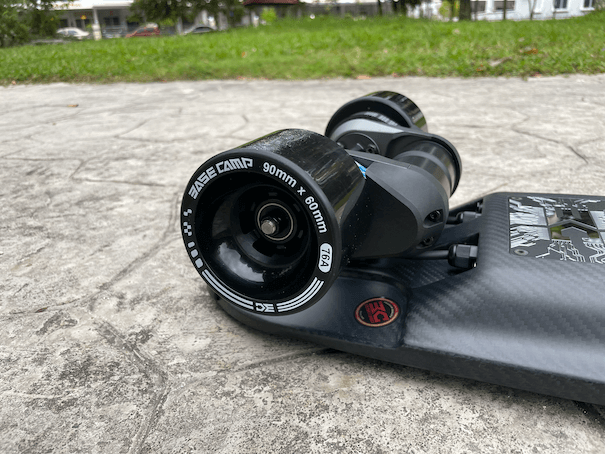
The wheels are 90 MM 76A PU Wheels and despite being advertised as the most comfortable wheels available, these seem very standard to us despite using the late-Boosted Hemotox technology.
Battery: 12S2P, Molicel P42A, 373 Wh
For the battery, Basecamp went with a 12S2P, Molicel P42A, 373 Wh. On one hand, this is pretty underwhelming for any board over $700, but on the other hand, a bigger battery will reduce the portability, which is one of the unique upsides Ghost has going for itself.
At the very least, it’s using the best cell possible with Molicel P42A. The Ghost is marketed at a range of 25 miles or 40 km. In our tests, we managed to reach 19 miles or 30 km with a 154 lbs or 70 kg rider riding fast modes 3 and 4, which is still a healthy range.
ESC: Basecamp Customized ESC
Moving onto the ESC, Basecamp decided to design their own for the Ghost.
Initially, we were wary of the claim, as there had been many small brands that launched boards with quote-unquote customized ESC but, in truth, were just using a version of Lingyi ESC.However, this is not the case with Ghost; what is within the Ghost gave us the impression of a VESC. It includes smart turn-on features, which let the board to switch on automatically when the remote is turned on, like many VESC do nowadays. It also came with 4-speed modes.
So we reached out to Basecamp, and they told us that it is an XESC and claims that it is superior to VESC. This Basecamp XESC does provide for the same customizing capabilities as a VESC, although we don’t like to compare the two. It allows for customization of almost everything, including swapping out motors, batteries, etc. And you can change the settings straight from the remote, very convenient. I think this is where Ghost tries to set itself apart and try to be as custom-friendly as possible, catering to the DIY crowd. Caution, though, the advanced customization with the pro settings will void the 1 year warranty, so play around at your own risk.
The remote is very nice, too, it’s very ergonomic and comfortable to hold. The throttle dial has a lot of travel, which always translates to more precise control.
Motor: Belt, 2 x 3000W Hobbywing 5255
Last but not least is the motors; the Basecamp Ghost uses a belt drive system with two 3000W Hobbywing 5255. These are pretty good motors and can go up to 34 mph or 55kph.In our tests, we managed to hit 30 mph or 48 kph before we ran out of road, but the board feels like it could really go to 55 kph, which is crazy for a shortboard.
Specs Summary:
To sum it up, Basecamp Ghost was well assembled and is truly built of high-quality components. Additionally, the board features a 1-year guarantee and an IP 65 waterproof rating.
Just going through the specs made it clear that this definitely wasn’t a board that budget shoppers would reach for, as a 12s2p battery for $1,299 is pretty steep. However, since people used to purchase Boosted for similar specs at a higher price, we know that some consumers are willing to pay more for a premium experience.
Riding Experience
Basecamp Ghost rides more like a cruiser board and less like a shortboard. The wheelbase is wider than most minis, and it reminds us of the Tynee Stinger and Meepo Flow we just reviewed, just with a narrower deck and a milder concave.
What Basecamp Ghost did better than those cruisers is the speed control. Whatever ESC Basecamp put into this board, it really does its job well, even better than the latest gen of Hobbywing ESC.
First, you get perfect smoothness in how the speed ramps up. Second, how the speed mode was designed makes sense too. The third speed mode allows you to access the highest top speed while accelerating smoothly up to the top speed. The 4th speed mode was configured to be very intuitive, too. It has a smooth and gentle initial initiation, but if you push the throttle all the way up, it gives you the extra power and the kick.
And, the throttle has a lot of travel and hence gives you more precise control of the acceleration. You can keep the throttle in the midpoint, and it’s already plenty strong, and there is a lot more room for you to push the dial all the way up, and the acceleration just ramps up precisely as strongly as you want it to. And if somehow you want the speed control to behave differently, you can always tinker with it yourself.
Power
Besides a better-than-most speed control, Basecamp Ghost is more powerful than most shortboards too, and we are expecting nothing less from a premium board at this price. The powerful dual 3000W Hobbywing motors do not let you down. For context, the Basecamp Ghost is still one of the most powerful mini boards we evaluated, but not being as mad as certain powerhouses like the Tynee Mini 3 Pro.
It can go up to 34 mph or 55 kph, and the setup is pretty stable. Although we do not have a long, straight, safe road to reach the board’s limits, we can imagine riding that fast on this 31-inch board. And that brings us to the point, the Basecamp Ghost prioritizes stability over responsiveness.
Responsiveness and Stability
Because of its longer wheelbase and lack of a kicktail, the board is more stable than the average micro board and rides like a 35-inch cruiser board with a kicktail. The CNC trucks are great; they are precise but also more biased toward stability than responsiveness. We think this leaning towards stability makes sense as Ghost clearly should be ridden fast, and any board this length has no problem turning tight corners anyway. Although carving is clearly not this board’s strong suit—it is not a longboard with a flexible deck and twin kingpin trucks— but it is still pretty enjoyable though.
Vibration
So, the riding experience on the Ghost is pretty amazing, however, it does have one weakness that came with the design, which is road vibration. With 90mm wheels and a carbon fiber deck, the board conducts unpleasant road vibrations too well. Additionally, since you would typically lay your foot squarely on top of the trucks, the vibration would pass directly from the wheels to the trucks to your knee. Although it can’t be helped, purchasing a small board comes with this inconvenience. Wearing larger wheels might be beneficial.
Verdict of Basecamp Ghost:
The Basecamp Ghost is undoubtedly a premium board and, hence not for everyone.
If you want a carbon fiber short cruiser that is light and portable, powerful and stable, with perfect speed control, then Basecamp Ghost will be what you build. It is also one of the rare non-boutique boards that are DIY-friendly, as it has an ESC that allows tinkering with its parts.
All in all, it is not a board that we value-counting plebs at ESHQ would buy, but if we are stealing one board from an electric shortboard store, we will definitely be taking this one.
If you are interested in buying the Basecamp be sure to check out our affiliate discount link here and use code: “ESKATEHQ” to receive $150 Off during checkout. It will help you get a small monetary discount and help us out too. On top of that, you’ll be tagged as an Electric Skateboard HQ customer and probably be treated better. Cheers!
After reviewing the Meepo Flow, we re-discovered how well a cruiser deck works on electric skateboards. It’s the perfect size for cruising around. Compared to full-size longboards, they are easier to turn with their relatively shorter wheelbase, and when compared to shortboards, they are much more comfortable for longer rides and have lesser road vibration on rougher roads.
I guess many brands noticed the same thing, and this year, we see quite a few cruisers released by different brands.
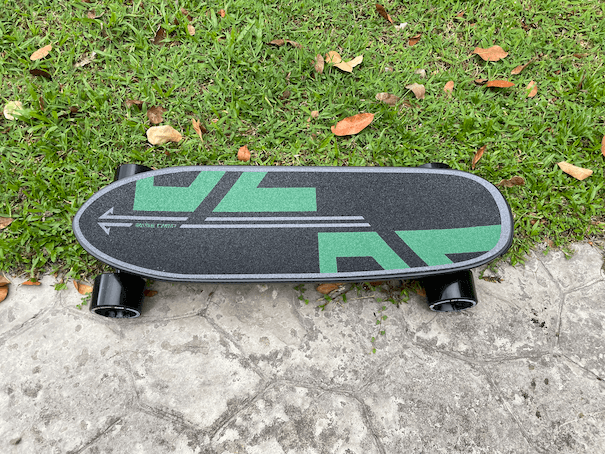
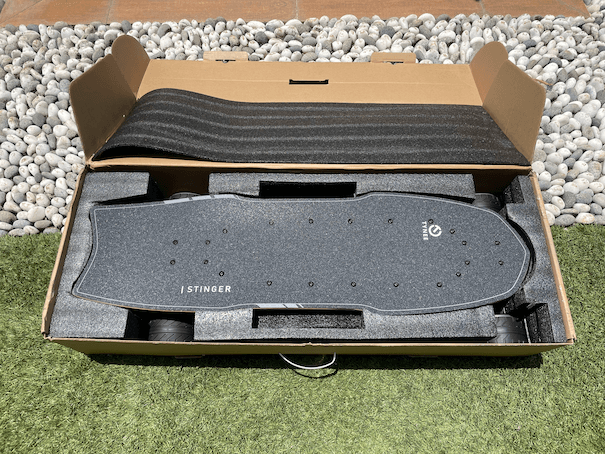
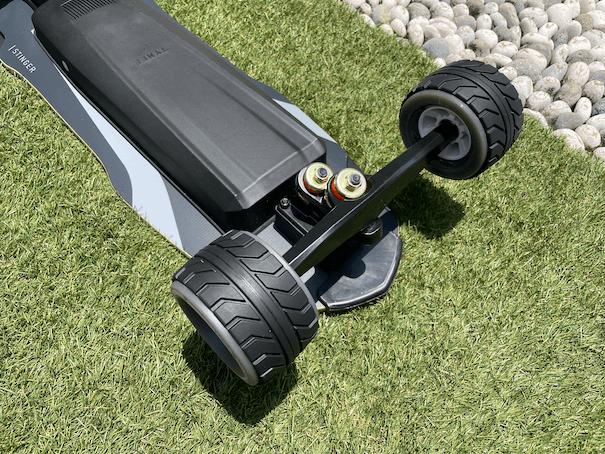
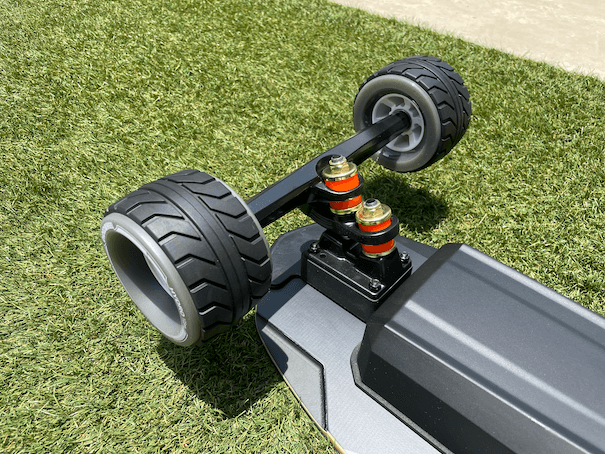
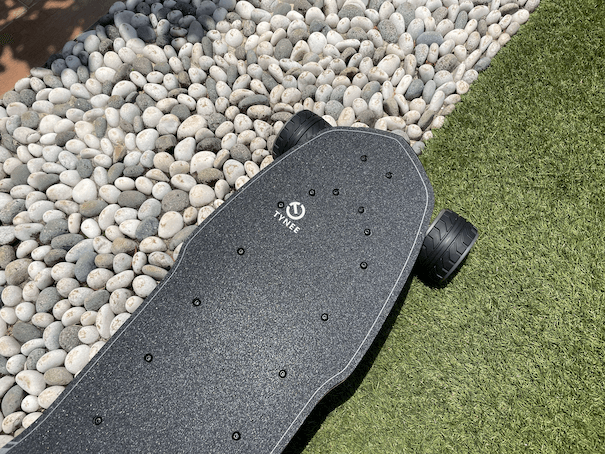
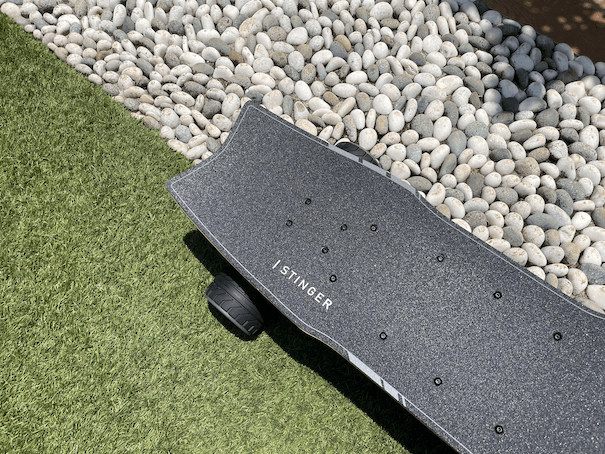
Introducing the $889 Tynee Stinger, another 34-inch board with Double kingpin trucks.
Tynee Stinger Specifications:
Price
$899
Battery
12S3P, Molicel P42A, 544.32 Wh
Controller
12s Hobbywing ESC
Top Speed
34mph (55kph)
Range
24 miles(38 km)
Deck
33.86-inch Canadian Maple+fibreglass
Motor
Dual 3000W belt-drive motors , 6368
Net Weight
26 lbs / 11.8 Kg
Deck: 8 ply Canadian Maple and Fibreglass
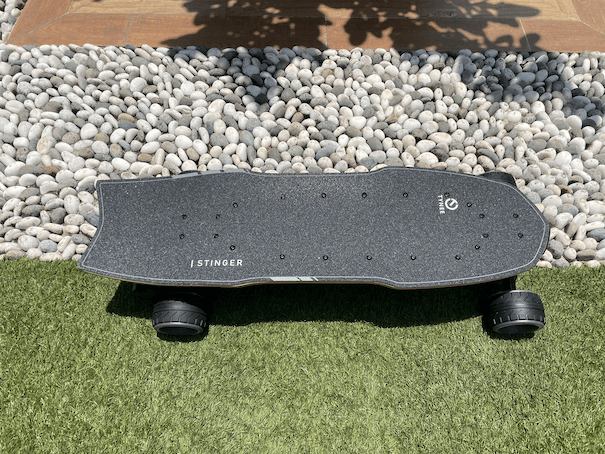
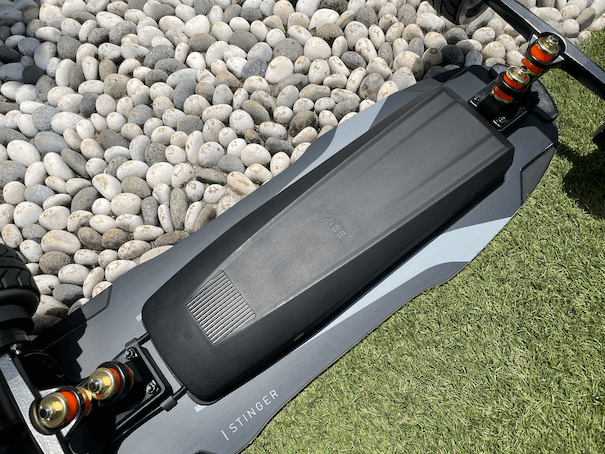
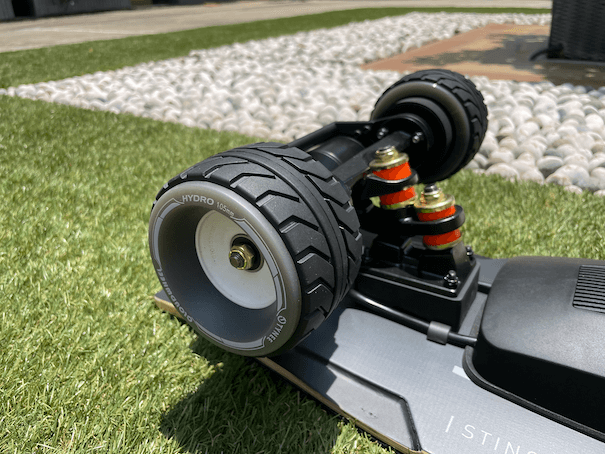
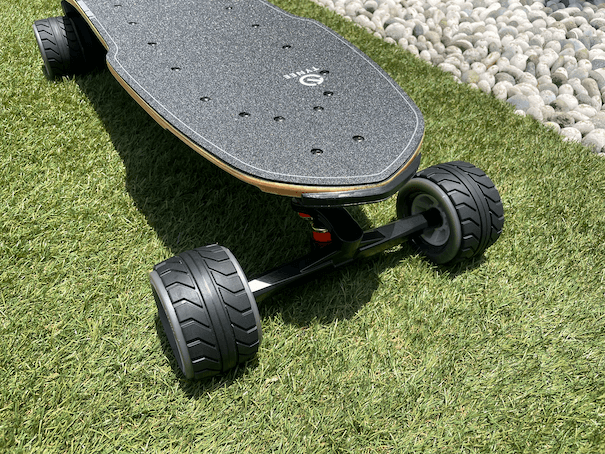
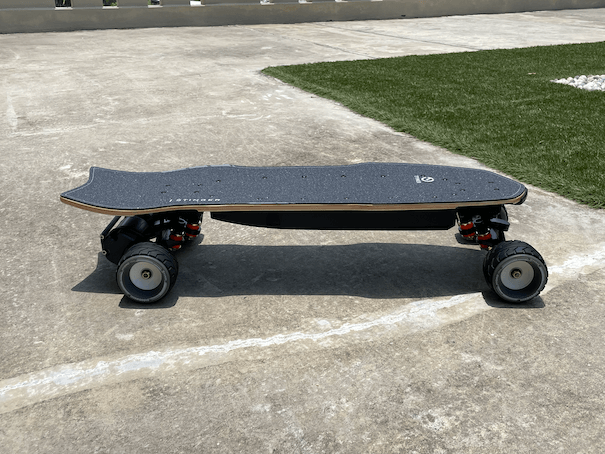
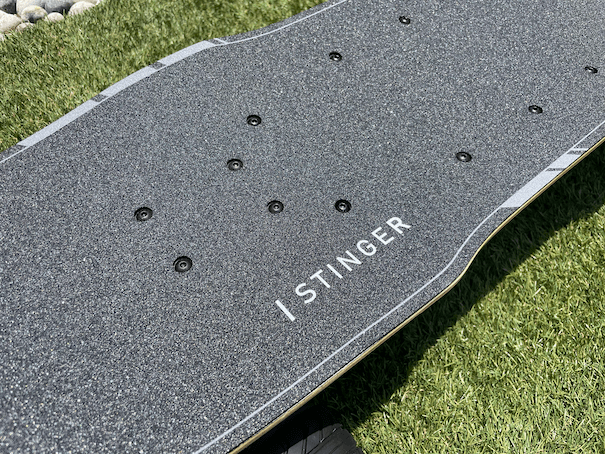
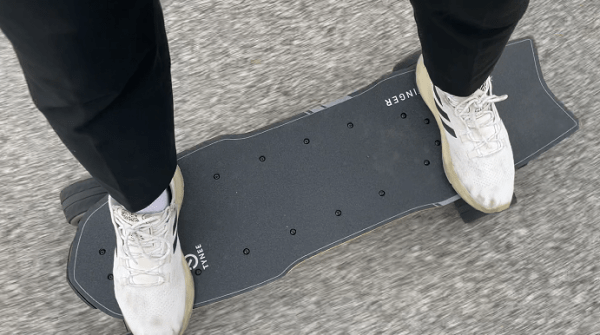
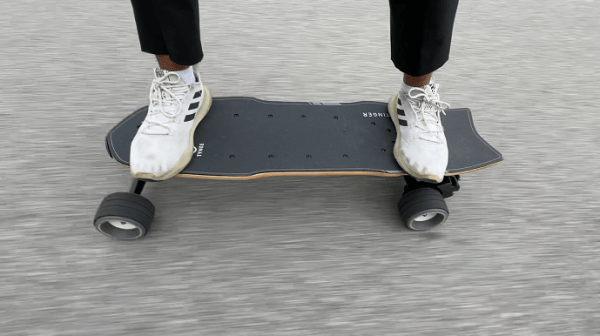
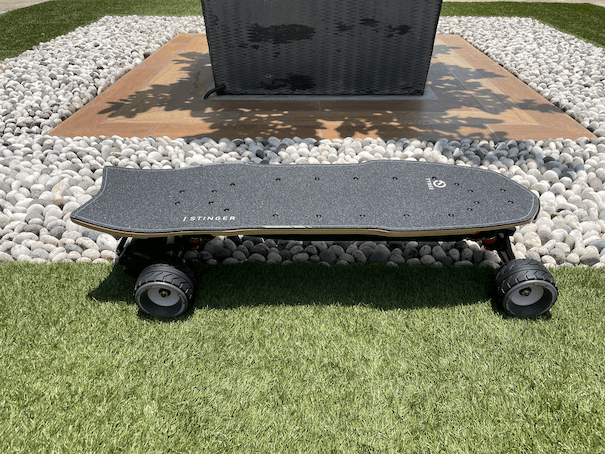
Starting off with the deck, the Tynee Stinger has a 33.8-inch deck made from 8 layers of maple and fibreglass. It’s pretty stiff with not much flex to it but a nice wide concave and unique deck shape. We really appreciate eskate brands trying out different variations of deck design, and the Stinger is a great example of this by having a lower fishtail dip at the end. It’s ideal for foot placement, and the easier, sharper turns are made possible by the lower centre of gravity, which is practically parallel to the battery level.
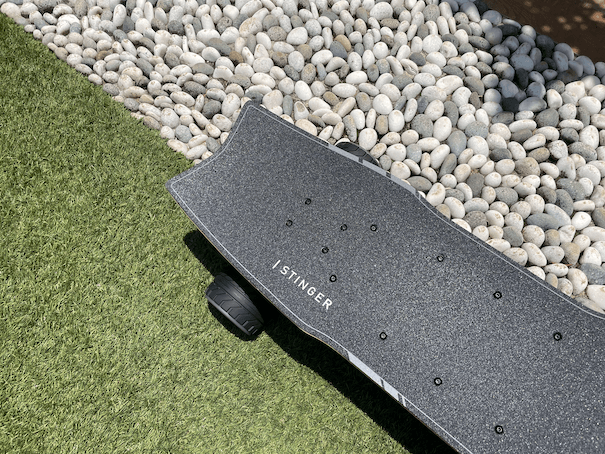
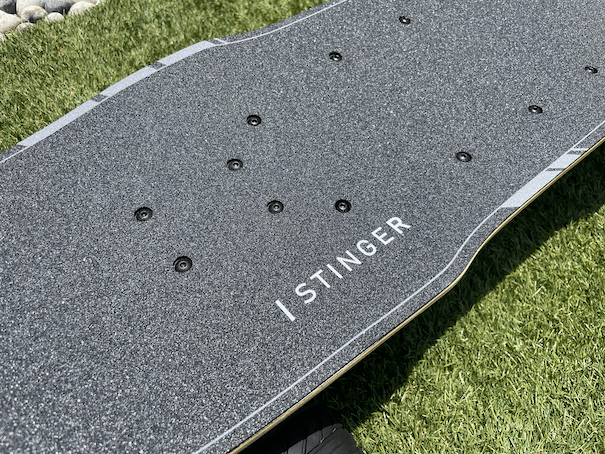
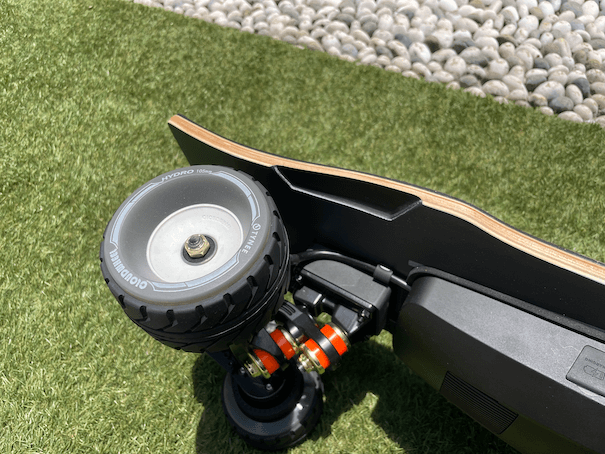
In contrast to the sophisticated deck, the belly of the deck is decorated with a clean and minimalistic design with its shock-absorbing grip tape in a simple black and grey colorway. Also, there are wheel wells to prevent wheel bites.
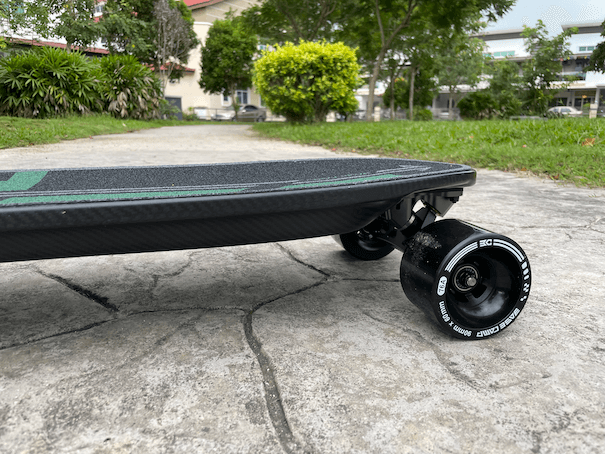
Truck and Wheels: DKP Trucks and 105mm Hydro Wheels
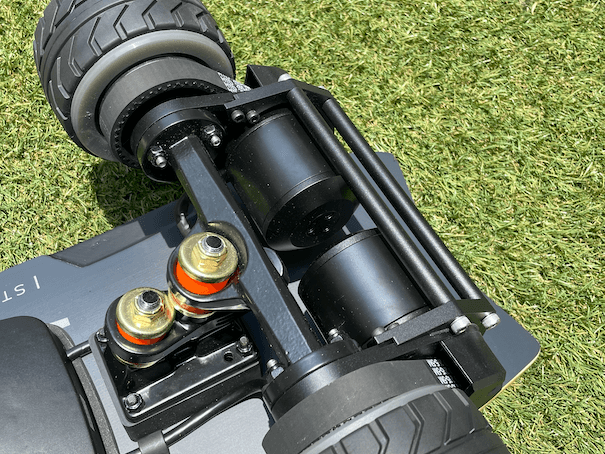
Moving on to the trucks, it seems that every cruiser board uses Double Kingpin trucks, and the Tynee Stinger is no exception.
We don’t recall testing a Tynee with a double kingpin truck in the past, so we are interested to see how it performs.
Next, While we aren’t familiar with Tynee’s double kingpin trucks, we do know these 105mm HydroWheels from our review of the Tynee Mini 3 Pro, which is a super fun and powerful shortboard, by the way. These hydro wheels are a lot different than the cloud wheels, as they’re made out of material somewhere between rubber and PU. It also has tire treads on them which improves its traction on wet roads much better than traditional PU wheels.
Battery: 12S3P, Molicel P42A, 544.32 Wh
Tynee is known to put in a much bigger battery than its rivals, and the Tynee Stinger is no exception. With 12S3P, Molicel P42A, 544.32 Wh, the battery on the Stinger is 30% bigger than the similarly priced Meepo Flow using the same cells. It is marketed to have a range of 24 miles (38 km), however we were able to travel 22 miles (35 km) when riding fast with a rider weighing 154 pounds (70 kg). Kudos to Tynee for keeping it real with the marketed range.
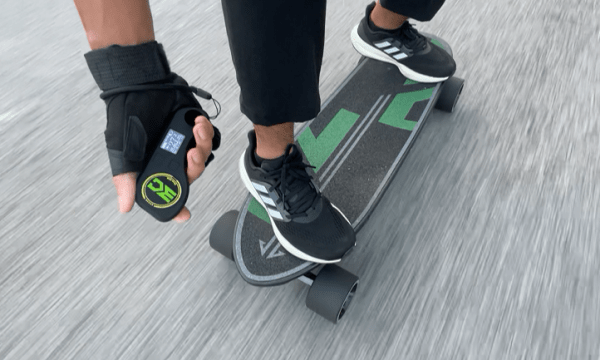
As usual, Tynee opted for the tried and true Hobbywing ESC, which comes with four-speed settings. And like all Hobbywing ESCs, it has a smart turn-on feature, meaning the board powers on automatically when the remote is powered on. It’s paired with the standard Hobbywing remote, but there’s also a mobile app so you can customise the ride profile.
Motor: Dual 3000W belt-drive motors , 6368
Moving onto the motors, the Tynee Stinger packs a punch with its hefty Dual 3000W belt-drive motors , 6368, which is way bigger than the already crazily powerful pairs on the Tynee Mini 3 Pro, which are Dual 2775W 6355 belt motors. We’re expecting a heck of a ton of power from these huge motors as their marketed top speed is a whopping 34mph or 55 kph. We tested it ourselves but bailed at 29 mph or 47 km/h as it gets scary, but the board clearly has more speed to spare.
Specs summary of Tynee Stinger:
To sum it up, the Tynee Stinger has a lot of substance despite its simplistic design. For $889, it packs a lot of battery, has powerful motors, and the 105mm wheels aren’t cheap either. All of this serves to highlight how the Tynee Stinger certainly has a lot of value on paper; all that is left to do is to hit the road and test if the ride lives up to the expectation.
Riding Experience
Stepping on the Tynee Stinger, we immediately noticed something we don’t quite like about it, which is that it’s very high off the ground due to the thick risers it uses to prevent wheel bites. And you don’t need me to tell you riding in high heels felt a lot less stable at high speed.
But the Tynee Stinger has the power to go really fast. The 12s Hobbywing ESC gives a smooth and intuitive control as always, but the 4th mode came right off the box, being scarily powerful. Much more exhilarating than the Meepo Flow, which is good news for the adrenaline junkies out there, but for everyone else who prefers a more relaxing cruise, there is always the Mobile app to customise to a tamer ride profile.
Again, the board is really powerful, but the high riding height and double kingpin trucks limit how fast we dare to go. 26 mph or 42 km is the limit for us, and even with full safety gear, we only dare to go 29 mph or 47 km/h before it starts to wobble.
While stability wasn’t its strongest suit, the board was undoubtedly built with carving in mind. For the Tynee Stinger, carving is really smooth; words may fail us here, but it feels like drifting when you turn, but in a good way. The turning radius is obviously small, thanks to the short wheelbase and double kingpin trucks.
We can definitely make sharp turns without doing kick turns, which is kinda important because the kick tail is pretty far behind where our rear foot naturally positions, so using it doesn’t come as naturally. Kick turns also were not as easy due to the board’s weight, as those big batteries are heavy.
While we blame the big 105mm hydro wheels for forcing the use of tall risers, they do have their perks. Firstly, though not as well as the Cloud Wheels or the 105 Boosted OEM wheels used on the Meepo Flow, the hydro wheels did decently well in reducing road vibrations, but it did make the board tolerable enough on rough roads.
Secondly is its grip. The hydro wheels are pretty grippy, and that helps make carving fun while preventing the board from drifting.
Verdict – Tynee Stinger:
Unlike many boards nowadays that keep it safe and can be pretty bland, Tynee Stinger is an interesting cruiser board that has clear strengths and weaknesses.
It is super-duper-powerful and has a great range, and it’s super responsive, too. However, it is also less relaxing to ride due to its higher riding height. Tynee Stinger may not be the best choice if all you want is a comfortable ride to cruise around in.
On the other hand, Tynee Stinger is an excellent choice if you are a heavy rider who needs the power or you actually need a cruiser board with a great range. Or, if you want a fun ride, the Tynee Stinger’s incredibly strong, nimble, and responsive ride will suit you just fine.
If you are interested in buying the Tynee be sure to check out our affiliate discount link here and use code: “ESKATEHQ23” to receive $5 off during checkout. It will help you get a small monetary discount and help us out too. On top of that, you’ll be tagged as an Electric Skateboard HQ customer and probably be treated better. Cheers!
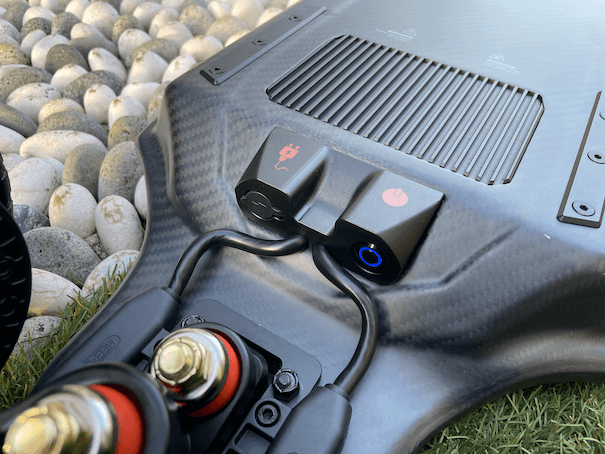
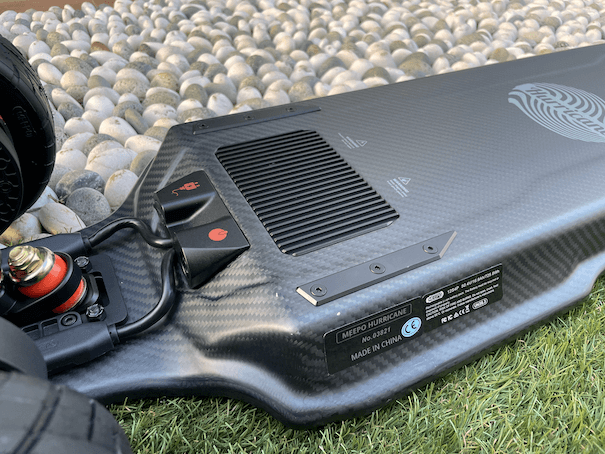
In late 2021, Meepo launched the $1699 Meepo Hurricane to great acclaim. It was much more powerful and had a significantly larger battery than the similarly priced Exway Atlas, which was the board to beat in the carbon fiber all-terrain category.
Fast-forward to 2023, and the field has become much more competitive. In response, the Hurricane has been upgraded to the Hurricane Vader. Besides boasting a slightly lower price of $1599, it also features several changes from the previous version of the Hurricane.
Meepo Hurricane Vader Specifications
Price
$1599
Battery
12s4p Molicel P42A (725.8WH / 16.8AH)
Controller
12s Lingyi ESC
Top Speed
32 mph / 52 kph
Range
31 miles / 50 km
Deck
Carbon fiber, Double-drop deck
Motor
3500W x 2 Gear Drive Motors (Gear Ratio = 1:4.4)
Net Weight
38.8 lbs/ 17.6kg
Deck – Same Great Material, Sleeker Design:
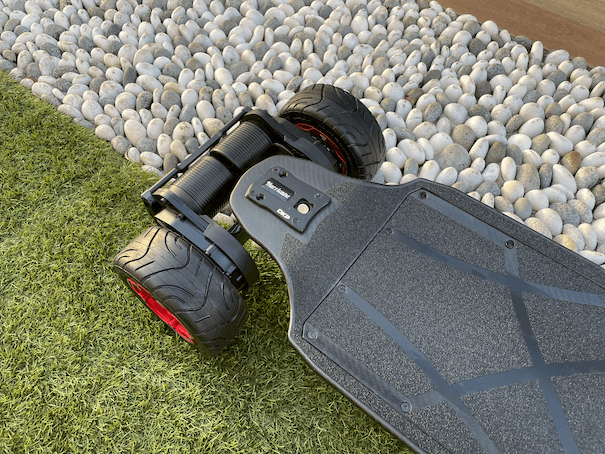
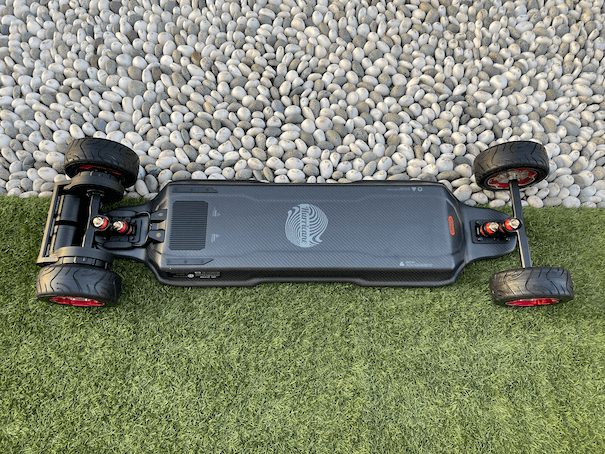
This deck is identical to the one on the original Hurricane but with a modified grip tape print design. It has a more subdued design and a smaller logo, which, to us, looks more sleek and contemporary.
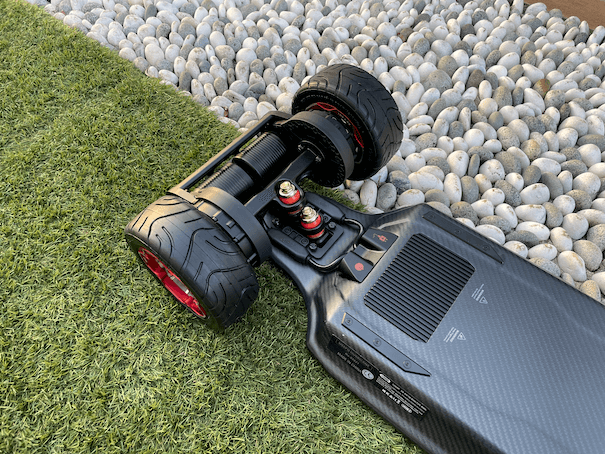
Beyond aesthetics, this is the same double-drop deck constructed from T700 3k Carbon Fibers. It’s worth noting this material since it’s used in manufacturing professional drones.
It is stiff with no flex, and It is wide with a pronounced concave.
ESC and Remote – 12s LingYi ESC and M4s Remote
For its ESC, the Meepo Hurricane Vader has once again chosen the 12s LingYi ESC. This ESC features a push-to-turn-on function and offers four speed modes as well as four brake modes. By 2023, Meepo had begun integrating the Hobbywing ESC into some of its boards. Therefore, it appears intentional that Meepo chose LingYi for this model, suggesting that Meepo wants this board to have a more aggressive speed control. .
The ESC is paired with the standard M4s Meepo remote, which is the same one used for the previous Meepo Hurricane. This remote includes a display that shows speed, battery status, and other useful information.
Battery – 12S4P Molicel P42A:
The Meepo Hurricane Vader’s battery remains unchanged. It continues to be powered by a big 12S4P battery using Molicel P42A, and provides a total of up to 725.8WH or 16.8AH. By 2023, this no longer outshines the competition, but it remains competitive for its price point.
Meepo advertises a range of 31 miles (50km). In our tests, we achieved up to 22 miles (35 km) while riding in the highest speed mode. This is a significant improvement over the 18.5 miles (30 km) range of the previous Hurricane. We believe this increased efficiency is due to the gear-drive being more energy-efficient than the belt.
Motor – 3500W X 2 6374 motor with Gear Drive System 4.0:
So, let’s talk about the gear drive. These are a pair of 3500W, 6374 motors. Meepo refers to this as the Gear Drive System 4.0, a name that doesn’t mean much to us other than the fact that it is not the planetary gear drive used on the previous City Rider 2 and Ecomobl boards. Gear drives are always exciting because while keeping the smooth ride that results from not having a hard hub core inside the wheels, they offer better battery efficiency than belt-drive. These gear drives are generally more expensive; for example, Meepo allows customization of the Hurricane via the Hurricane Ultra product page, and the gear drive option is priced $100 higher than the belt version. While these drives must still be time-tested for durability, so far, we haven’t heard much about failures related to the gear drive.
The marketed top speed of these motors is 32 mph (52 km/h), which is a little slower than the previous belt-driven Meepo Hurricane. We suspect this difference may be due to gear ratio settings that prioritize torque over speed. (Gear Ratio = 1:4.4)
Additionally, we lacked a long, straight stretch of road during our test, which prevented us from reaching the top speed. The board accelerated powerfully from a standstill, but its acceleration tapered off as it reached higher speeds. As a result, it took some time to reach its maximum speed, and our test ended when we ran out of roads, reaching 28 mph (45 km/h), which we can tell is well below the board’s limit.
Truck and Wheels – Double KingPin and Cyclone 165s Racing Wheels
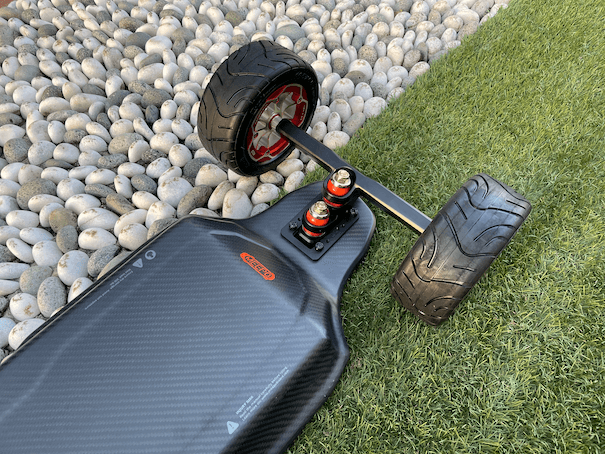
As for the trucks, Meepo sticks to what works and uses the same double kingpin trucks as on the Hurricane. We already know that they work well and have a good balance between stability and responsiveness.
Meepo still allows customization and the true kingpin option through Meepo Hurricane Ultra X for people who prefer stability.
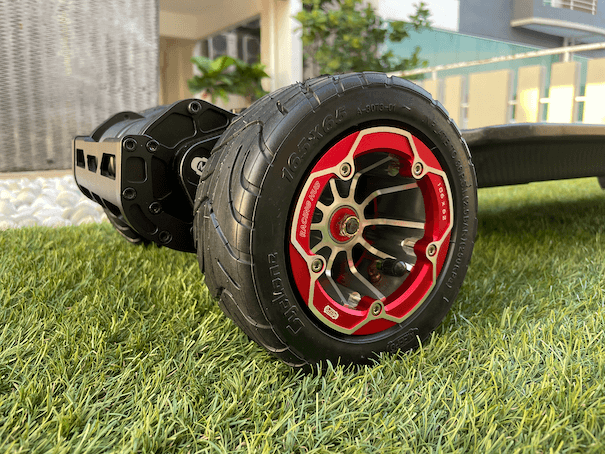
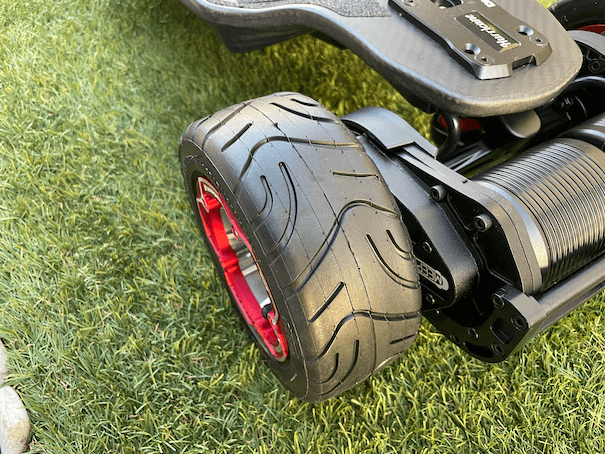
There have been adjustments to the wheels. The Hurricane Vader uses Meepo’s new Cyclone 165S Racing Wheels with CNC machined rims in place of 155mm pneumatic wheels.
The board weighs a hefty 39 lbs (17.6kg). It’s definitely on the heavy side with this one.
Specification Summary
Overall, the Meepo Hurricane Vader offers great specs for $1599. While I wouldn’t say it’s jaw dropping in terms of value for money, a 12s4p carbon fiber board with gear drives, constructed with such finesse, is about as good as it gets for $1599.
Riding Experience of Meepo Hurricane Vader:
For those who are unfamiliar with the Hurricanes, this stunning carbon fiber deck is nice to ride, too. It’s nice and wide, with enough room for people with larger feet. Given that this is a very, very powerful board, it is crucial that the board remain stable at high speeds, which was made possible by the stiffness of the deck and the pronounced concave.
For Vader, the speed control is better than the previous Hurricane. The speed controls for mode 1 to mode 3 are now perfectly smooth and intuitive, as good as Hobbywing ESC. And as per typical Meepo fashion, Mode 4 is aggressively powerful and has that extra punch, which is often more for the thrill than for any practical reason. It is, however, helpful for uphill hikes. Mode 4 will undoubtedly be too powerful for a beginner because of how quickly the board moves ahead, thanks to its steep acceleration curve. If you like that kind of thrill, it is quite exciting, but for the majority of riders, mode 3 is a lot more comfortable and usable and is already very strong.
Meepo Hurricane Vader has a very distinct riding feel. It uses double kingpin trucks, but the board feels more stable than it is responsive. We believe the 165s Cyclone Wheels, which have large contact patches and are incredibly grippy, are a big factor in this. This means that while we can maneuver the board with ease and carving is fun, the board isn’t nimble, and executing sharp L turns is not easy.
We also blame the grippy-ness of the cyclone wheels for holding back the acceleration. When we test the top speed, it feels like the wheels are too glued to the tarmac, stopping the board from leaping forward. Additionally, the board will abruptly lose speed when the throttle is released, which could cause wobbles for inexperienced riders. This was unexpected because, typically, belt systems provide better free-rolling than gear drives, but the 165S Cyclone wheels appear to offset that advantage.
But it doesn’t mean we don’t like the cyclone wheels. They are quite comfy; there was virtually no road vibration at all. And all the credit has to go to the wheels, as the stiff carbon fiber deck wouldn’t have done anything to help reduce road vibration.
Not sure how important this is to you, but the gear drive is also quieter. It is about as loud as the quietest belt drive.
Verdict – Meepo Hurricane Vader:
Meepo Hurricane Vader is no longer an underdog that dramatically undercuts the competition in terms of price and specs. Instead, it has evolved into an uncompromising premium board featuring quality parts, a refined finish, and an amazing ride. Its ride profile leans more toward torque, power, and stability. It is a complete package at a slightly lower price than its competitors (I’d value it at around $1799), and if you’re in the market for a powerful board with great specs, you can’t do much better than the $1599 Meepo Hurricane Vader.
If you are interested in buying the Meepo be sure to check out our affiliate discount link here and use code: “ESKATEHQ23” to receive $5 off during checkout. It will help you get a small monetary discount and help us out too. On top of that, you’ll be tagged as an Electric Skateboard HQ customer and probably be treated better. Cheers!
October 7, 2023 – In a recent update from Wowgo, the company has announced changes to its warranty policy. Initially offering a 6-month standard warranty for all its electric skateboards, Wowgo has now extended this period to 9 months. Additionally, customers have the option to further extend this warranty to 12 months with an extra fee of 20 USD.
This is pretty good news for us eskaters. We hope more brands will soon follow Wowgo’s lead and provide longer warranty coverage. For context, a 6-month warranty is the prevailing standard amongst electric skateboard brands right now.
Top picks:
If you are thinking about getting a Wowgo board, we’d recommend the belt-driven Wowgo 3E ($479) which we consider as the best affordable electric skateboard priced under $500.
If you are interested in buying the Wowgo be sure to check out our affiliate discount link here and use code: “ESKATEHQ” to receive $5 off during checkout. It will help you get a small monetary discount and help us out too. On top of that, you’ll be tagged as an Electric Skateboard HQ customer and probably be treated better. Cheers!