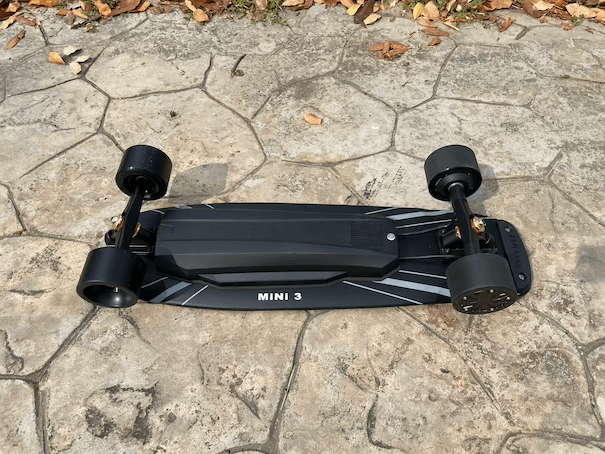
Propel Pivot S Electric Skateboard Review: A Balanced Perspective

Today, we will be reviewing the Propel Pivot S.

On July 2023, Propel, a brand that’s gained quite a following for its powerful off-terrain suspension boards and its top-tier post-sales service, is now stepping into the 2-in-1 arena with the Pivot S and the Pivot GT.

There are many boards out there that have adopted the Evolve formula (Double drop deck + DKP trucks + 2 in 1 wheel), but we haven’t seen any brand make one at the price that Propel is selling Pivot S for.

Pivot S starts at $799 for the base version and $999 for the 2-in-1 package.
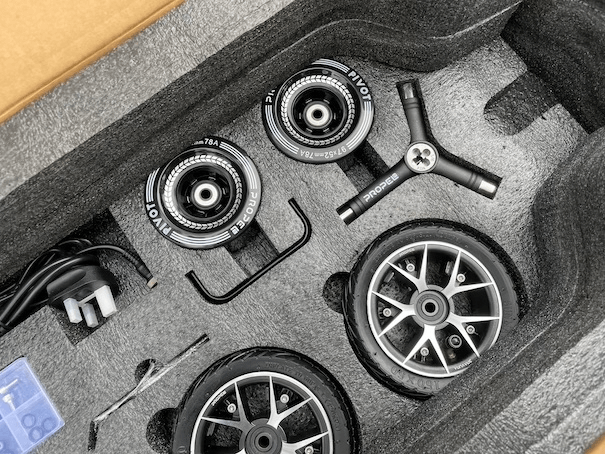
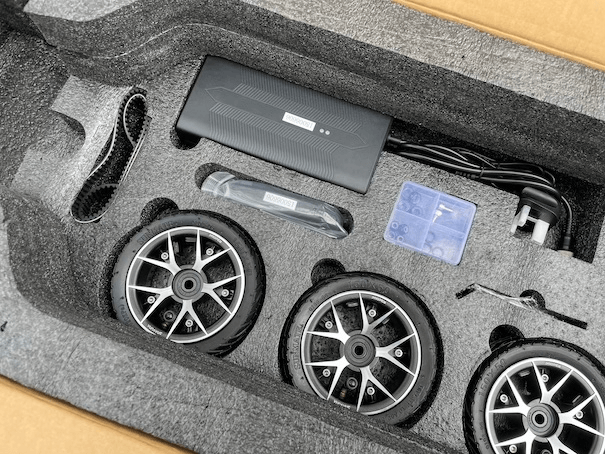
(The 2-in-1 package comes with both the 97mm street wheels and the 155mm wheels.)

Now, a lower price means nothing if Propel skimmed on the specs, but this doesn’t seem to be the case here.

Propel Pivot S – Specifications

Price$799 (Street)
$999 (2 in 1)
Battery518Wh, 12S3P, Lishen LR2170SA
Controller55A LingYi ESC
Top Speed36mph(60kph)
Range97mm: 26.5miles (44km)
155mm: 54 miles (87km)
DeckCarbon hybrid BVR Unibody
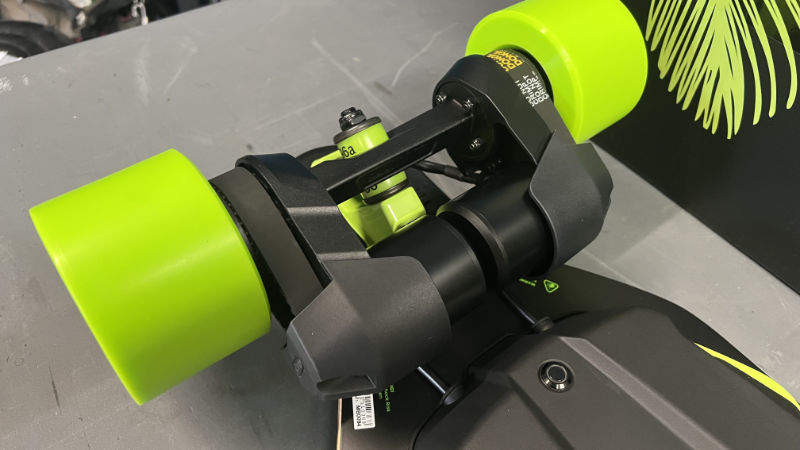
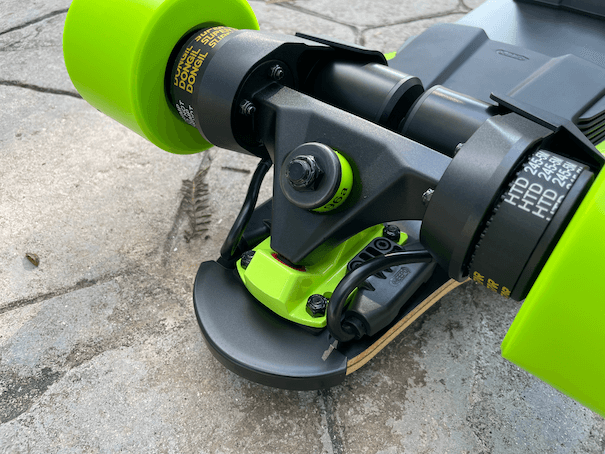
Motor2×6374 Motors/ Belt Drive
Net Weight25.3lbs (11.5KG)

Deck – “BVR Deck”

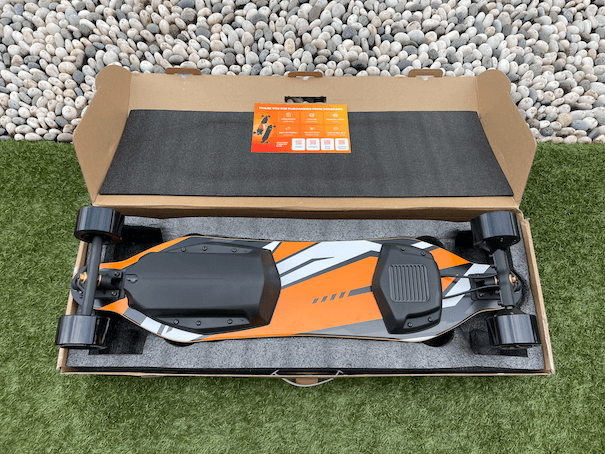
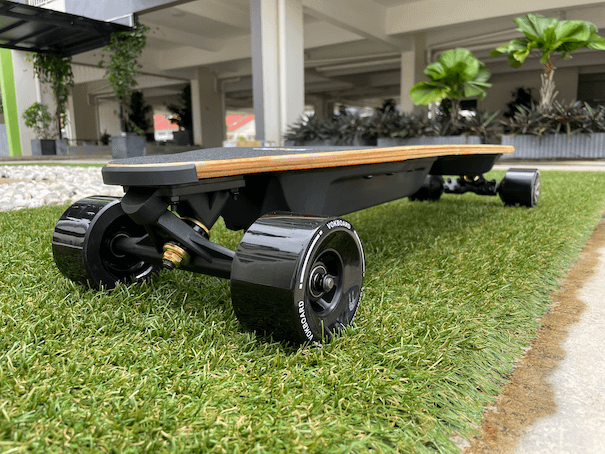
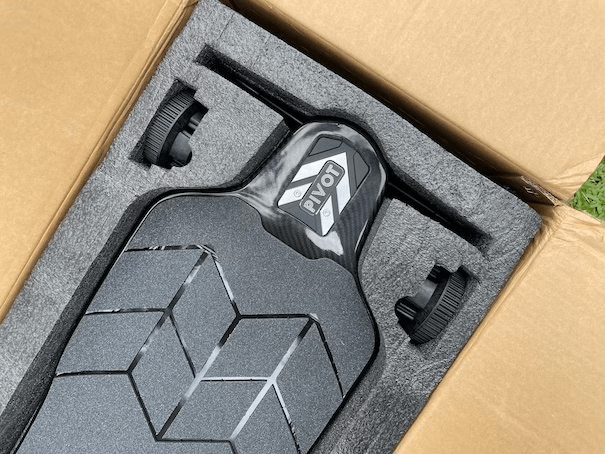
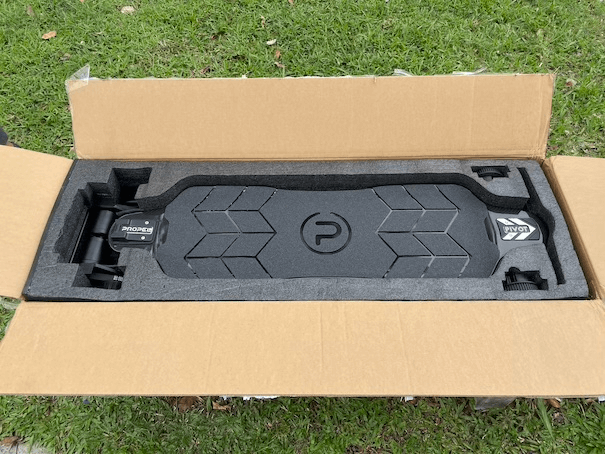
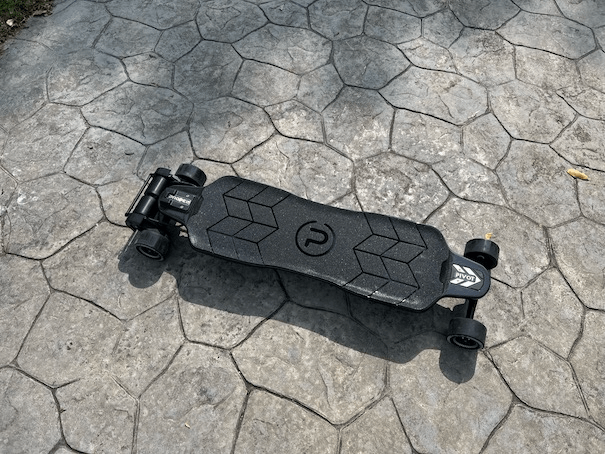
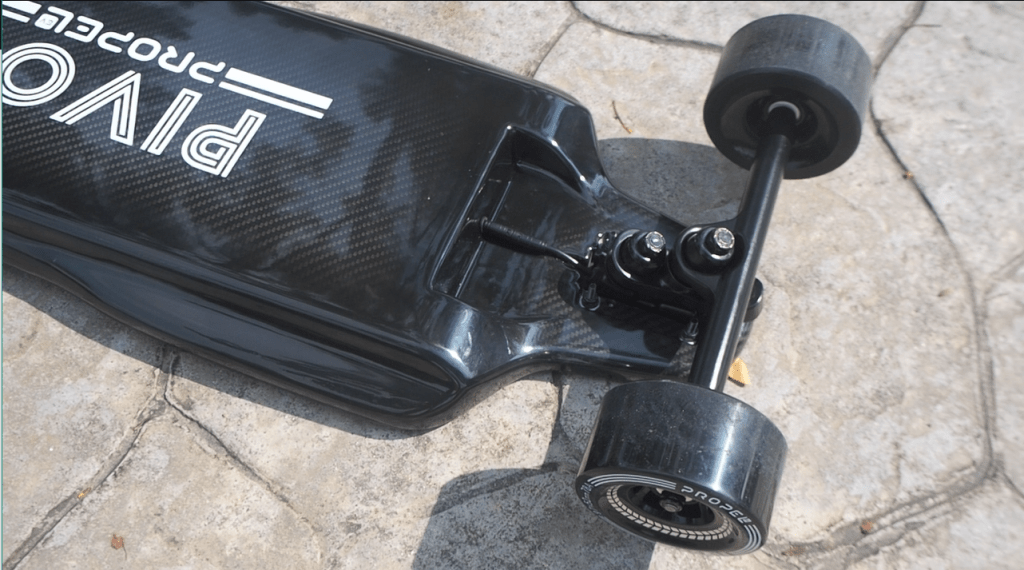
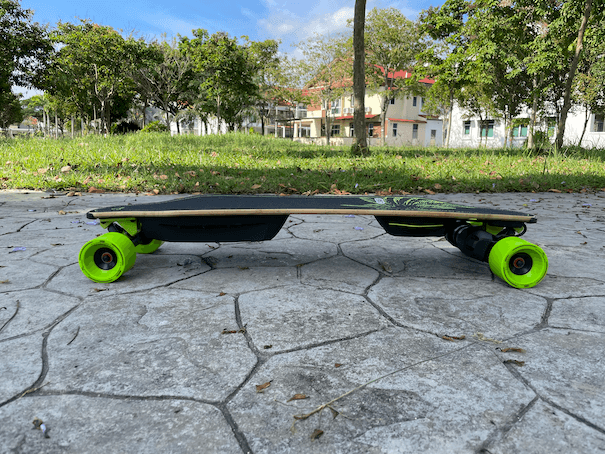
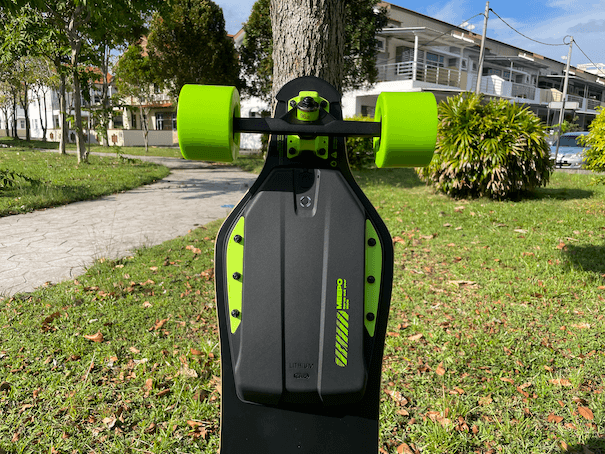
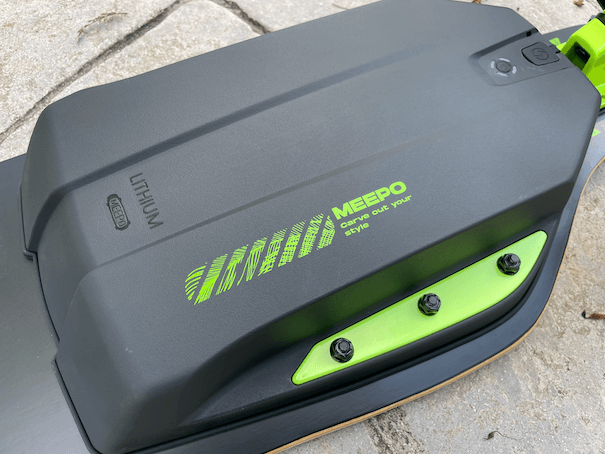
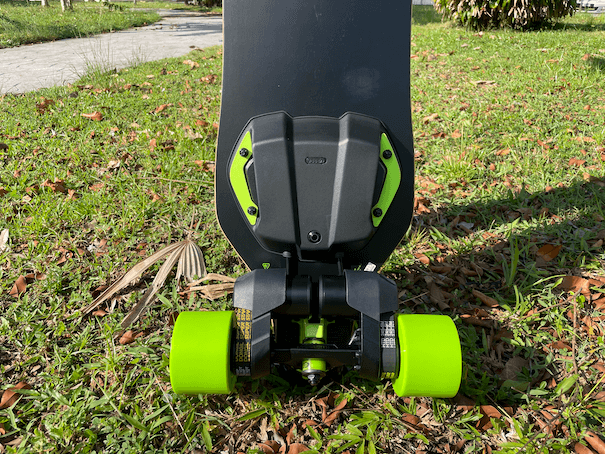
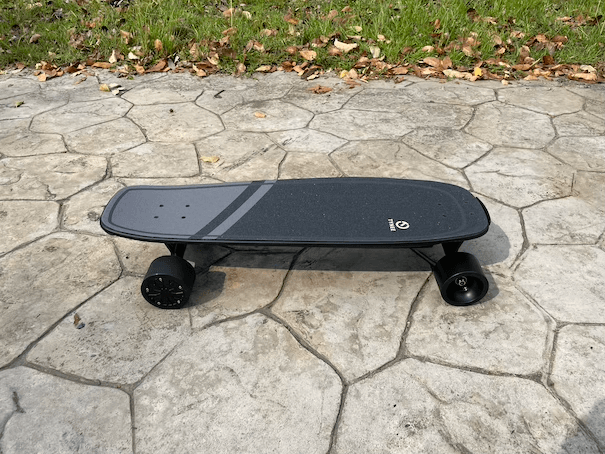
At first glance, the Pivot S’s double-drop deck immediately grabs your attention with its carbon fiber and fiberglass build. It has that sleek, unibody design with no unsightly enclosure sticking out. Propel called this deck BVR “Bad Vibe Reduction” deck and said that by including fiberglass in the deck material, it would dampen road vibrations. Will it work? We shall see.

On the deck, there is the foam tape padding which gives a helping hand in cushioning those road vibrations on this stiff deck.

Stepping on Propel Pivot S
Foam grip tape

It’s around 43 inches long and 10.7 inches wide, broader than most longboard decks. And while it does have a sweet concave, the center of the deck stays pretty flat.

Concave of the deck Propel Pivot S

ESC (Electronic Speed Controller) – LingYi ESC:

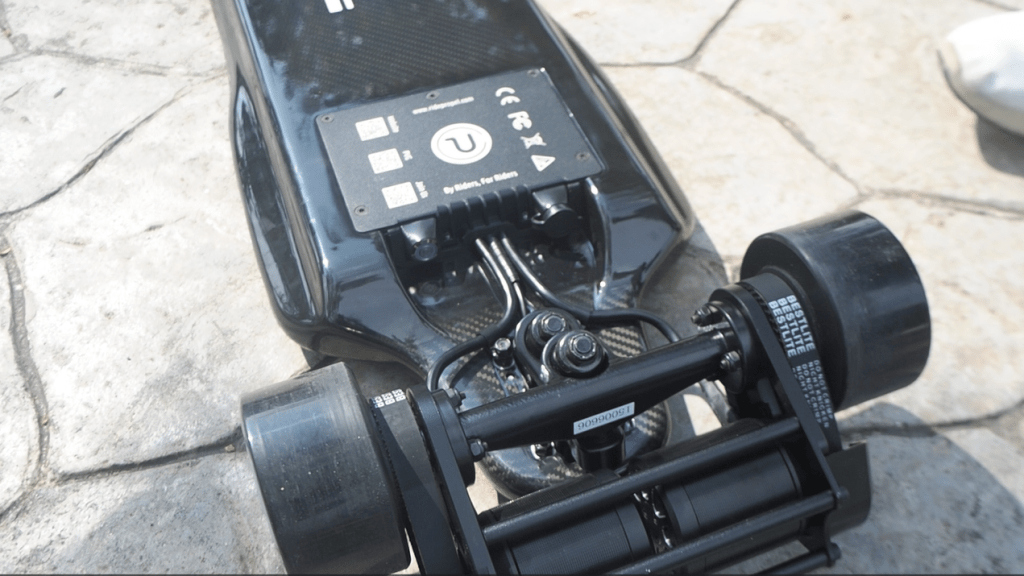
Flipping the board over, you’re met with easy access to the ESC compartment, which can be popped open with five screws. Propel went for the LingYi ESC in this model, and currently, it’s paired with the standard LingYi ESC remote.

Propel Pivot S ESC assess point
5 screws to access the ESC

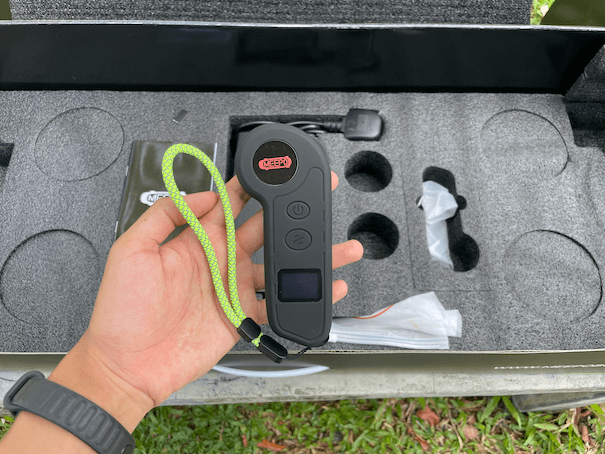
It’s rather jarring that a premium carbon fiber board ended with the most generic and cheap looking remote, but luckily a new remote is on its way to replace this one soon. We’ve seen the prototype, and it’s better. Anyways, this is just a cosmetic issue, as the generic LingYi ESC was functionally perfect, no connectivity issues, durable, good battery life. 

Generic Remote of the Propel Pivot S
something better-looking will replace this remote, soon.

As always, the LingYi ESC comes with ‘push to start’ features meaning the board fires up as soon as those back wheels start rolling. Like other boards with LingYi ESC, you get to choose amongst 4 acceleration modes and 4 braking modes separately, and we will talk about how they felt later.

Battery – Lishen LR2170SA

The Pivot S draws its power from a 12S3P pack with Lishen LR2170SA, 21700 cells. These cells, like those found in other premium boards such as the Exway Atlas Pro and Evolve Hadean. 

This gives the board a healthy 518Wh battery, similar to Exway Atlas, and bigger than Evolve GTR’s 504Wh battery.

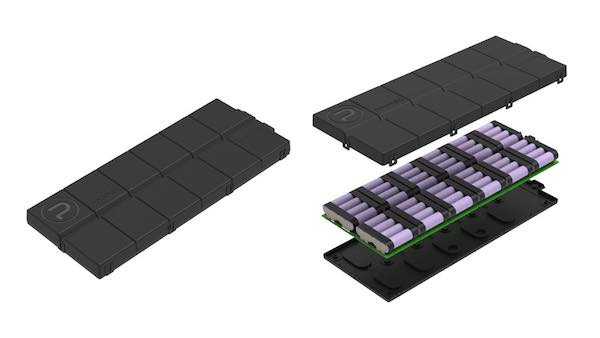
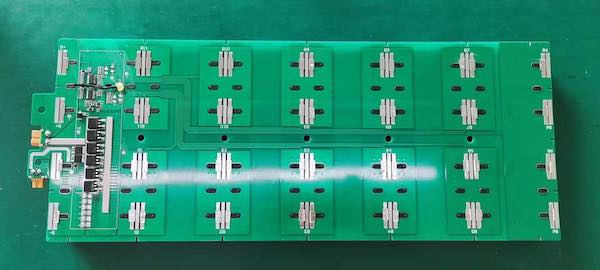
Propel also went further by adopting a Printed Circuit Board Assembly design with its battery, which eliminates wires. The benefit of the PCBA design is that the battery pack will be more durable, as wire could get dislodged from vibrations.

Range – A healthy 27 miles

The marketing range is 27.3 miles (44km) with 97mm wheels;
and 15.5 miles (25km) with 155mm wheels.

As usual, Propel did not exaggerate the range; our range test with 145lb (65 kg) riders yielded an impressive 14 miles (22km) on the 155mm wheels. 

Double-Kingpin Truck – We’ve seen them around.

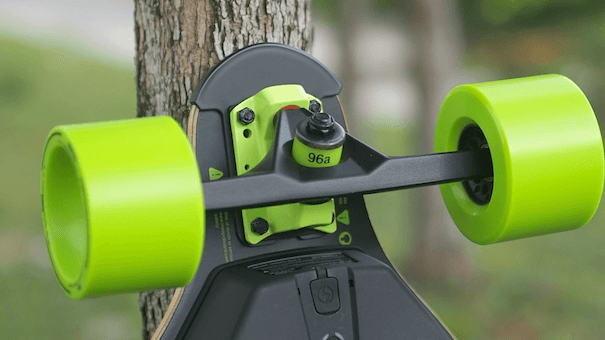
The Pivot S, like all 2-in-1 electric skateboards, has a double-kingpin truck. It appears to be one of those off-the-shelf double kingpin trucks that work well and are widely used.

Motors – Definitely Powerful!

motors of the Propel Pivot S

The Propel Pivot S is powered by two 1375W belt motors. These are huge 6374 motors, and they are incredibly powerful. The board’s top speed is an impressive 37 mph (60 km/h), though we only got up to 28 mph (45 kph) before it got too scary for us. Keep in mind, at high speeds, double kingpin trucks can get wobbly.

Wheels – 97mm or 155mm

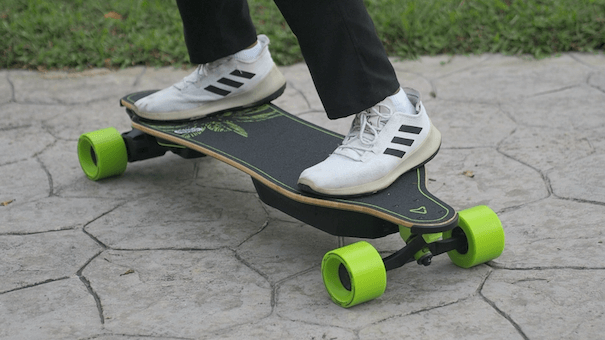
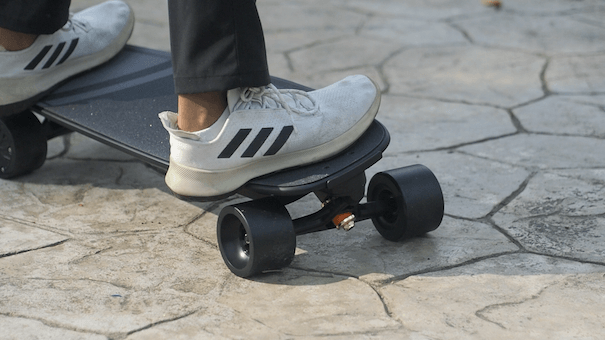
pressing on Propel Pivot S 97mm wheels

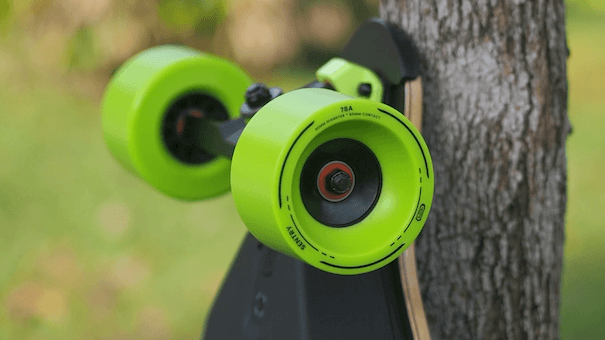
The base version features 97mm PU wheels, while the optional $200 upgrade offers 155mm wheels with a Bravura alloy hub.

Accessories – Lights & Pull bars

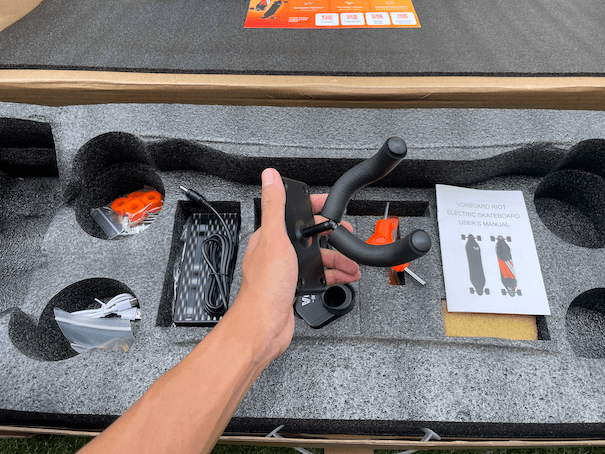
Pivot S, like many of Propel’s boards, came with integrated brake light, which lights up during brakes. The $999 two-in-one option also comes with a pull bar which you can install.

Pull bar of the Propel Pivot S

It should be noted that the board may only be pulled when it is in the AT configuration; pulling it in the street configuration will cause the motor to scrape the ground.

Propel Pivot S motor guard scraping the ground
In street wheel configuration, the board shouldn’t be pulled.

You can also buy a headlight kit, which can be integrated into the board, but it’s an additional $150 investment.

pivot light kits from Propel

Spec Summary:

Propel Pivot S (Street) – $799:

A 12s3p carbon fiber board built with high-quality materials from a brand recognized for excellent customer service feels like a value at $799. In reality, there isn’t another product that compares. A better match would be the $849 14s2p Backfire Zealot S2 or the $999 12s3p Meepo Voyager X. Both boards are more expensive and, as you will see, provide different riding experiences. They also are not carbon fiber electric skateboards.

Read our review of the Backfire Zealot S2 here.

Read our review of the Meepo Voyager X here.

Propel Pivot S (2-in-1) – $999:

Pivot S as a carbon fiber two-in-one all-terrain electric skateboard, on the other hand, competes directly with the similarly priced Exway Atlas at $999. Both have a 518wh battery, and the devil is in the details when it comes to choosing between the two. So let’s next talk about how the board rides.

Riding Experience of the Propel Pivot S:

The Pivot S, like many other electric skateboards debuted this year, is focused on power. When you equip a skateboard built for propelling AT wheels upwards with 97mm urethane wheels, you get a skateboard with plenty of power.

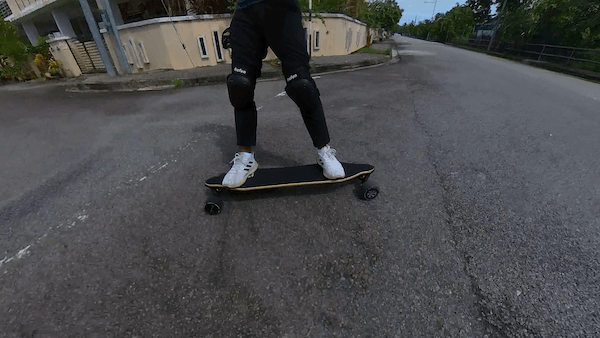
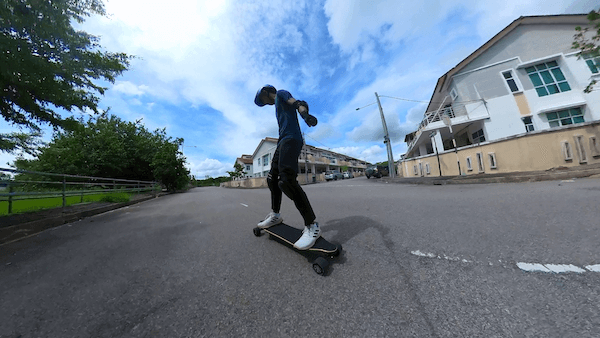
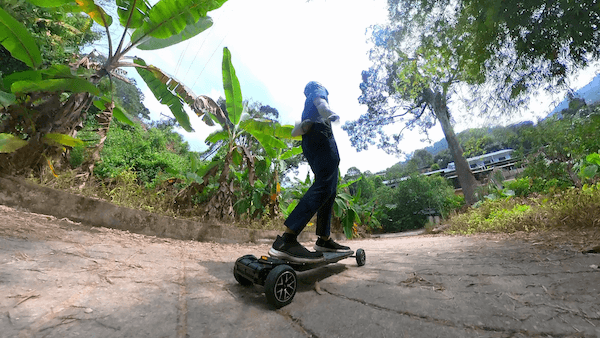
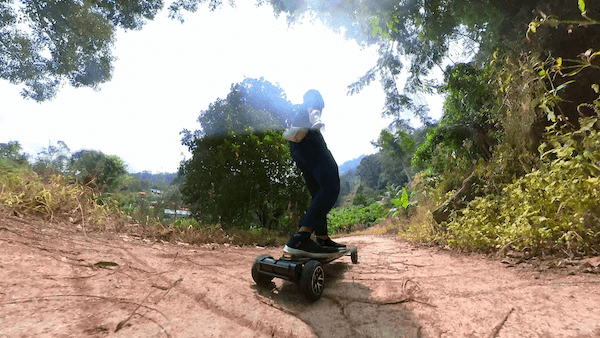
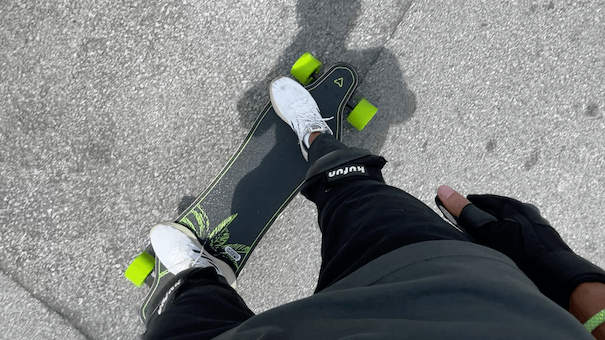
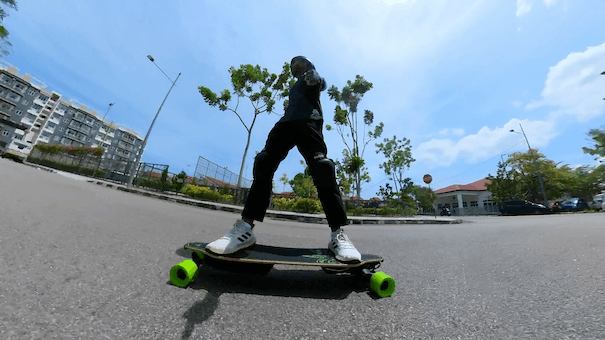
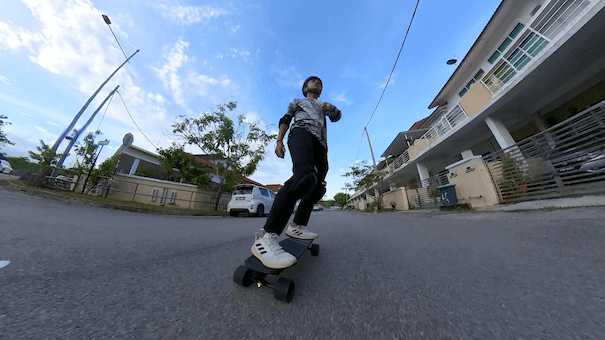
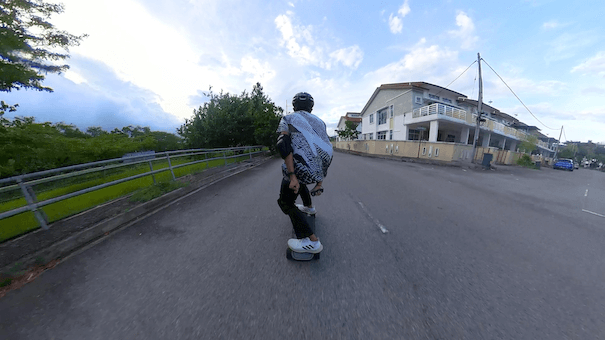
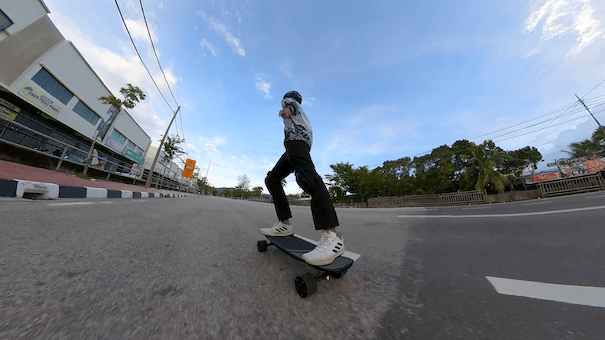
Riding shots of Propel Pivot S

Fortunately, the latest version of LingYi ESC has pretty smooth controls. The first three acceleration modes are, as always, pleasant and easy to use, while the fourth ‘PRO mode’ feels too powerful for the average street rider.

When the throttle is pushed, it punches strongly. Adrenaline junkies will enjoy it, but most riders won’t need to switch to PRO mode unless they’re riding in an all-terrain setup. 

The stronger brakes are another advantage of the LingYi ESC. On an incline, LingYi ESC can better stop the wheels, whereas Hobbywing ESC usually can’t hold the board in place and will roll down the slope. This function will be useful if you plan on doing some uphill longboarding, and the Pivot S certainly offers plenty of power for uphill runs!

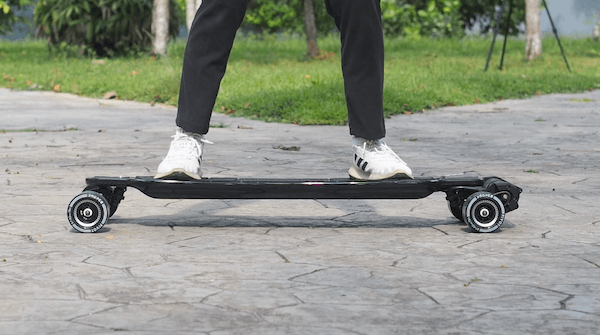
Besides the nuances of LingYi ESC, the board rides pretty much as well as one would expect from what we’ve seen on paper. The double-drop carbon fiber deck reduces ride height, and we always enjoy riding near the ground.

Some reviewers mentioned that the deck may be too wide and too flat in the middle, and it was uncomfortable for them as they couldn’t feel the deck concave when riding. We don’t share that opinion. The deck is comfortable for us, so I guess this is pretty subjective.

Pivot S’s large, stiff deck helps with the board’s stability, which is important because the dual kingpin trucks can feel wobbly at high speed.

You might feel more comfortable at high speeds if you’re a better rider than us or tighten the trucks further, but I’d recommend against having twin kingpin trucks if your primary goal is to ride quickly. These trucks are undoubtedly great for carving.

BVR “Bad Vibe Reduction” – Still lots of Bad Vibe

Let’s talk about the vibration now. Even with Propel’s best efforts, even going as far as branding the deck  THE “Bad Vibe Reduction” deck, foam grip tape, and those massive 97mm wheels, stiff decks feel terrible on uneven roads. We can hear rattling noises and feel road vibrations in our knees. This is just part of the bargain when getting a carbon fiber street setup, so be prepared.

riding shots of Propel Pivot S on poor roads

However, switching to the 155mm all-terrain wheels makes a huge difference. They absorb a lot of road vibrations while maintaining a low-to-the-ground ride experience. It’s quite nice. We’d go so far as to suggest that the AT setup is a must-have for anyone who rides on unpaved roads regularly.

Propel Pivot S versus Exway Atlas:

As previously said, the Propel Pivot S with 155mm wheels will almost certainly be compared to the Exway Atlas. In their all-terrain configuration, both boards will set you back $999. 

In comparison, the Exway Atlas has a smoother ride thanks to its Hobbywing ESC and precision CNC-forged axles. It also appears more sophisticated, thanks to its style and abundance of add-on accessories. However, the Propel Pivot S has greater power, while the Exway Atlas has a reputation for being an underpowered all-terrain board. Propel also appears to offer stronger post-sale service at the moment. 

Propel Pivot S Verdict:

Once again, Propel didn’t disappoint with the Propel Pivot S. It is a powerful board built well by a reliable brand. For $999, the 2-in-1 package is a pretty good deal for anyone looking for something similar (and better) to the Evolve Carbon GTR. 

When it comes to value proposition, the 97mm street set-up of the Pivot S is even better.

Unlike the 2 in 1 setup, which has competition, the street setup Pivot S is virtually unparalleled at $799. There is no other board that comes close to matching the value offered by the Pivot S. If you want a carbon fiber board with double kingpin trucks, Propel Pivot S should be the first choice for anyone shopping in this price range.

If you are interested in buying a Propel, be sure to check out our affiliate discount link here and use code: “ESKATEHQ” to receive 3% off during checkout.
It will help you get a small monetary discount and help us out too. On top of that, you’ll be tagged as an Electric Skateboard HQ customer and probably be treated better. Cheers!

Meepo Mini 3S Review (Meepo Atom): Powerful and Affordable!

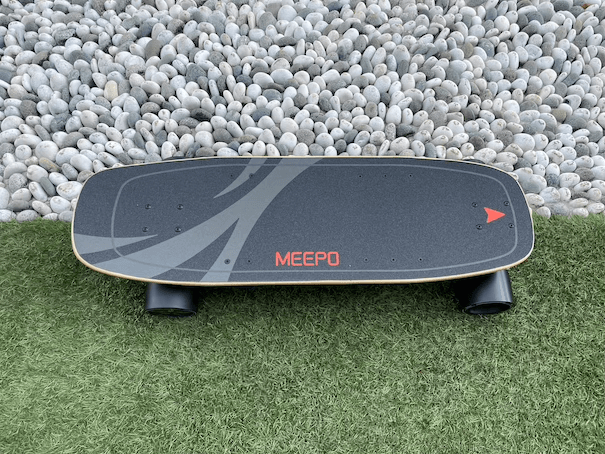
Today we will be reviewing the Meepo Mini 3s, also known as the Meepo Atom. 

The Mini 3s, priced at $469, is essentially the do-over of the $429 Meepo Mini 5, a few-month-old predecessor. For those who might be confused about the naming, the Mini 3s and the Meepo V3s were both released as successors to the much-loved 2020 Meepo V3, a board that gained notoriety as the most powerful affordable electric longboard on the market.

Check out our review of the Meepo V3s here!

Meepo Mini 3S Specifications:

  • Price: $469
  • Deck: 30″ 8-ply Canadian maple; a comfortable amount of flex, mild concave
  • Electronic Speed Controller: LingYi ESC; 4-speed modes, push-to-start
  • Remote: M4s remote with telemetry screen
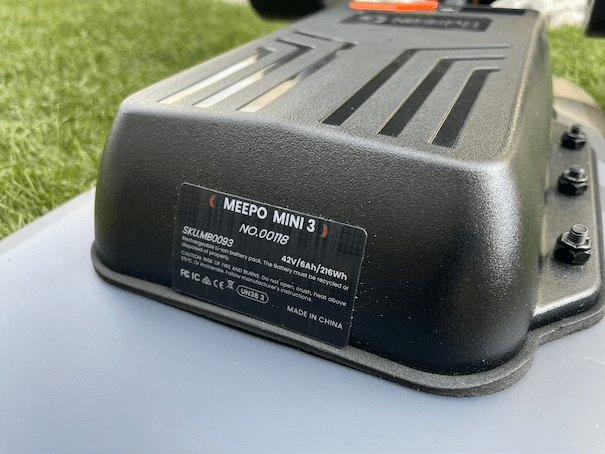
  • Battery: 10s2p battery with 21700 cells (Molicel P42A), 216Wh
  • Marketed Range: Standard – 17 miles (27km)
  • Motors: Dual 540W Hub
  • Marketed Top Speed: 29mph (47kph)
  • Trucks: Meepo Signature Shredder Trucks (7-inch 45°)
  • Wheels: 90mm PU (Compatible with 105mm donut wheels)
  • Weight: 18.5 lbs (8.4kg).

As you can see, Meepo Atom (Mini 3s) wasn’t trying to be groundbreaking in design. It has the same color scheme as the Meepo V3s, which also was pretty similar to the 2020 Meepo V3. It also uses the same electronic enclosure. 

This is obviously how Meepo keeps its cost down. Now, let’s take a deeper look at each of the parts.

Deck: Broad for a shortboard (12.6″)

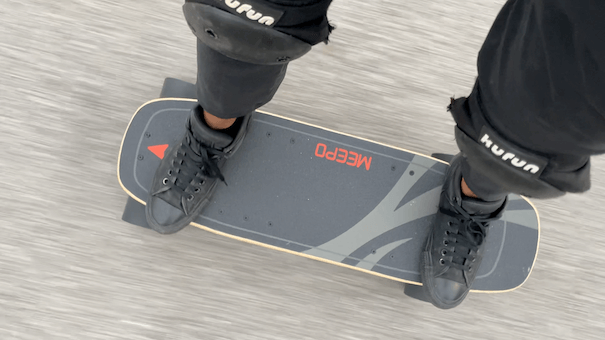
The deck of the Mini 3S measures 30″ x 12.6″, which is considered wide for a shortboard. It’s a stiff deck made from Canadian Maple and features a dish-shaped concave with a spacious kicktail. Meepo also included a skid plate on the kicktail to allow for worry-free use of the kicktail or tail brakes.

Electronic Speed Controller (ESC) – LingYi ESC

The Mini 3S uses the 10S LingYi ESC, known for its punchy acceleration. There’s also a push-to-start feature, so the board automatically turns on when you start rolling. Additionally, the Mini 3S is paired with the Meepo M4S remote, which comes with a display that shows telemetry. The ESC allows switching between 4 acceleration modes and 4 brake modes, independent of each other.

Battery: 10s2p Molicel P42A

Meepo Mini 3s is equipped with a 10s2p 216Wh battery, using 21700 cells. These cells hold more power than the 18650 cells used in the Meepo Mini 5 and most other entry-level electric skateboards. 

Meepo claims the Mini 3S can go 17 miles or 27 km on a single charge. However, in our testing, a 165lbs (75kg) rider achieved 13 miles (21km) on the highest speed mode. This range is slightly better than most entry-level electric skateboards.

Big Motors – Dual 540W Hub

The Mini 3S uses dual 540W hub motors, a step up from the 500W motors found on the Mini 5. Meepo lists the Mini 3S as having a top speed of 29 mph (47 kph).

We did not have the courage to get to that top speed. We got to 22mph (35 kph), and aborted there. .

Shredder Trucks and 90mm Wheels

Just like Meepo Mini 5, the Mini 3s use Meepo’s Shredder trucks, 7” 45° RKP trucks. 

The trucks come right out of the box with firm 100A bushings but Meepo also included \a set of 92A bushings for those who prefer softer trucks. 

The wheels are standard 90mm street wheels, but these are compatible with 105mm donut wheels. 

The Riding Experience of Meepo Mini 3s (Meepo Atom)

First impression of the Mini 3s? This board is powerful.

In recent times, ‘power’ seems to be the aim of brands when designing new electric shortboards. Boards like the $899 Tynee Mini 3 Pro, the $699 Verreal Ace, and the $469 Meepo Mini 3s Atom all embrace this trend. Fortunately, Meepo Mini 3s handles the power with grace.

Read more: Another amazingly powerful electric shortboard is the Tynee Mini 3 Pro. Check out our review of the Tynee Mini 3 Pro here.

While the highest speed mode of the LingYi ESC is punchy and thrilling, the board’s wide 7” trucks, stiffer bushing, and wider deck with a comfortable concave all contribute to a stable and smooth ride. The board performs well up to speeds of around 22mph (35 kph), after which the ride might become a bit intimidating for us.

For those who prefer a shortboard for a relaxing commute, the Mini 3s can do that too. The first three speed modes offer gentle and smooth rides, perfect for beginners and for those who enjoy carefree cruising. 

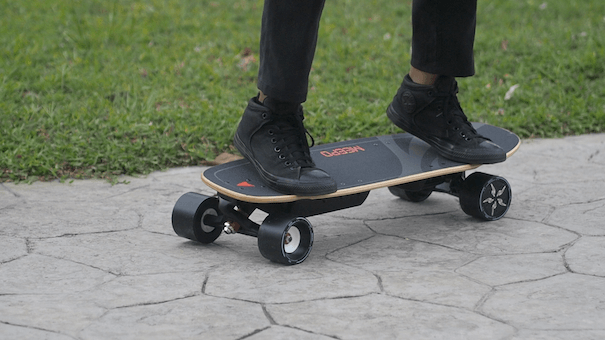
It’s great for riding on sidewalks too, The trucks are nimble enough for tight turns, and the kicktail is easy to use for kick turns and tail brakes. (We had come across some other shortboard that kicktail was way too short, making it borderline unusable and was merely ‘decorative’.)

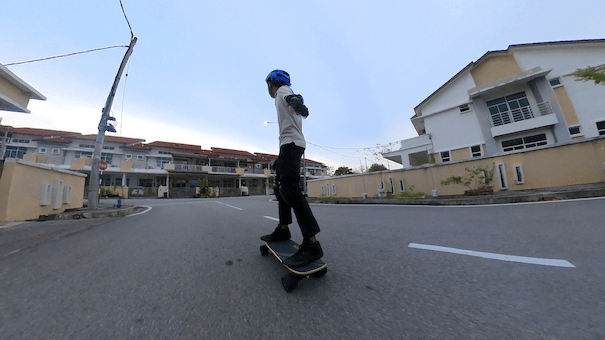
This board is pretty addictive to ride. It’s fun to have this much power on your ‘thumb tips’. Besides that, the board is also fun to just ride around, as it is agile and responsive. 

However, as with all hub-driven electric shortboards, Meepo Mini 3s is NOT fun when the roads are rough. The vibration will travel up the trucks, through the stiff deck, and straight into your knee.

Verdict: The Meepo Mini 3s – One of the Best Under $500

All things considered, we think the Meepo Mini 3s Atom is one of the best electric shortboards under $500. It’s not just powerful, but it handles everything else rather well, too. It’s a fun and agile board for sidewalk cruising, a comfortable ride for relaxed carving, and an exhilarating machine to race down straight roads. At this point, the Meepo Mini 5 is completely overshadowed by the Mini 3s. So if you’re in the market for an entry-level electric shortboard that delivers on all fronts, the Meepo Mini 3s should be among your first consideration.

If you are interested in buying the Meepo be sure to check out our affiliate discount link here and use code: “ESKATEHQ” to receive $5 off during checkout.
It will help you get a small monetary discount and help us out too. On top of that, you’ll be tagged as an Electric Skateboard HQ customer and probably be treated better. Cheers!
The Meepo NLS 3 Review: Power, but not Only!

Today, we’re diving deep into the $699 Meepo NLS 3, AKA Meepo Envy. It’s the successor to the popular Meepo NLS and NLS Pro, which were famous for being the strongest hub-driven electric longboards at their launch.

 As a mid-range electric skateboard ($500-$900), the Meepo NLS 3 was designed for those who want something better than the entry-level boards (e.g., Meepo V3s) but are not quite ready to spend the big bucks on the flagship (e.g., the super powerful Meepo Voyager X $999). Meepo NLS and NLS Pro fit the bill quite nicely; their over-the-top power and fun & flexible deck make them quite popular back in their days. However, as you’re about to see, the NLS 3 is very different from the previous NLS models. For starters, it is now using belt drive rather than hub motors!

Specifications of the Meepo NLS 3

  • Price: $699
  • Deck: Bamboo and fiberglass. Very flexible with a good concave.
  • Trucks: 8” 50° Reverse Kingpin (RKP)
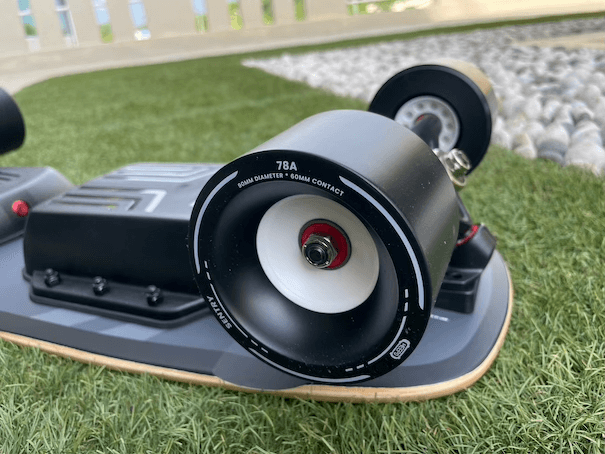
  • Wheels: 90mm wheels with a 65mm contact patch, 78A durometer​
  • ESC: 12s Hobbywing ESC
  • Motors: Dual 2519W belt-drive motors​
  • Battery: 12S2P, Molicel P42A, 362.8 Wh, 8.4AH
  • Top Speed: 32mph (52kph​)
  • Range: 24 miles(38 km​)
  • Weight: 21.4 lbs/(9.7 kg)

Aesthetics and First Impressions of the Meepo NLS 3

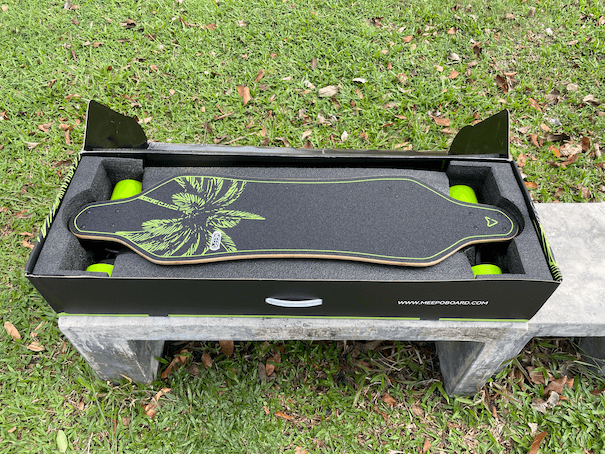
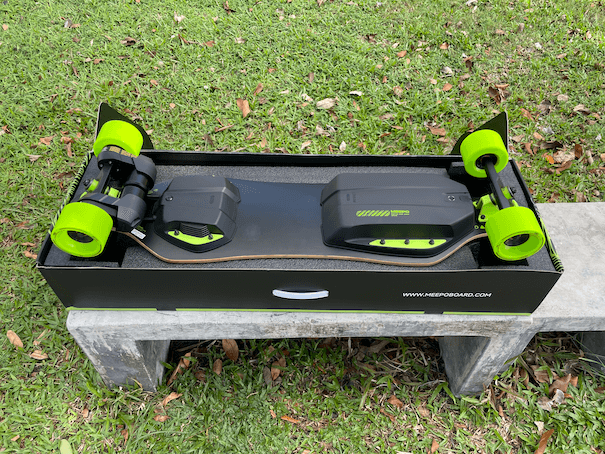
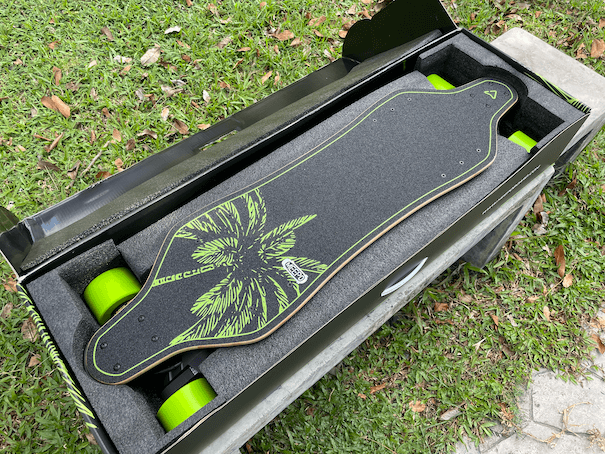
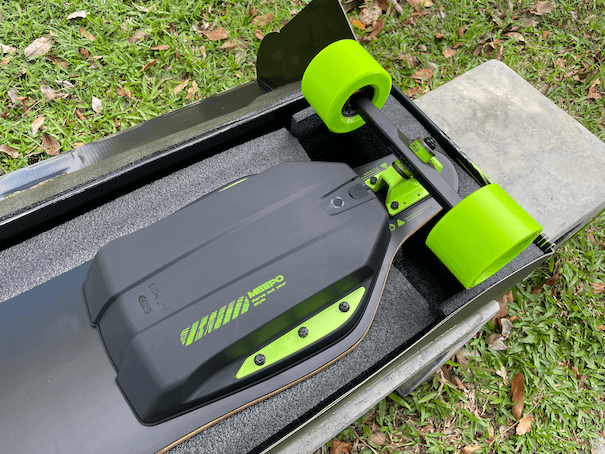
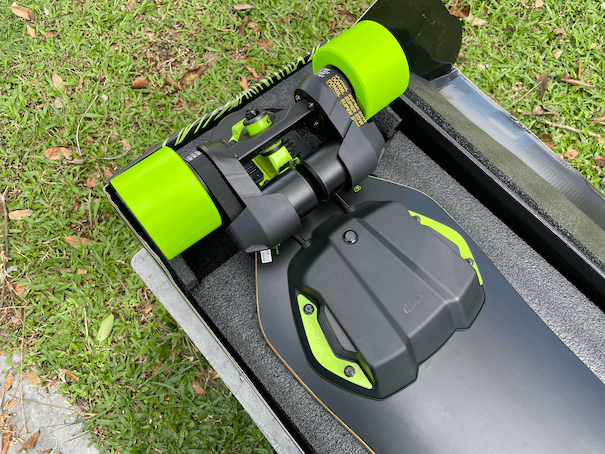
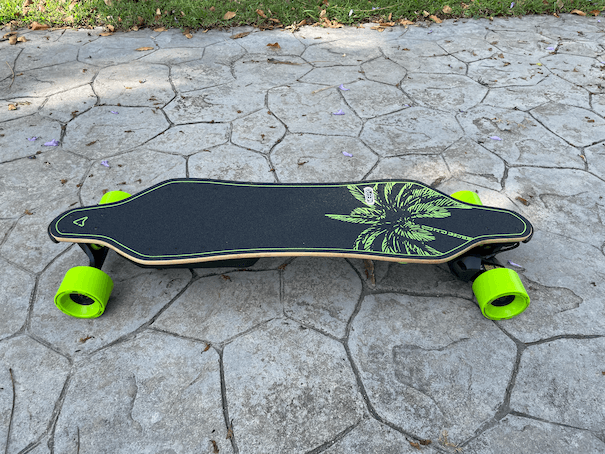
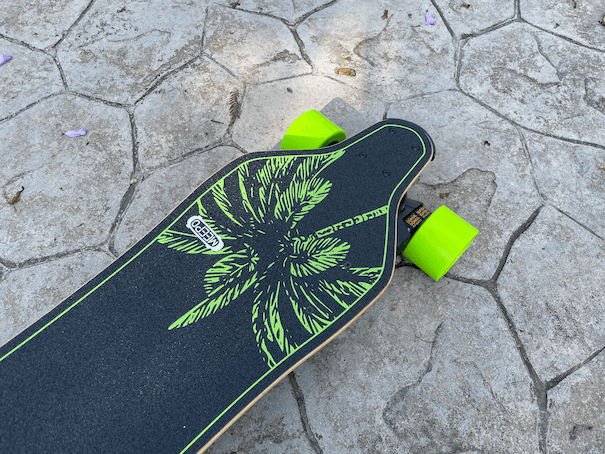
And it was all yell… green. I don’t know about you, but I’m not a big fan of the palm tree graphic on the grip tape, and neither am I a fan of the green color. The only part I am a fan of is the green color base plate, I think it makes the trucks look more interesting. 

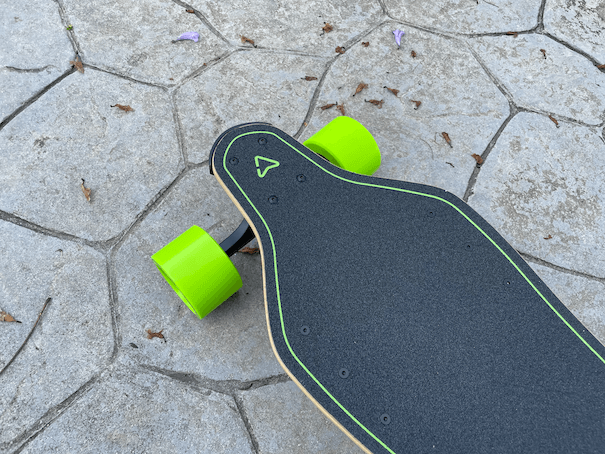
However, despite my ire about the color scheme, the built quality of the NLS 3 is nonetheless great. We also like that it includes built-in bash guards on the nose and tail of the deck, this is a nice touch.

The NLS deck – Flexible Bamboo Deck with nice concave.

The Meepo NLS 3 Electric Skateboard uses a similar deck to the NLS Pro, which is great news since its predecessor had a fantastic deck. The deck is a combination of bamboo and fiberglass and is really flexible. It also has a good amount of concave, which makes it easier to control the board and gauge where our feet are.

Trucks and Wheels

The Meepo NLS 3 rides on 8″ 50° Reverse Kingpin Trucks. The stock bushings are 96A double barrels, good for lighter riders. Most of us in Electric Skateboard HQ weigh around 155 lbs (65kg), and the stock bushing works just nicely for us. Heavier riders or those who prefer a more rigid setup can opt for the extra set of 100A bushings included in the box. The trucks are incredibly stable at high speeds and offer responsive carving.

The board features 90mm polyurethane wheels with a 65mm contact area and a soft 78A durometer. 

ESC and Remote – Mum, look! It’s Hobbywing!

What surprised us was Meepo’s decision to use a 12S Hobbywing ESC on the NLS 3, departing from their controversial habit of sticking to LingYi ESC in their entire lineup. 

This tells us that the NLS 3 is prioritizing a buttery smooth ride over aggressive power. For those who don’t know, LingYi ESC is known to give a punchy and untamed acceleration at its highest speed mode; while Hobbywing ESC is known for its perfectly intuitively smooth speed control throughout all its speed modes. Both have their fans; most of us here prefer Hobbywing ESC (we are not adrenaline junkies :P). 

This ESC comes with four-speed modes and a smart turn-on feature and pairs with Meepo’s M5S remote. This remote houses an OLED display, providing essential stats such as battery levels, current speed, odometer, and trip length.

Motors and Performance

The Meepo NLS 3 is powered by dual 2519W belt-drive motors, promising a thrilling top speed of 32mph / 52kph. The motors also provide a pleasant whizzing sound during rides, which is far more appealing than the harsh screech often associated with lower-quality boards.

The hill-climbing ability is specified at 26%, making it suitable for heavier riders or those living in hilly areas.

Meepo Envy NLS 3 motors

Battery – 12s2p Molicel P42A

The NLS 3 is powered by a Molicel P42A in a 12s2p setup, providing 362.8 Wh of energy. The company advertises a range of 24 miles (38 km), but we get a slightly lower range of 16.5 miles (26.5 km) with a 155lbs (70 kg) rider riding fast.

Obviously, we are slightly disappointed, but this result is not unexpected. Boards with big belt motors tend to drain batteries fast, for instance, we get the same range on our Tynee Mini 3 Pro too, and that board has a higher 393WH battery.

Read our review of the Tynee Mini 3 Pro here!

For context, the 12s2p setup with 21700 cells is quite standard for mid-range electric skateboards at present. If you’re looking for more range, Meepo essentially nudges you towards their $999 Voyager X with its 12s3p 544Wh battery.

While the battery size of NLS 3 didn’t particularly exceed our expectations, the inclusion of a 4.5A fast charger right out of the box is great news. It allows you to charge your board fully in just two hours, which is a significant convenience. Most other brands would charge extra for such a fast charger, often over $80.

Furthermore, the ESC and battery are well-protected. Both are housed in their own sealed enclosures, making the NLS 3 fairly water-resistant, although there is no official waterproof rating.

The Motor – From Hubs to Belts

The most substantial shift from the previous NLS models is the motor type. The NLS 3 uses a belt motor system as opposed to the hub motors used in its predecessors. 

These are a pair of powerful motors, each with a power rating of 2519 Watts. 

Meepo loves to pack over the top top speed for their boards, and as expected, the NLS 3 can reach an impressive top speed of 32 mph (or 52 kph). We manage to hit that in our testing.

For those who don’t know the difference between hub and belt: the belt-drive system gives the board more torque [thanks to gear reduction] and also a smoother ride [thanks to having four real PU wheels as opposed to 2 stiff hub backwheels]. However, belt drives are also less energy efficient, are noisier, cost more, and have more maintenance needed, such as belt change. If you care about the ride feels, you’d want a belt-driven board.

Truck and Wheels

Meepo uses their trusted Shredder truck, which are 8” 50° RKP trucks with 96A double barrel bushings and includes an additional set of 100A bushings for heavier riders. 

The wheels are 90mm and 78A with a 65mm contact patch. 

Meepo NLS 3 Ride Experience – Smooth and Powerful

The shift to Hobbywing ESC signals that Meepo wants the NLS 3 to be as smooth of a ride as it could be. After all, smooth speed control + flexible deck + responsive truck + belt drives are all ingredients for a butter smooth ride and also maximum carving fun.

And the result does not disappoint! 12s Hobbywing ESC gives the NLS 3 a perfectly intuitive and smooth acceleration and braking. It is quite powerful too! Not to the level of power specialists such as Voyager X or Backfire Zealot X, but certainly on par with pricier boards such as the Zealot S2, and certainly more powerful than the board of the same price tier such as the Wowgo Pioneer X4 and the Exway Flex ER Riot. 

Read our review of the Meepo Voyager X here!

Or read our review of the Backfire Zealot X here!

The deck of the NLS 3 especially stands out, it is quite flexible, and the more pronounced concave makes the board more responsive to control. The concave also makes it easy for us to gauge where our feet are. 

The trucks are responsive and easy to turn; they feel a little bit tighter than genuine Paris Trucks. It’s stable enough for us to ride up to 30mph before it becomes scary.

To no one surprise, the NLS 3 does well in reducing road vibration, too, thanks to having a flexible deck and going with a belt system. 

Verdict on the Meepo NLS 3

The Meepo NLS 3 is a well-rounded and reliable electric skateboard that is well-constructed, offers excellent speed control thanks to Hobbywing ESC, and a smooth ride, thanks to its super nice deck. It also has more power and speed than its similarly priced competitors.

I think Meepo NLS 3 biggest weakness is lacking any “wow” factors such as ride profile customizations, integrated lights, or mobile apps. It also didn’t overdeliver on battery size and range as some smaller budget brands might do. Also, I’m not a fan of the palm tree theme and the color green.

With all that said, if you’re looking for a well-rounded board with great power and a super comfortable ride, the Meepo NLS 3 is a perfectly good choice. Plus, you know you’re not paying for extra features that you won’t use.

If you are interested in buying the Meepo be sure to check out our affiliate discount link here and use code: “ESKATEHQ” to receive $5 off during checkout.
It will help you get a small monetary discount and help us out too. On top of that, you’ll be tagged as an Electric Skateboard HQ customer and probably be treated better. Cheers!
Tynee Mini 3 Review: The Compact Powerhouse for City Cruising

Today, we will be looking at Tynee Mini 3, the non-pro & hub version!

Electric shortboards are great for urban commuting, as they are both more portable and more agile to ride around pedestrians on sidewalks. Most major electric skateboard brand has one electric shortboard in their line-up, but Tynee, probably encouraged by how well their Tynee Mini 2 did, launched 2 of them in one go.

In May 2023, Tyneeboard launched two new shortboards: the Tynee Mini 3 Pro and the Tynee Mini 3. While we’ve already reviewed the $899 Pro version here (it’s absurdly strong) ,the focus today is on its sibling, the Tynee Mini 3 – Hub version. Priced at $699 for the hub version and $759 for the belt version, the Mini 3 offers a more affordable alternative to its Pro counterpart.

Tynee Mini 3 (hub) Specifications

Before we delve into the riding experience the Tynee Mini 3 offers, let’s chart out its specifications. It’s very similar to the Tynee Mini 3 PRO, with the only notable difference being the default wheels, the Motors, and the remote.:

Tynee Mini 3 at a glance:

  • Price: $699
  • Deck: Canadian Maple, mildly dish-shaped concave
  • Trucks: Tynee PE reversed kingpin trucks (based on Paris V3 trucks)
  • Wheels: 90mm PU wheels (with an optional upgrade to 105mm Cloudwheels)
  • ESC: 13s Hobbywing ESC with smart turn-on and 4-speed modes
  • Motors: Dual 700W hub motors
  • Battery: Molicel P42A battery (13S2P configuration, 393.12Wh, 54.6V)
  • Top Speed: 32mph (52kph)
  • Range: Up to 26 miles (42km)
  • Weight: 17.7lbs (8kg)
  • Additional Features: Integrated brake lights

The Deck and Trucks: Solid Foundation for a Smooth Ride

Similar to the Tynee Mini 3 Pro, the non-pro Mini 3 uses a Canadian Maple deck with a mild concave. This design is widely used on electric shortboards for a reason; it helps with board control, is quite comfortable, and helps to secure footing while riding.

As we complained in our Tynee Mini 3 Pro review, we had wished that Tynee went a little bit more aggressive with the concave, as we still find ourselves needing to look down and check our footing when riding fast. A steeper concave like the one on the Boosted Mini or the Meepo Mini would help us feel more secure here.

The Tynee PE reversed kingpin trucks are Tynee’s proprietary trucks based on Paris V3 trucks. We have ridden them on other Tynee boards and know they are pretty good.

The Wheels: standard 90mm PU wheels.

The standard 90mm PU wheels the Tynee Mini 3 comes with serve well for smooth city roads. Unsurprisingly, riding this hub-driven shortboard on rough roads are terrible. The vibration killed our knees.

The $100 upgrade to 105mm Cloudwheels is a must for those who frequently ride on poor roads, but I doubt its going to help too much. Just get a belt-driven longboard instead if that describes your daily route.

ESC and Motors – Bottle-necked.

Under the hood, the Tynee Mini 3 was powered by a 13s Hobbywing ESC and dual 700W hub motors. Hobbywing ESC comes with the smart turn-on (board automatically powered on upon switching on the remote) and four-speed modes. Compared to the Mini 3 Pro, the non-Pro Mini 3 requires smartphone apps for advanced customization of control settings (Speed, acceleration, top speed, etc.); while for the Mini 3 Pro, you can change the settings straight from the remote.

As for the 2 x 700W hub motors, they obviously did not match the power of the Mini 3 Pro’s 2x 2775W belt motors. A 13s system promised a lot of power, but the 700W motors obviously put caps on the power. Despite having an over-the-top 13s system, Tynee Mini 3 is merely ‘strong.’ But hey, there isn’t any real need for a shortboard to have crazy power, and the Tynee Mini 3 is strong enough that it can bring a heavy rider up any steep hills.

The top speed clocks in at 32mph or 52 kph, although we’ve only had the nerve to hit 28mph(45 kph). 

The Battery: Disappointed.

Powering the Tynee Mini 3 is the high-performing Molicel P42A battery, configured as 13S2P. This 393.12Wh, 54.6V battery offers an advertised range of up to 26 miles (42km). However, our range test with a heavier rider (220lbs, 100kg) going at top speed only yielded a range of about 12.5 miles (20km). 

This goes to show that rider weight and riding style heavily impact the range you get. A lighter rider or a slower riding style should get a lot more range from this 393.12WH battery. (393.12WH is a pretty good size for a $699 board)

Additional Features: 

Tynee Mini 3 tail light

The Tynee Mini 3 comes with integrated brake lights that light up when the throttle is dialed back. They can also be manually switched on via the remote control.

Having integrated light is always nice. (Unlike aftermarket solutions, such as shredlights, you don’t have to charge them separately.)

Riding Experience of the Tynee Mini 3: 

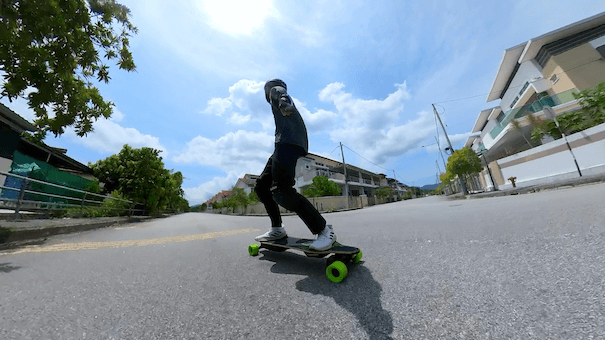
Tynee Mini 3 is an easy board to ride. 

It’s doesn’t have the exhilarating acceleration of the Mini 3 Pro, but it still took off fast, and it accelerated in perfect smoothness just like any Hobbywing ESC would. The brakes are strong and smooth, too, something that some 10s Hobbywing ESC may lack but 13s Hobbywing ESC wouldn’t.

As a shortboard, the Tynee Mini 3 is considered as stable as the 7” trucks balance stability and ease of turning well. As I mentioned, the board only starts to feel sketchy for us at around 28mph(45kph), which, IMO is wayyy faster than one should go on a shortboard. The kicktail is user-friendly too. Some shortboards we reviewed were prone to accidental wheelies during acceleration, while others have a kicktail so short that it feels more decorative than useful. Tynee Mini 3 doesn’t have that problem; its kicktail is easy to use and doesn’t cause accidental wheelie.

The Verdict: Low-key, a great board.

To wrap it up, while the Tynee Mini 3 hasn’t really broken new ground or wowed us with any groundbreaking features, it’s a solid board. It’s well-built, comes with good power, a decent range, and provides a pleasant ride. 

It might live in the shadow of the much more exciting Mini 3 Pro, but it’s still a fantastic option for anyone in the market for a competent, well-rounded electric shortboard for zipping around town.

If you are interested in buying the Tynee be sure to check out our affiliate discount link here and use code: “ESKATEHQ” to receive $5 off during checkout.
It will help you get a small monetary discount and help us out too. On top of that, you’ll be tagged as an Electric Skateboard HQ customer and probably be treated better. Cheers!
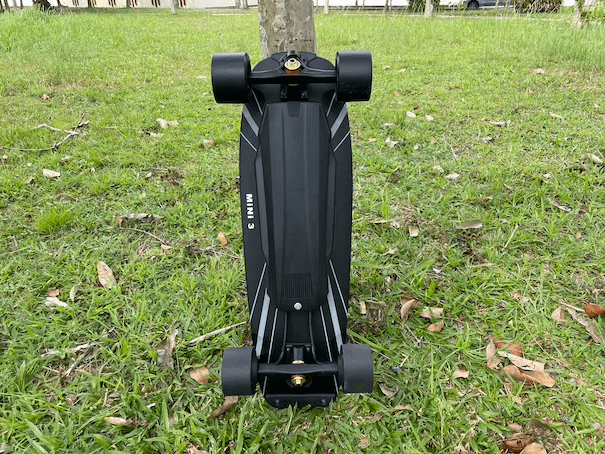
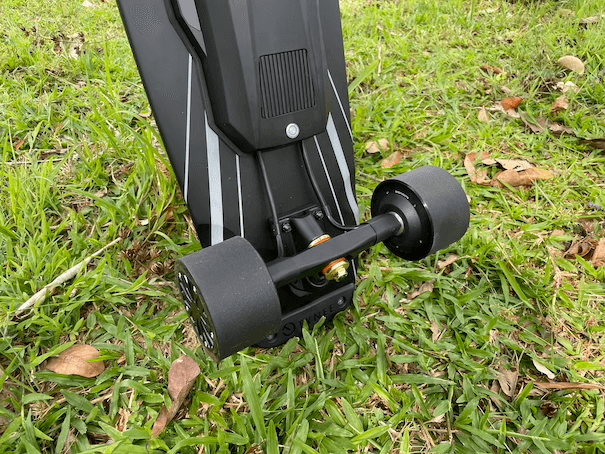
Tynee Mini 3 Pro Review: Very D*mn Strong

Tyneeboard, a well-known electric skateboard company, has recently launched two new shortboards in mid-May 2023: the Tynee Mini 3 and Tynee Mini 3 Pro. 

These boards are successors to the popular Tynee Mini 2. 

Today, we will be reviewing the $899 Tynee Mini 3 Pro. 

Priced at $899, this is a midrange electric skateboard. Unlike entry-level electric skateboards that cost less than $500, boards in this price range usually has no significant weakness, and are well-rounded, with some showcasing unique features. 

And once we went through the specs, it became quite clear that the Tynee Mini 3 Pro unique strength is .. its strength!
Specifications of the Tynee Mini 3 PRO

The Tynee Mini 3 Pro boasts some impressive specs for a shortboard, including:

  • Deck: Canadian Maple with a wide concave, similar to Boosted Mini or Meepo Mini
  • Trucks: Tynee PE reversed kingpin trucks (based on Paris V3 trucks)
  • Wheels: 105mm HydroWheels (optional 90mm PU wheels available)
  • ESC: 13s Hobbywing ESC with smart turn-on and 4-speed modes
  • Motors: Dual 2775W 6355 belt motors
  • Battery: Molicel P42A battery (13S2P configuration, 393.12Wh, 54.6V)
  • Top Speed: Default at 31mph (50kmh), up to 37mph (60kmh) with advanced settings
  • Range: Up to 26 miles (42km)
  • Weight: 20.4lbs (9.25kg)

Deck and Trucks: The Foundation of a Smooth Ride

The Tynee Mini 3 Pro features a Canadian Maple deck with a wide concave, shaped similarly to the late-Boosted Mini or Meepo Mini dish-shaped concave, but with a slightly less pronounced curve. This design is widely used on electric shortboards for a reason, it helps with board control, is quite comfortable, and helps to secure footing while riding.

However, we do wish that Tynee went a little bit more aggressive with the concave, as we still find ourselves needing to look down and check our footing when riding fast. A steeper concave like the one on the Boosted Mini or the Meepo Mini would be a little bit better here. But hey, this is just us nitpicking. 

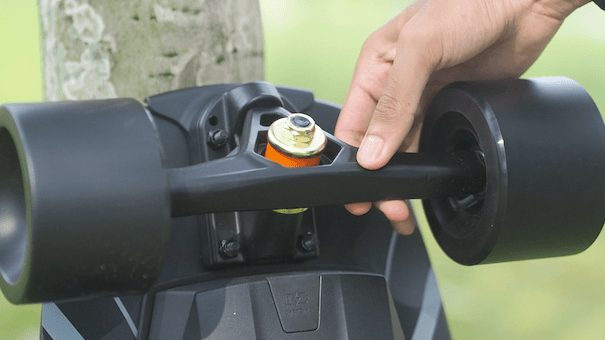
The Tynee PE reversed kingpin trucks are Tynee’s proprietary trucks based on Paris V3 trucks. We have ridden them on other Tynee boards and know they are pretty good.

Wheels: Bigger 105mm wheels

The Tynee Mini 3 Pro comes with 105mm HydroWheels.

The hydrowheels are a lot different than cloudwheels, its material is somewhere between rubber and PU. It also has a tire tread on them, so it should grip wet roads much better than traditional PU wheels. 

Unlike cloudwheels which were notorious for their tiny contact patch, the hydro wheels have a pretty wide contact patch of 53mm. This is the first debut of the hydrowheels, and it is pretty good! It’s really helpful to reduce the vibration from rough roads, while still feeling pretty similar to the ride feel of traditional PU wheels.

For riders who prefer the traditional 90mm PU wheels, Tynee offers an option to choose these for $100 less than the HydroWheels. However, most reviewers and Tynee itself recommend the 105mm HydroWheels for the best experience.

ESC and Motors: Unleashing the Power

The Tynee Mini 3 Pro is powered by a 13s Hobbywing ESC with smart turn-on and 4-speed modes. This advanced ESC allows for customization through the remote control, including top speed, acceleration, and braking strength adjustments.

The board’s dual 2775W 6355 belt motors are exceptionally powerful for a shortboard, providing smooth yet strong acceleration and a top speed of up to 37mph (60kmh) with advanced settings. This level of power is unparalleled among electric shortboards (you can compare the stats with our data tables here) making the Tynee Mini 3 Pro a standout in its category.

Battery: High-Performing and Long-Lasting

The Tynee Mini 3 Pro uses Molicel P42A cells (they are great cells) in a 13S2P configuration, giving a total capacity of 393.12Wh and 54.6V. 

The advertised range of the Tynee Mini 3 Pro is up to 26 miles (42km), although our tests only managed to achieve a range of 16 miles (26km) with a 165lbs (75kg) rider at high speed. 

You could obviously get a lot more range if you ride slower, but what’s the point? ¯\_(ツ)_/¯ 

Additional Features: Brake Lights and More

The Tynee Mini 3 Pro comes with some additional features to enhance the riding experience, including a built-in brake light that lights up during braking and can be manually switched on via the remote control. Built-in light is always great, especially when you consider that you don’t have to charge them separately.

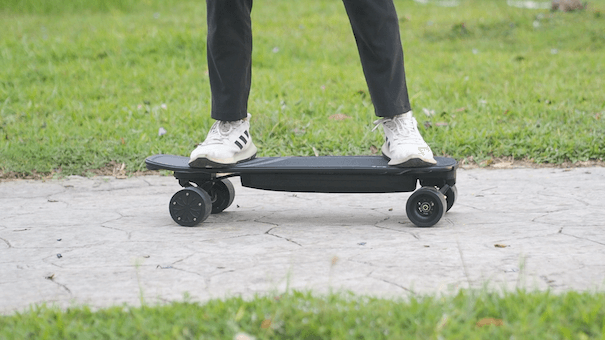
Riding Experience of the Tynee Mini 3 Pro

First and foremost, this is a super duper powerful board.

The Tynee Mini 3 Pro is smooth yet extremely powerful, thanks to its combination of absurdly powerful motors (Dual 2775W 6355 belt motors) and 13s Hobbywing ESC.

The board took off faster than even most electric longboards, making it one of the most powerful electric skateboards, and the most powerful electric shortboard we’ve reviewed. It is as strong as, say, the Meepo Voyager X, which is a longboard specialized for power!

You can read more on our review of Meepo Voyager X here.

And, the braking is equally smooth and strong, unlike the old 10s Hobbywing which typically has weak brakes.

Maneuvrebility-wise, the Tynee Mini 3 Pro is obviously great, it’s a shortboard after all. The kick-tail is easy to use, allowing for quick kick turns. The 7″ trucks are very stable and equally responsive. It’s a fun board to carve around, while not at all wobbly when going at high speeds. And being stable enough is really important; as I should remind you, the board has a default top speed of 31mph or 50kmh and can even reach up to 37mph or 60kmh. 

Unfortunately, we only dared to go up to 28mph or 45kph and decided to call it quits there. The board should be able to surpass the marketed top speed of 31mph once you unshackle its top speed by tweaking the advanced settings.

Not Many Weaknesses to Pick On

As you can see, we’re pretty happy with the Tynee Mini 3 Pro.

If we were forced to say something negative about the board, it would be the deck.

As I said earlier, we feel that the deck could benefit from a more aggressive concave, similar to the late Boosted Mini. It would help us to gauge our foot placement easier.

Another minor drawback is how the board handles rough terrain. Being a shortboard with a stiff deck, the Tynee Mini 3 Pro is still somewhat uncomfortable on unpaved roads.

However, among shortboards, this one is undoubtedly the best at reducing vibration. The 105mm wheels on a belt-drive significantly reduced road vibration, but a longboard is the way to go for a smoother ride on rough roads.

Verdict: Tynee Mini 3 Pro is a great board for the Pros

From the outset, we expect the Tynee Mini 3 Pro to be superbly strong and has a reasonably well ride fee for an $899 board. It hits both of those points.

If you’re looking for an absurdly powerful electric shortboard that has more power than anyone needs, the Tynee Mini 3 Pro is where it’s at, with the $599 Verreal ACE being its more affordable counterpart. However, this also means that the board is overkill for those who are only seeking an easy board to ride around town and would be satisfied with plenty of other cheaper options. However, it is always exciting to have more power than you need, it’s always thrilling to engage the throttle and rocket away, and that’s what the Tynee Mini 3 Pro offers.

 In conclusion, the Tynee Mini 3 Pro is an unparalleled electric shortboard that offers an exciting blend of power and agility. It is perfect for riders who want more from their e-skates and appreciate the thrilling feeling of rocketing away with a simple flick of the throttle.

If you are interested in buying the Tynee be sure to check out our affiliate discount link here and use code: “ESKATEHQ” to receive $5 off during checkout.
It will help you get a small monetary discount and help us out too. On top of that, you’ll be tagged as an Electric Skateboard HQ customer and probably be treated better. Cheers!